5-Year Cost of Veneer vs Solid Wood in a Singapore Kids Room
Choosing furniture for a kids room in Singapore often comes down to two familiar materials: veneer and solid wood. The sticker prices can look similar, but the five-year cost rarely is. Scratches, swelling, replacement panels, delivery charges, and the question of what happens when a child outgrows the bed all affect the total.
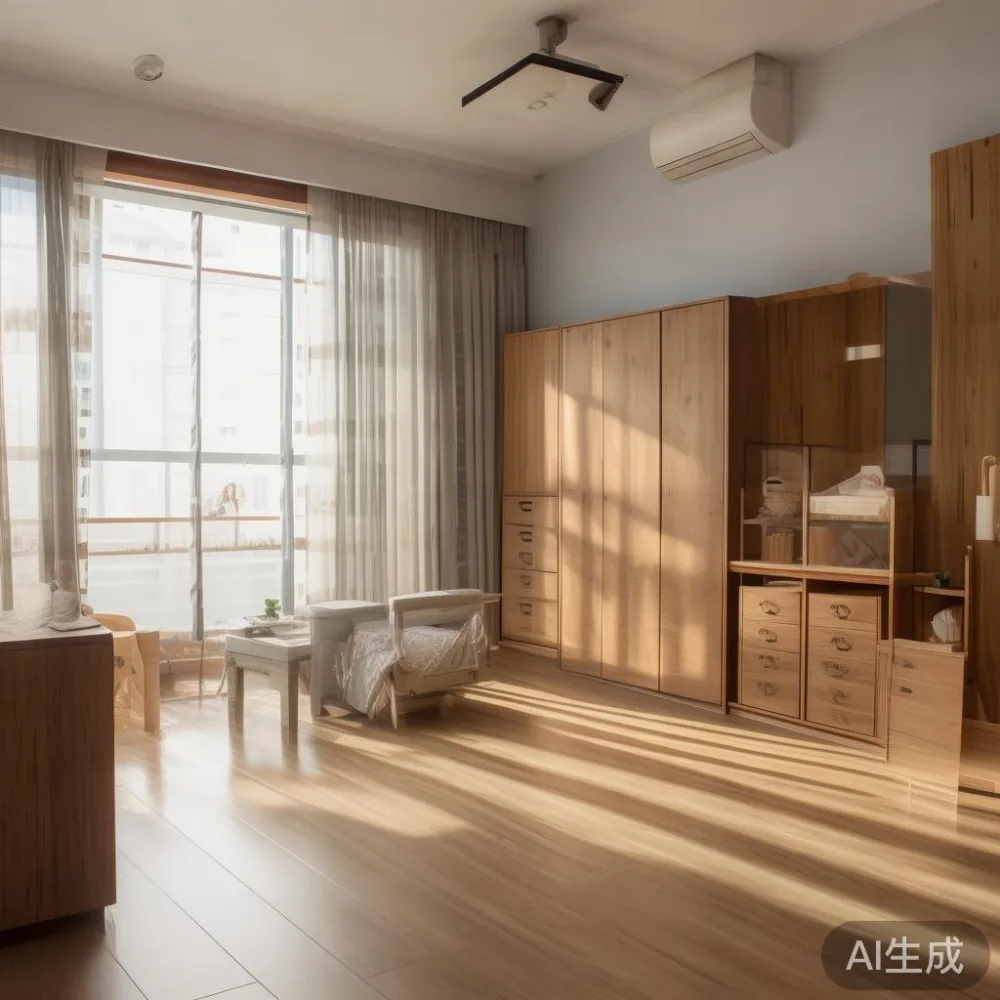
This comparison focuses on children’s furniture in HDB flats and condos across Tampines, Bedok, and Punggol. I tested the practical differences with measurements, weights, prices, and Singapore conditions in mind. The figures below are planning estimates in SGD, including GST where stated, rather than quotations for every plan.
What Is the 5-Year Cost Difference in a Kids Room?
For a typical children’s setup, assume one 120 cm bed frame, one 60 cm nightstand, and one 90 cm wardrobe. A veneer set might cost SGD 1,280 before delivery, while the comparable solid wood set might cost SGD 1,880. Over five years, however, the veneer set can require SGD 340 in repairs and replacement parts, while the solid wood set may need only SGD 120. That produces a five-year cost of SGD 1,620 for veneer and SGD 2,000 for solid wood: a difference of SGD 380, or 23% of the initial veneer price.
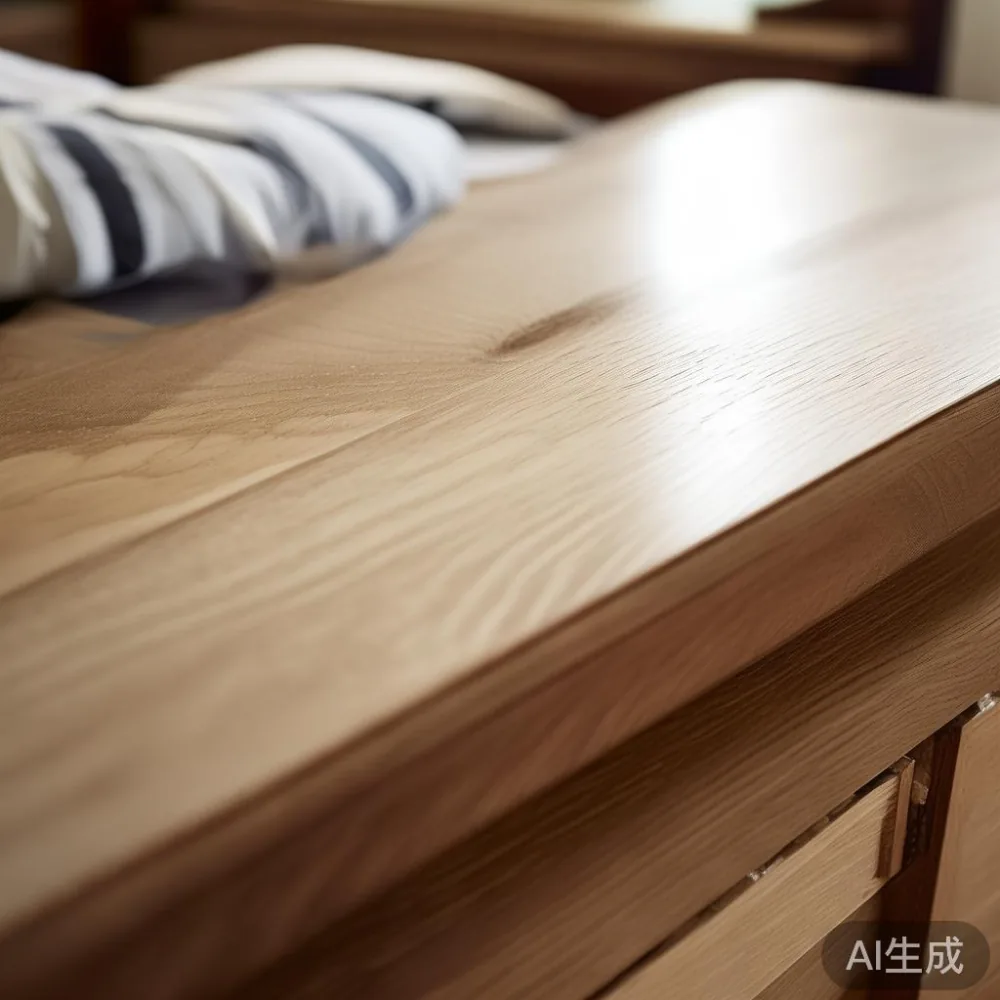
The calculation is not automatic. A low-cost veneer wardrobe damaged near the floor could cost SGD 180 to replace a panel. Solid wood may scratch more visibly, but a small repair can cost SGD 40. Add delivery, GST, and the price of the child’s later furniture, and the result changes.
Here is the working model:
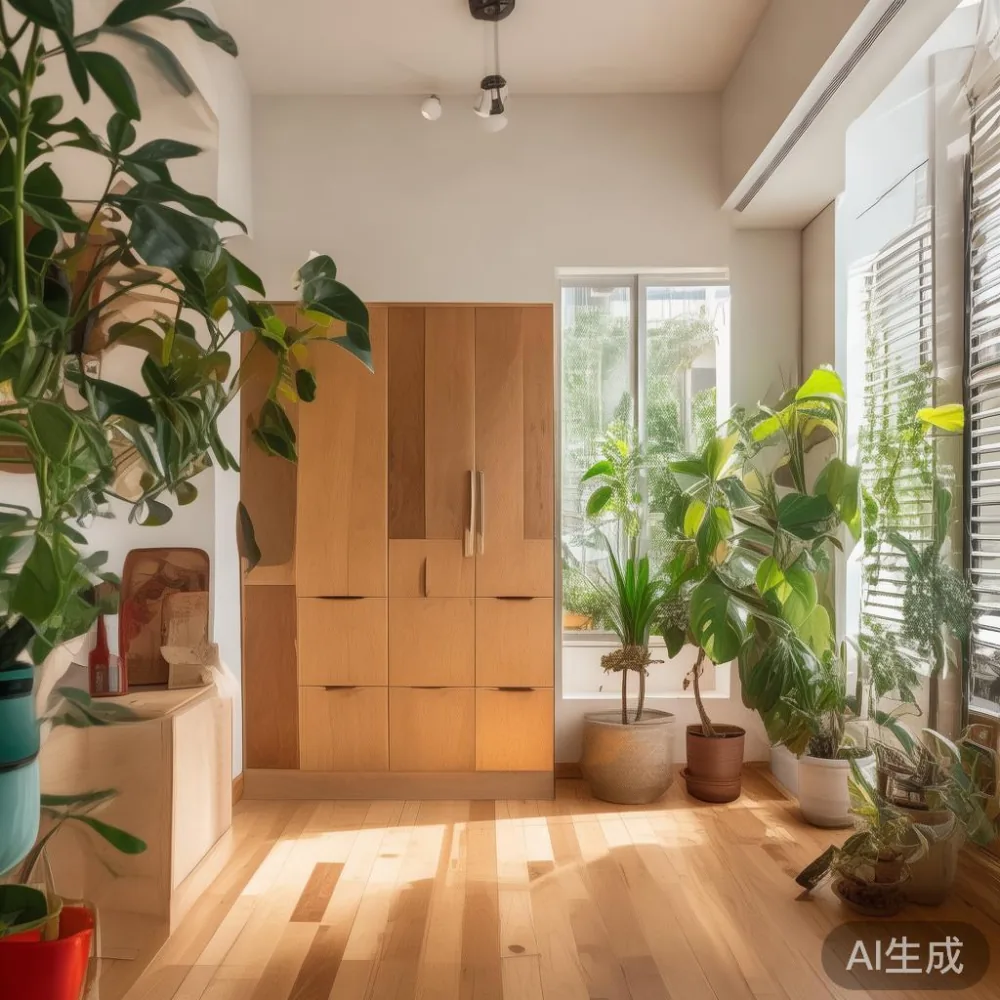
- Initial furniture: veneer SGD 1,280; solid wood SGD 1,880.
- Repairs over 5 years: veneer SGD 340; solid wood SGD 120.
- Delivery: SGD 60 for either set in a Singapore HDB flat, with lift or corridor access included.
- GST: 9%, already included in the displayed planning prices.
- Replacement after 5 years: excluded because the wardrobe and bed would be replaced as part of moving to a larger room.
This model treats the bed frame, wardrobe, and nightstand as one project. A dining table or marble table belongs in a different room and should not be mixed into a kids-room budget. Likewise, a solid wood sofa is a living-room product, not part of this comparison.
How Do Veneer and Solid Wood Behave in Singapore’s Humidity?
Singapore’s relative humidity commonly ranges around 65% to 85%, especially during the wetter months. That makes edge banding, panel stability, and finish maintenance more important than a material label alone. Veneer is real wood, usually 0.6 mm to 1.2 mm thick, bonded to a plywood or particle-board core. Solid wood sections may be about 18 mm to 25 mm thick.
The thinner veneer face can chip or peel at an exposed edge. A typical 18 mm side panel can swell by roughly 1% under prolonged damp conditions, around 0.6 mm across its width. The movement is small, but repeated contact with a humid wall or an unsecured skirting board can expose the core.
Solid wood also moves with humidity. It may expand by 1% to 2% across the grain over a seasonal cycle, so a 120 cm bed frame might change by 1.2 cm to 2.4 cm in width. A manufacturer should therefore avoid trapping a solid wood frame tightly against a wall.
Last month I visited a family in Tampines with a 3-year-old and examined a veneered nightstand that had been beside an open window. The top had lifted by about 2 mm along one rear corner after 14 months. A solid wood nightstand in the same flat had a less dramatic finish issue: a 7 cm scratch caused by a toy car. The veneer repair was quoted at SGD 95 because the edge band had separated. The solid wood repair was SGD 35 after sanding and refinishing. Neither piece had warped through its 120 cm width.
That visit illustrates the difference: veneer does not necessarily fail, and solid wood does not remain untouched. The more practical question is which damage is easier and cheaper to repair. Sanding a solid wood surface can usually be blended more discreetly. Veneer requires the correct veneer leaf, adhesive, and press, so a local repair may cost more than the panel itself.
How Much Do Delivery and Building Access Change the Price?
For Singapore homes, delivery is often a larger variable than shoppers expect. A standard HDB lift may have a door width of about 90 cm and a car lift depth of 130 cm to 140 cm. A flat-pack package can pass through even when the assembled cabinet cannot. A 180 cm wardrobe may need to enter through a 75 cm bathroom door, turn along a 110 cm corridor, and pivot inside a bedroom with 85 cm of clearance beside the bed.
Veneer furniture is commonly shipped flat, which reduces freight damage and allows a courier to use a standard van. A 150 cm flat pack may weigh 28 kg, compared with 54 kg for the same wardrobe in solid wood. Delivery may take 7 to 12 working days for a local stock order and 18 to 30 working days for a made-to-order piece. A made-to-order solid wood wardrobe may take 35 to 50 days.
Here is a realistic Singapore delivery comparison for the three-piece set:
- Veneer: SGD 60 standard lift delivery, 7 to 12 working days.
- Solid wood: SGD 90 two-person delivery, 10 to 18 working days.
- White-glove placement: SGD 140 to SGD 220 for either material when the item must be carried up stairs or assembled in the room.
In a Punggol condo with a 1.05 m private lift and a 1.20 m bedroom doorway, the larger solid wood pieces are manageable, but turning space still matters. In an older Bedok flat with a 70 cm corridor and no frontage load-in, flat-pack veneer may be easier. If a wardrobe cannot be carried through, a local carpenter may charge SGD 120 to dismantle it and SGD 160 to reassemble it, effectively adding more than the original delivery fee.
GST should be read carefully. Singapore charges 9% GST on taxable furniture sales, and a displayed price can either include it or add it at checkout. Comparing SGD 1,280 with SGD 1,880 is only fair if both figures include GST.
What Repair and Replacement Costs Can Appear Over 5 Years?
Children create predictable wear: drawers are pulled with toys inside, bed rails are climbed, wardrobe doors are slammed, and small chairs scrape the nightstand. Veneer often shows wear first at corners, drawer edges, and the top rail of a bed. Solid wood often shows scratches, dents, and chipped edges, while veneer’s paper-thin face can tear where the substrate is exposed.
A practical five-year allowance for this model is:
- Veneer: SGD 95 for one drawer edge repair, SGD 85 for a bed rail touch-up, SGD 60 for a nightstand corner, and SGD 100 for an unexpected wardrobe panel replacement.
- Solid wood: SGD 40 for furniture scratch filling, SGD 30 for nightstand sanding and refinishing, and SGD 50 for a bed touch-up.
The cost can change if a parent places an open laundry basket beside the wardrobe. A water leak may ruin an 18 mm particle-board panel while only darkening the edge of a solid wood rail. Conversely, a hot cup can create a raised bubble in a lacquered veneer surface that cannot be sanded flat without exposing a new layer.
Finishing schedules matter too. A water-based lacquer may need a light refresh every 24 to 36 months in a humid room. A solvent-based finish may last longer but can show chips differently. Ask the supplier for the exact coating, expected maintenance interval, and repair method. A 10-year structural warranty can cover frame failure, but it does not automatically cover accidental scratches or moisture damage.
Is Solid Wood or Veneer the Better 5-Year Value for a Kids Room?
Solid wood generally offers the stronger five-year economics when the furniture stays in the room and receives reasonable care. The modelled difference is SGD 380 across the three-piece set. That equals SGD 76 per year, enough to cover a mattress protector, two replacement drawer pulls, or part of the next bed.
Veneer can still make financial sense under specific conditions: the budget is fixed at under SGD 1,500 including GST, the furniture will be moved within 2 years, or the pieces will remain lightly used. It is also practical where corridor access is narrow and flat-pack dimensions are important.
Solid wood is not automatically heavier or stronger in every design. A well-engineered solid wood bed frame with corner bracing may outperform a loosely assembled veneered frame. Review joints, drawer construction, wall clearance, and replacement-part availability before deciding.
For a family starting with a nursery, a lower-cost setup may be sensible if the child will move to a larger bed at age 5 or 6. For a child aged 6 to 11, solid wood usually absorbs the period of daily use with fewer invasive repairs. Children do not need every piece to survive a university move; they need furniture that remains stable, repairable, and comfortable during this stage.
How Do You Style Solid Wood in a Light Luxury Kids Room?
French light luxury suits a kids room without making it look formal. Use a pale solid wood bed with simple moulding, a cream wall, and one muted blue or sage textile. Keep hardware in brushed brass or warm nickel, but use 12 cm knobs or 10 cm pulls that are easy for small hands to grip. A rounded nightstand with a 50 cm top gives space for a book and a 15 cm table lamp.
For the wardrobe, an 80 cm to 100 cm unit may be more useful than an oversized 180 cm model in a compact HDB bedroom. Leave at least 60 cm in front of the doors for an open door and a child standing beside it. In a 2.8 m by 3.2 m room, a 120 cm bed against the longest wall can leave a 95 cm circulation route if the bed frame’s total width is no more than 130 cm.
If the question is how to style light luxury wardrobe in bedroom, use matching frames, limited colours, and functional lighting. A 2700K LED strip beneath the top shelf is kinder to bedtime routines than a cool ceiling spotlight. For how to choose European light luxury bed, check that the headboard is securely fixed, the rail gap is below 90 mm to reduce entrapment gaps, and the finish is water-based.
The wider design language can overlap with American light luxury, post-modern light luxury, and Mid-century modern details. A post-modern light luxury wardrobe might pair warm oak with clean inset handles. Mid-century shapes can appear in tapered legs and rounded corners, but the priority remains safety and durability.
For practical guidance, how to choose French provincial wardrobe means checking drawer slides, door stops, and the depth needed for hanging clothes. For how to choose French provincial bed, confirm the mattress size, rail height, and anchor points. For how to choose Mid-century modern bed, inspect leg joints and avoid extremely narrow legs where children climb. If you are researching how to choose European light luxury bed, compare the actual timber species and construction rather than relying on a style label.
How Does Refinishing Affect the 5-Year Calculation?
One advantage of solid wood is that superficial damage can often be removed. A nightstand with a 12 cm scuff may need 2 to 3 hours of sanding, one coat of finish, and 24 hours of curing. The cost may be SGD 35 to SGD 80 when done locally. Veneer cannot be restored in the same way if the face layer is gone; a complete replacement sheet can take 4 to 7 days to source.
MIDHILL provides lifetime refinishing for qualifying furniture, so buyers should confirm what the service includes and whether collection is charged. A free refinishing service that requires a 14-day turnaround still has a timing cost: the child may use a temporary table for 2 weeks. A local refinisher may return the piece in 5 days but charge SGD 120 in labour and materials.
MIDHILL also offers a 10-year structural warranty, free shipping over US$350, and 14-day returns. For a Singapore order, check the equivalent threshold in SGD, the local delivery quote, and whether the return process includes pickup. These services can reduce the risk of a poor purchase, but they do not erase damage caused by moisture or misuse.
Before ordering, use this 60-point checklist:
- Measure the bedroom door, lift, corridor turns, and delivery path.
- Confirm external dimensions, including rails that extend beyond the mattress.
- Ask for the core material, veneer thickness, timber species, and finish name.
- Compare prices with 9% GST included.
- Review drawer load ratings, hinge types, and replacement-part costs.
- Check whether scratches, edge chipping, and finish peeling are covered.
- Arrange anchor points for a wardrobe taller than 150 cm.
- Ask how refinishing, returns, and warranty claims work in Singapore.
On the model used here, solid wood starts at SGD 1,880 and reaches roughly SGD 2,090 over five years after delivery and repairs. Veneer starts at SGD 1,280 and reaches about SGD 1,680. Solid wood costs SGD 400 more initially but becomes about SGD 410 cheaper over the period. In this setting, that is the clearest financial argument: pay for the material and construction once, then keep the furniture in service through a demanding stage of family life.