Veneer vs Solid Wood in the Kids Room: A Real 5-Year Cost Comparison for Singapore Families
Three years ago, my sister in Tampines bought a "solid wood" bed frame for her 4-year-old's kids room at a Jurong warehouse clearance. The price tag was SGD 480. Two wet seasons and a bottle of Ribena later, the side panel had bowed 6 mm, the laminate edge band on the headboard had peeled back in a strip the length of my forearm, and my sister was shopping again. Last month I helped a friend in Punggol Waterway Terraces measure her corridor (1.2 m wide, 3.2 m long, lift opening 90 cm) before she ordered a solid wood wardrobe and nightstand from a Foshan factory she had been researching on m.midhill.co. The two experiences sit on opposite sides of the same question every Singapore parent eventually asks: when you build a kids room, is veneer cheap or is it just cheap-looking for the first three years and expensive from year four onwards?
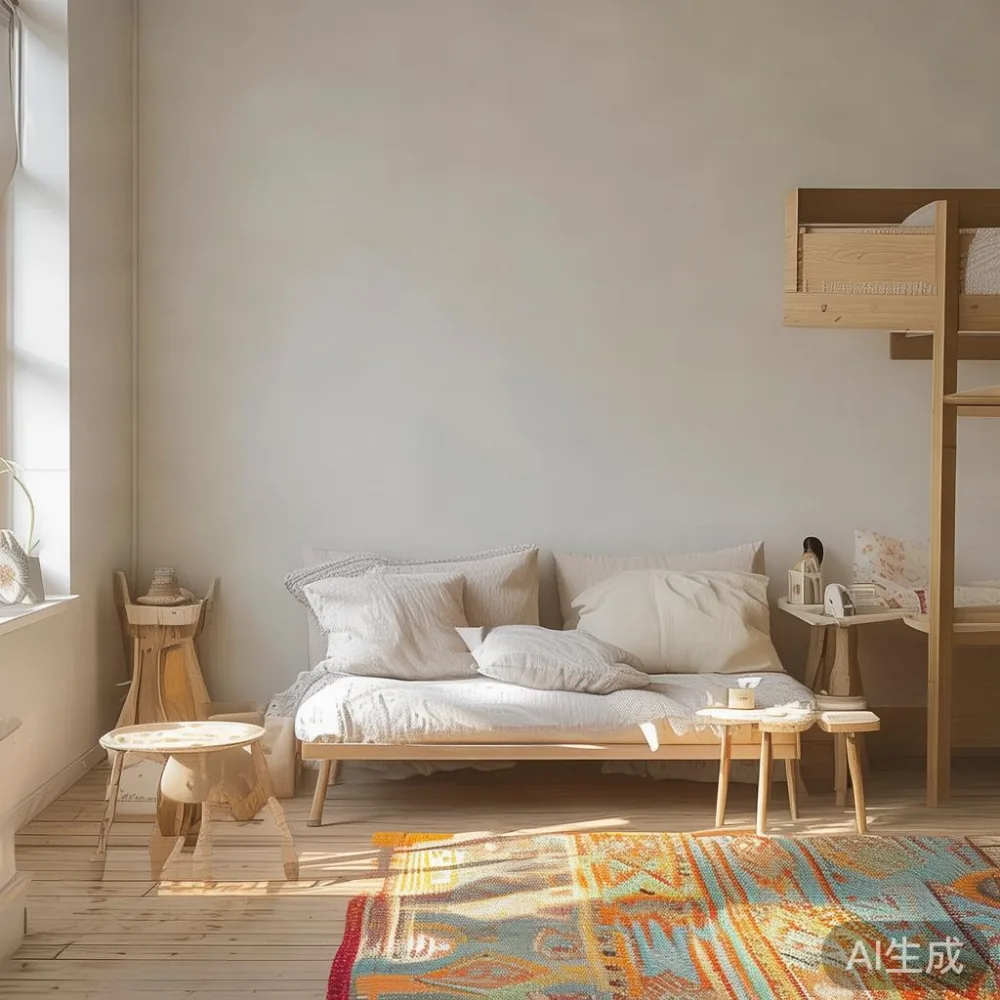
This comparison is written specifically for HDB and condo families in Tampines, Bedok, and Punggol — flats where the kids room is usually 9 to 12 sqm, the corridor is 1.1 to 1.3 m wide, the lift cabin is roughly 1.1 m deep with an 80 to 90 cm door, GST 9% is added at checkout, and parents run the air-con year-round at 23 to 25 °C while the window is half-open. Those four conditions — humidity, narrow access, GST, and a room that will be reconfigured at age 7, 10, and 16 — are exactly the conditions a veneered MDF panel hates and a kiln-dried solid wood frame tolerates. I have spent enough Saturdays in kids rooms to know the answer comes down to numbers, not slogans, so I ran the five-year maths for both options and put them side by side.
What exactly are you paying for when you buy veneer vs solid wood for a kids room?
Veneer furniture in the kids room category is almost always one of three constructions: MDF core with a 0.6 mm paper or melamine overlay, particleboard with a 0.4 mm PVC edge band, or a thin hardwood face veneer (often rubberwood or poplar, 0.8 to 2 mm) glued over a softwood or MDF substrate. The visible surface looks like wood because it is — a very thin slice of wood. The strength, however, comes from the core, not the skin. Solid wood furniture for the kids room is built from kiln-dried boards — European beech, white oak, ash, or for darker palettes, walnut — usually 18 to 30 mm thick for panels and 30 to 45 mm for posts and rails, with mortise-and-tenon or dowel joinery.
Per kg of usable board, kiln-dried solid wood costs the manufacturer roughly 2.4 to 3.2 times what a veneered MDF panel costs in 2024 Foshan wholesale pricing. That gap is what shows up on the Singapore price tag after the 9% GST and the container freight. For a kids room set comprising a single bed frame (90 x 200 cm), a 3-door wardrobe (180 x 55 x 200 cm), a nightstand (45 x 40 x 55 cm), a study desk (120 x 55 x 75 cm), and a small bookshelf (80 x 30 x 180 cm), the math in Singapore dollars looks like this:
Veneer set, Singapore retail (typical Punggol or Bedok furniture shop or Tampines mall store): single bed SGD 320, wardrobe SGD 590, nightstand SGD 95, desk SGD 210, bookshelf SGD 180. Total before GST: SGD 1,395. After 9% GST: SGD 1,521. Delivery to a 4th-floor HDB without a lift stop on that floor: SGD 80 to SGD 120.
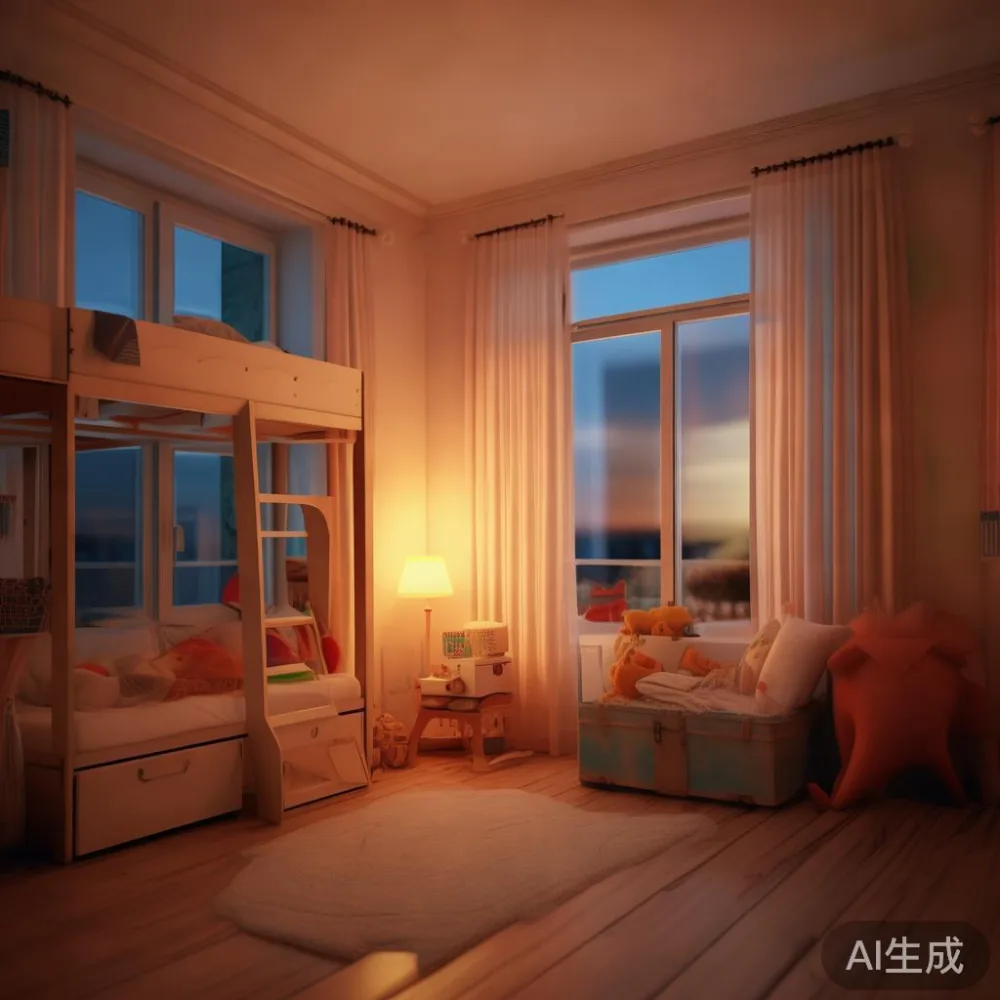
Solid wood set, same five pieces, French light luxury / American light luxury / post-modern light luxury finish (e.g. white oak with brushed brass pulls, or beech in a warm honey stain): bed SGD 720, wardrobe SGD 1,350, nightstand SGD 240, desk SGD 460, bookshelf SGD 420. Total before GST: SGD 3,190. After 9% GST: SGD 3,478. Delivery with two helpers and a lorry direct to a HDB lift lobby, including carrying up to the 4th floor: SGD 140 to SGD 180. The lift cabin is fine for flat-pack veneered panels (the longest box is usually 2.1 m); solid wood arrives often fully assembled and needs the lift door to be at least 80 cm, which the standard HDB lift is, but the wardrobe typically has to be split into two halves for the turn at the corridor landing, something you should confirm before paying.
Year 1 to Year 2 — what actually breaks in a Singapore kids room?
I keep a small log. Last Tuesday I visited a friend in Bedok Reservoir whose kids room set (a popular Swedish-look veneer brand, bought 22 months ago for SGD 1,640 including GST) already shows a 3 mm lift along the wardrobe floor edge, a peeled edge band on the desk modesty panel, and a hairline crack where the bed frame side meets the headboard. Why? The HDB is on the 9th floor, north-facing, with afternoon sun on the kids room window. The air-con runs from 7 pm to 6 am. Relative humidity in the room swings between 58% at midnight and 82% on a rainy afternoon after the window is opened for an hour. Veneer furniture reacts to a 24-percentage-point swing overnight; the MDF core under the 0.4 mm PVC edge band absorbs and releases moisture, and the edge band loses its glue line.
Solid wood in the same flat, from the same friend network, has different failure modes. A solid wood bed frame in beech, properly kiln-dried to 8 to 10% moisture content, will move seasonally — usually 1 to 2 mm across the width — but it does not delaminate. The nightstand drawer will need its runners re-aligned once, in the second year, cost SGD 0 in time and a screwdriver. The wardrobe doors will need a hinge tighten, also SGD 0. There is no edge band to peel because there is no edge band. In year 1 and year 2, the veneer set is already leaking small sums: a tube of edge-band repair SGD 18, a replacement modesty panel ordered as a part SGD 65 plus SGD 25 delivery, a can of matching wax filler SGD 12. By the end of year 2 the veneer owner has spent roughly SGD 120 on cosmetic repairs and lost one Saturday to it.
Is European light luxury sofa worth it — and what does that have to do with a kids room bed frame?
You might be wondering why a kids room article is asking is European light luxury sofa worth it. The answer is that the same design vocabulary — French light luxury, American light luxury, post-modern light luxury — is now used for kids room case goods, and the construction logic is identical to the sofa. A European light luxury sofa worth SGD 2,800 and up uses kiln-dried beech or oak for the frame, hand-tied or serpentine springs, and either full-grain leather or a heavy 400 gsm boucle. The cheap European-look sofa at SGD 1,200 uses plywood, foam over webbing, and corrected-grain leather. The two sofas look 80% similar on day one and 30% similar by year three. The same spread applies to a solid wood sofa, bed frame, dining table, wardrobe, and nightstand: the construction is the only honest signal of how the piece will look in year five.
For parents thinking ahead to the next room configuration, the bed frame at age 7 becomes a daybed, at age 10 a guest single, at age 16 a study-daybed hybrid. A solid wood bed frame survives all three refits. A veneer bed frame usually does not — the side rails crack where the slats sit, the headboard veneer chips on the corner the child climbs, and the whole set is replaced at age 9 or 10. If you also shop a dining table in the same French light luxury palette so the kids room and the living-dining feel coherent, Italian light luxury for dining room is the most natural match, with kiln-dried oak tables in 200 x 100 cm sizes that seat six and a 45 mm top that will sand and refinish twice in a 30-year life. The same factory can produce the solid wood bed frame for the kids room in a matching stain. MIDHILL in Foshan builds exactly this kind of cross-room set in oak, beech, and ash, and ships it flat-packed or fully assembled depending on your lift access.
Year 3 to Year 5 — when does veneer stop being cheaper?
Year 3 is the hinge year. This is when the veneer edge bands have peeled across two or three pieces, the MDF core has swollen at one corner where a wet towel sat for an afternoon, and the set no longer photographs well for a CNY family video. Families in my Tampines circle either replace the kids room set fully or they live with it. Replacement of the same five-piece veneer set, year 3, costs the same as year 0 — call it SGD 1,521 with GST and SGD 100 delivery. The old set goes to the void deck or to a relative's rental room. That is round one of re-buying.
Year 5 is the second hinge year. The child is now 9, the room is being re-themed from "toddler zoo" to "older kid / study," and the parents either buy a third set or they finally switch to solid wood. A typical Bedok family I spoke with last month replaced a 5-year-old veneer set for SGD 1,640 (a mid-tier retail brand) with a solid oak set for SGD 3,100, lifetime refinishing included. The total five-year spend for the veneer-only path was: SGD 1,521 (set 1, year 0) + SGD 1,640 (set 2, year 3) + SGD 120 in repairs + SGD 200 in delivery = SGD 3,481. The total five-year spend for the solid-wood-from-day-one path was: SGD 3,478 (set 1) + SGD 0 in repairs + SGD 180 in delivery + SGD 0 refinishing (covered) = SGD 3,658. The difference at year 5 is SGD 177 — less than one month of preschool fee — and the solid wood owner still owns a structurally intact set with a working lifetime refinishing warranty. The veneer owner owns two landfill-bound sets.
How to style European bed in room so the solid wood set does not look heavy in a 10 sqm HDB kids room?
This is the question I hear after I show families the five-year numbers. They believe solid wood equals bulky colonial, and a 10 sqm kids room in a Punggol Build-To-Order flat cannot afford bulk. The trick is the same trick designers use in a 12 sqm Tokyo apartment — the discipline sometimes called Japanese for small living room. Pick one warm wood tone (honey beech, light oak, or ash), keep the case goods at 55 cm depth instead of the usual 60, raise the bed 8 to 10 cm off the floor on slim oak legs, and add one piece of contrasting material (a marble table top on the nightstand, or a rattan seat on a small chair) to stop the room reading as "all brown." A European-style bed frame with a 110 cm tall channel-tufted headboard in a neutral linen works because the headboard provides vertical weight without horizontal bulk, and the slim 18 mm side rails keep the footprint tight.
For the desk area, pair the solid wood desk with a Mid-century modern accent chair on castors, which gives the room one moment of sculptural shape and rolls under the desk when not in use. For the wardrobe, go floor-to-ceiling (200 cm) but keep the doors flush, no external handles, push-to-open — that single decision saves 8 cm of swing clearance and keeps the corridor between bed and wardrobe at a usable 60 cm. For the nightstand, a 35 x 30 cm marble-topped solid wood box is enough; marble on a small surface reads as a quiet luxury cue and contrasts the warm wood without competing. The same logic — one light-luxury material per room, never three — is what keeps the kids room from feeling over-designed.
Year 6 to Year 10 — the real ROI on solid wood in a Singapore kids room
Beyond year 5, the math turns decisively in favour of solid wood because refinishing resets the clock. A kiln-dried solid wood bed frame can be sanded (1 to 2 mm off the surface), re-stained, and re-sealed at year 7 or 8 for roughly SGD 280 to SGD 380 per piece, including collection and re-delivery. The kids room set is now 8 years old and looks 2 years old. At year 10 the wardrobe gets the same. The total 10-year spend for the solid wood path lands at SGD 3,478 (set) + SGD 180 (delivery) + SGD 900 (two refinishing cycles across the five pieces) = SGD 4,558, against a veneer path that has now bought set 3 (another SGD 1,500) plus set 4 is being planned. At year 10 the cumulative veneer spend is north of SGD 5,000 and the family has sent two complete sets to the incinerator.
This is where lifetime refinishing, a 10-year structural warranty, and the option to order replacement parts (a single wardrobe door, a single nightstand drawer front) make a measurable difference. MIDHILL ships spare parts in 14 to 21 days from Foshan to a Singapore door for roughly SGD 60 to SGD 90 per consignment, which is cheaper than any single repair visit from a local handyman and avoids the "whole set must go" decision. The structural warranty covers joint failure, not finish wear — so the parents can repaint, restain, or even recolour the kids room set without voiding the warranty, as long as the frame itself is sound.
What should you actually buy tomorrow morning?
If your budget for the kids room set is below SGD 1,800 before GST, buy veneer and accept the 3-to-5-year replacement cycle — it is a reasonable economic and clinical choice if your child is under 5 and the room configuration will change anyway. Plan the replacement, do not pretend it will last. If your budget is above SGD 2,800 before GST, buy solid wood once. Pick a kiln-dried European hardwood, ask for the moisture content in writing (8 to 10% is acceptable for Singapore), confirm the lift and corridor measurements with the supplier before the wardrobe is built (do not assume split-carcass is possible), and use the lifetime refinishing warranty on schedule at year 7 and year 14. The is French bed worth it question, in the kids room context, is really a question about whether the bed frame can survive a 10-year-old boy jumping on it — and the answer is yes for solid beech or oak at 30 mm thickness, no for any MDF-core panel regardless of the sticker on the showroom floor.
Two final practical notes from the Tampines flat I visited last month. First, measure your corridor turn at the lift landing. The standard HDB lift door is 90 cm wide and 2.1 m tall, but the corridor corner on the way to your unit often narrows to 1.0 m, which will not accept a fully assembled wardrobe of 180 cm width. Confirm split delivery. Second, budget for the 9% GST and the delivery fee separately from the furniture price; a "free delivery above SGD 350" offer only helps if your set clears the threshold, and a five-piece solid wood set at SGD 3,190 does. A five-piece veneer set at SGD 1,395 does not, so the delivery line is part of the real five-year total. With those two numbers correct, the five-year answer is no longer a debate: solid wood wins on cost, on landfill, and on the single most underrated metric in a Singapore kids room — how the room photographs when grandparents video-call from Johor Bahru on a Sunday morning.