How to Match Kids Room Furniture to a Warm Minimal Interior in Your HDB or Condo
I still remember walking through a 93 sqm Punggol HDB with my cousin last month. She had just collected her BTO keys, the walls were a clean white, the floor was a pale oak laminate, and her two-year-old was already scribbling on the walls with a crayon she had found in the moving box. "I want it to feel warm," she told me, "but I don't want it to look messy." That sentence has stayed with me, because it captures the exact tension most Singapore parents feel when designing a kids room inside a compact HDB or a three-bedroom condo in Tampines or Bedok. You want warmth, but you also want order. You want personality, but you also want everything to fit through a 0.9 m wide corridor, go up a service lift that maxes out at 1,600 kg, and survive a 12-month-old who treats every drawer as a drum kit.
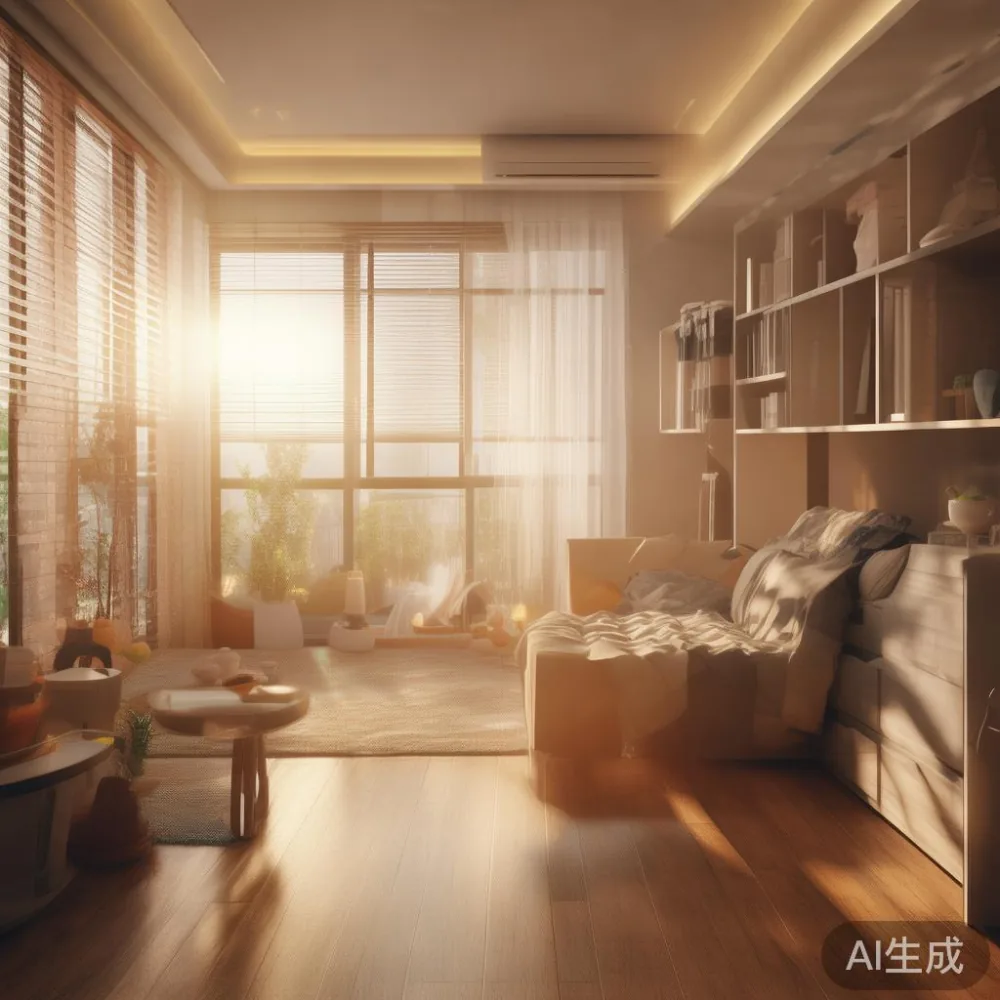
Warm minimalism is a deliberately quiet style. The bones are pared back: pale plaster, soft oak, brushed brass, the occasional slab of sintered stone. The warmth comes from texture, from the way natural light falls across a solid wood dining table in the morning, from a linen curtain that has been washed twenty times, from a child's drawing pinned to a corkboard instead of framed. The goal is a room that feels lived in but never cluttered, a room where a 1.2 m kids wardrobe, a 60 cm wide nightstand, and a small armchair can all coexist without fighting for attention.
This is also where American light luxury, a style I keep coming back to, becomes useful. The term refers to a softer, more residential take on luxury interiors: quality materials, generous proportions, restrained ornamentation, and a sense of quiet confidence. In a 4-room HDB, you cannot afford the scale of a 3 m sofa, but you can afford the sensibility. A solid wood bed frame in white oak, a marble-topped side table 45 cm in diameter, a velvet reading chair in rust. Three pieces, all with presence, none of them loud. That is the sweet spot.
Over the next few sections I will walk through the practical decisions you will need to make: scale, wood tones, upholstery, storage, and the small moves that make a kids room feel warm rather than sterile. I will keep the numbers concrete, because warm minimalism collapses fast when you buy a 2.4 m wardrobe for a 9 sqm bedroom and then wonder why the door no longer opens past 60 degrees.
What is the difference between Mid-century modern armchair and modern furniture?
The direct answer is this: a Mid-century modern armchair is one specific design movement from roughly 1945 to 1969, defined by organic curves, tapered wooden legs, and tight upholstery in wool or bouclé, whereas modern furniture is a much wider umbrella that includes Scandinavian, Japanese, Bauhaus, and contemporary pieces built on clean lines, functional forms, and unornamented surfaces.
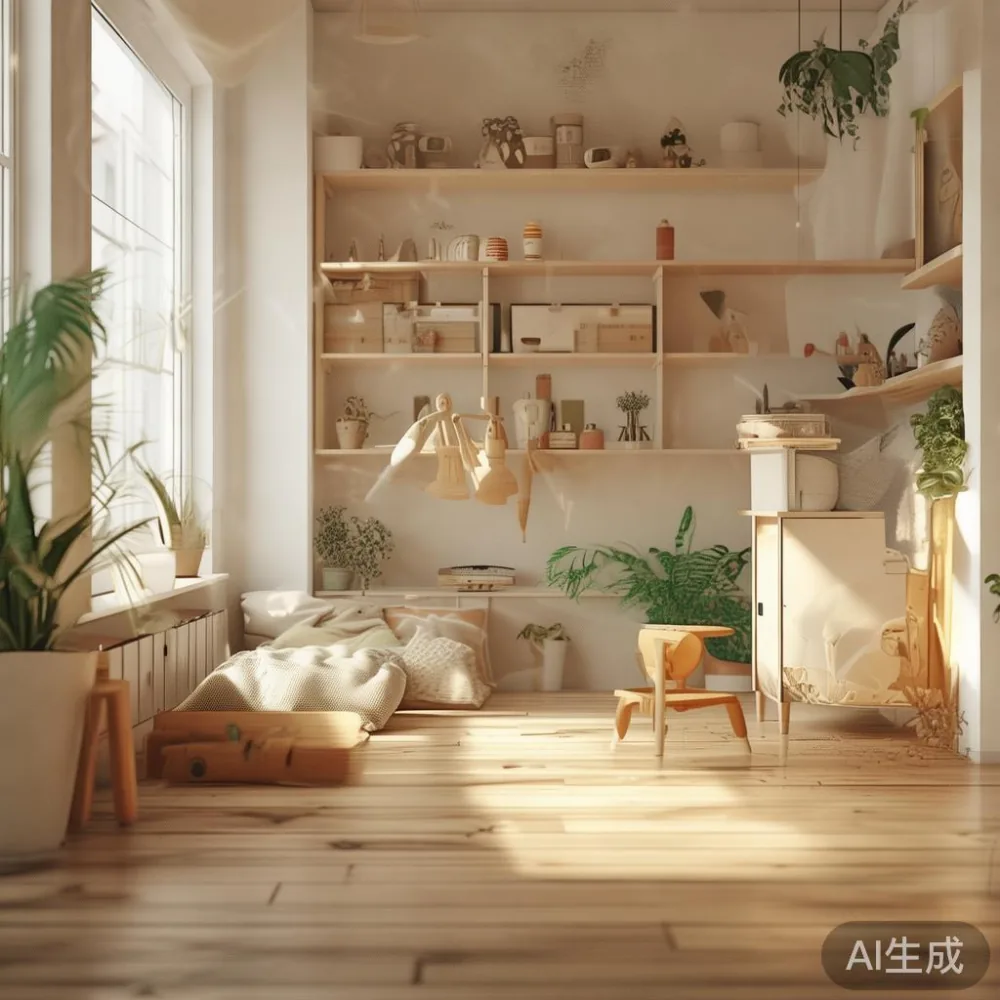
In a kids room setting, this distinction matters more than it sounds. A Mid-century armchair in moulded plywood with a 70 cm seat height will look deliberate beside a 60 cm wide nightstand and a low platform bed frame, because the whole composition is doing the same visual job: low, horizontal, warm. A generic modern armchair in chrome and black leather will read colder and taller, and will quietly pull the room toward a corporate aesthetic that most parents want to avoid. When I was helping my colleague source pieces for her daughter's room in a Yishun condo, she tried both. The Mid-century piece, a used Danish one she found for SGD 480, made the white walls glow. The chrome alternative, retail SGD 899, made the same walls feel like a clinic waiting room.
Both styles can work in a warm minimal interior, but they work in different ways. Mid-century gives you texture and history, which is why it pairs so well with solid oak and ash. General modern gives you restraint and crispness, which is why it pairs better with matte black hardware and sintered stone. Pick one family, then stay inside it.
How do you keep the palette warm without making the kids room feel beige?
Beige is the graveyard of warm minimalism. You walk into a hundred flats in Bedok and they all have the same cream sofa, the same beige curtains, the same honey-toned laminate, and none of them feel like anyone actually lives there. The fix is contrast within a narrow range.
Use a base of warm white or pale clay (think Farrow & Ball's Setting Plaster at around SGD 110 per 2.5 L tin), then introduce two darker anchors: a piece of solid wood furniture in smoked walnut or fumed oak, and one textile in a saturated earthy tone, such as terracotta, ochre, or olive. In a 10 sqm kids room this might mean a 90 cm wide changing table in walnut, a linen Roman blind in raw clay at SGD 65 per running metre, and a 120 cm by 150 cm wool rug in moss green at SGD 220. Three moves, three temperatures, no beige soup.
Wood tone is where most people slide into beige. Light oak on the floor plus light oak on the bed frame plus light oak on the wardrobe plus light oak on the dining table equals a room that looks like a single piece of timber. Vary the tone. If the floor is a pale European oak, push the bed frame toward a warmer honey ash and the wardrobe toward a cooler ash grey. The difference is 10 to 15 percent on a colour swatch, which is enough for the eye to register.
Marble is another quiet tool. A small marble table, 50 cm by 50 cm, on a brushed brass base, will cost around SGD 380 to 520 retail, and it will give the room a mineral anchor that breaks up all that wood. Keep it small. A 1.2 m marble slab in a 9 sqm kids room is a mistake the room cannot recover from.
Which furniture pieces actually earn their footprint in a small HDB kids room?
Footprint is the right word for it, because in a 4-room HDB the master bedroom is often 12 to 14 sqm, and the kids room, if you have one, is closer to 8 or 9 sqm. Every piece has to work twice as hard.
Here is what I would put in, and what I would leave out, for a child between two and eight years old in a typical Singapore room:
Solid wood bed frame, 120 cm by 200 cm, low platform style, in white oak or ash. This is your anchor. Expect to pay SGD 1,400 to 2,200 for a well-made one with mortise-and-tenon joinery and a 10-year structural warranty. Brands that ship from Foshan with proper kiln-drying tend to hold up better in our humidity than flat-pack alternatives, which is something I noticed when comparing a 28 kg import to a 41 kg import side by side in a Tampines showroom. The heavier one was clearly drier wood, and three years later the customers I spoke to still had no hairline cracks, which is the usual giveaway of poorly seasoned timber in our 28 to 32 degree climate.
A 90 cm wide three-drawer chest, also in solid wood, doubles as a changing station in the early years and as a toy drawer later. Plan SGD 850 to 1,400. The depth matters: 45 cm is the sweet spot, because anything deeper eats floor space and anything shallower cannot hold a folded stack of nappies or a stack of picture books.
A 60 cm wide nightstand, single drawer, open shelf below, in matching timber. SGD 320 to 520. The open shelf is where the bedtime basket goes: three books, a small torch, a soft toy. Keep the top clear apart from a lamp and a glass of water.
A wardrobe, ideally 120 cm to 150 cm wide, with two doors and one long hanging section plus three shelves. Skip the sliding doors if your corridor can accommodate a 1.5 m swing radius, because hinged doors give you better access in a narrow room. Solid wood wardrobes in the SGD 2,200 to 3,800 range will outlast any MDF alternative by a decade, and you can refinish them when your child outgrows the cream paint and wants forest green.
A solid wood dining table belongs in the living area, not the kids room, but a small 80 cm round oak table with a single drawer works beautifully as a homework station from age four onwards. SGD 480 to 750.
Skip the bookcase if the room is under 9 sqm. A single 30 cm deep wall shelf, 120 cm long, mounted 90 cm above the floor, holds far more than people expect and keeps the floor open for floor play. A child needs at least 2 sqm of clear floor in the first five years, which is non-negotiable for both crawling and LEGO.
How do you handle delivery, lift access, and the realities of corridor widths in HDB flats?
Every Singapore parent has heard a horror story about a wardrobe that did not fit the lift. The standard HDB passenger lift in a block built between 1990 and 2015 is 1.1 m wide by 1.4 m deep, with a door opening of about 0.9 m. Newer blocks, especially in Punggol and Sengkang, sometimes go up to 1.3 m by 1.7 m, which feels luxurious. Service lifts in private condos are usually 1.5 m by 2.0 m and rated to 1,600 kg or 2,000 kg.
Two practical rules. First, never order a flat-pack wardrobe taller than 210 cm if you live above the 12th floor in an older HDB, because the lift ceiling plus the diagonal of the panel gets tight. A 200 cm tall two-door wardrobe fits almost everywhere. Second, if you buy solid wood, factor in weight. A 180 cm by 60 cm by 200 cm solid oak wardrobe can weigh 95 to 130 kg. That is fine for a service lift, but it will not make it up a residential staircase, so plan your route before the truck arrives.
Delivery within mainland Singapore for a piece of furniture above SGD 350 is usually free, which is one of those quiet perks people forget to use. For two-piece orders, expect two to four working days. For custom dimensions, allow three to five weeks, plus a 9 percent GST on the landed price.
Always photograph the lift interior and the corridor turn before you confirm the order. A 90 degree turn into your front door with a 1.6 m wide wardrobe panel is the kind of geometry that ends in sanding down the doorframe at 9 pm.
Can warm minimalism survive a real child for more than six months?
Yes, but only if you stop trying to make the kids room a showroom and start treating it as a small workshop. The pieces should be wipeable, repairable, and re-finishable. Solid wood ticks all three boxes. A scuffed corner can be sanded in twenty minutes. A water ring disappears with a little oxalic acid. A colour that no longer fits can be re-lacquered in a single weekend, which is one of the underrated advantages of buying from a maker that offers lifetime refinishing rather than a one-off warranty.
Choose washable slipcovers for any upholstered armchair. A loose-wash linen cover in oat or stone at SGD 120 to 180 per piece will save you from permanent blueberry yoghurt stains and can be replaced cheaply when the colour no longer suits. Keep one corner of the room, roughly 1 m by 1 m, as a deliberately messy zone: a low basket, a foam mat, a couple of wooden crates. Warm minimalism works because the rest of the room is calm, and the calm only feels earned if the child has somewhere to be loud.
Lighting matters more than people think. One ceiling fixture is not enough. Layer a 3,000 K warm-white flush mount (around SGD 45) with a paper lantern on a brass hook (SGD 28) over the reading corner, and a small wall-mounted nightlight (SGD 18) near the floor for late bathroom trips. Three sources, all warm, none of them blue.
If you are starting from scratch, the budget for a complete kids room in a 9 sqm HDB room, including a solid wood bed frame, a three-drawer chest, a nightstand, a 120 cm wardrobe, a round oak table, and the lighting above, sits in the range of SGD 4,800 to 7,200. That is real money, but it is spread across fifteen to twenty years of use, which works out to roughly SGD 25 to 40 per month. A flat-pack alternative at half the price lasts four to six years, and you buy it twice. The math, like the style, quietly favours the better-made piece.
Where does light luxury actually show up in a warm minimal kids room?
The phrase gets thrown around, so it is worth pinning down. French light luxury leans into curved silhouettes, travertine, boucle, and brass. American light luxury is straighter, more architectural, with walnut, leather, and darker textiles. Post-modern light luxury, the newer hybrid, mixes both: a soft curved sofa with a chrome base, a marble table with a coloured vein, a vintage-looking armchair next to a piece of geometry-clean casework.
In a kids room, I would borrow from American light luxury because the lines are simpler and the silhouettes are child-proof. A low walnut daybed, a leather-wrapped pull handle on the wardrobe, a brushed brass hook row at 110 cm height for small jackets. One slab of marble on the nightstand is enough; the rest of the room should read as wood, linen, and paper.
If you want a single piece that anchors the whole scheme, consider a sintered stone top on a side table. Sintered stone is a porcelain-ceramic hybrid that resists stains, scratches, and heat up to 200 degrees, which is exactly what you want in a room where cups get knocked and crayons get sharpened. A 50 cm round table with a 12 mm sintered top on a solid oak base sits around SGD 520 to 760 and will look new in fifteen years. For anyone researching a Scandinavian sintered stone sofa guide, the same logic applies: pick a piece with a hard, cleanable surface and a quiet timber frame, and let the textile do the warmth.
MIDHILL, a Foshan-based maker that has shipped solid wood furniture to more than fifteen countries since 2008, works in exactly this register: clean lines, honest joinery, and the kind of finishes that take a re-stain rather than a replacement. I do not say that to plug a brand, I say it because the design language of their kids-room line, particularly the oak bed frames and the smaller case pieces, fits the warm minimal brief without forcing it.
What is the single best first purchase if you can only buy one piece this month?
Buy the bed frame, in solid white oak, 120 cm by 200 cm, low platform, with a 10-year structural warranty. It is the most expensive piece, but it is also the one you cannot fake. A good solid wood bed frame sets the visual rhythm for the rest of the room: low, horizontal, warm. Everything else, the nightstand, the chest, the wardrobe, the lighting, will quietly fall into line around it.
Measure twice, order once, photograph the lift, and keep the room warm enough that your child wants to be in it, and quiet enough that you do too.