What Actually Drives the Price of Solid Wood Furniture (Especially for a Kids Room)
Pricing a solid wood bed frame, dining table, or wardrobe looks simple on the surface: pick a style, pick a finish, pay the number on the tag. Anyone who has actually compared quotes in Tampines, Bedok, or Punggol quickly realises the spread between two "solid wood" pieces can be S$800 or more for what looks like the same product. After spending the last month visiting factories, showrooms, and three HDB flats where furniture was being delivered, I can tell you that the price gap has very little to do with the brand name on the label and almost everything to do with a handful of decisions made before the wood is even touched.

Why does solid wood cost more than veneer or engineered boards in the first place?
Solid wood is, by definition, one continuous piece of timber cut, dried, and shaped into a furniture component. A 180 cm bed frame slat in solid oak weighs around 4.2 kg; the same slat in plywood weighs about 2.1 kg and costs roughly 40% less at the raw-material stage. Multiply that difference across a king-sized bed frame (typically 12-15 slats plus side rails, a headboard, and a footboard) and you already see why a genuine solid wood bed frame starts at around S$1,400 in Singapore while a veneered MDF alternative can be had for S$550.
The price jump is not a markup for the sake of it. Kiln-dried hardwood loses about 8-12% of its weight in moisture over 6-10 weeks, and the kiln time itself costs energy. A factory drying 50 cubic metres of ash at once is paying for electricity, insurance, and the floor space to store it. That cost has to land somewhere, and it lands in the price you see on a quote sheet. This is one reason why a brand like MIDHILL, which kiln-dries its own timber in Foshan rather than buying pre-dried boards from a trading house, can publish a structural warranty of 10 years and still keep the bed frame under S$2,200 for most configurations.
How much of the price is the wood species versus the joinery?
Species matters, but less than most buyers assume. Rubberwood, the workhorse of Southeast Asian furniture, runs at roughly S$600-900 per cubic metre dried. White oak, by contrast, lands at S$2,400-3,200 per cubic metre for FAS grade. On a 1.8 m dining table using about 0.18 cubic metres of timber, the species choice alone moves the material cost by S$300-400. That is meaningful, but it is rarely the biggest line item.
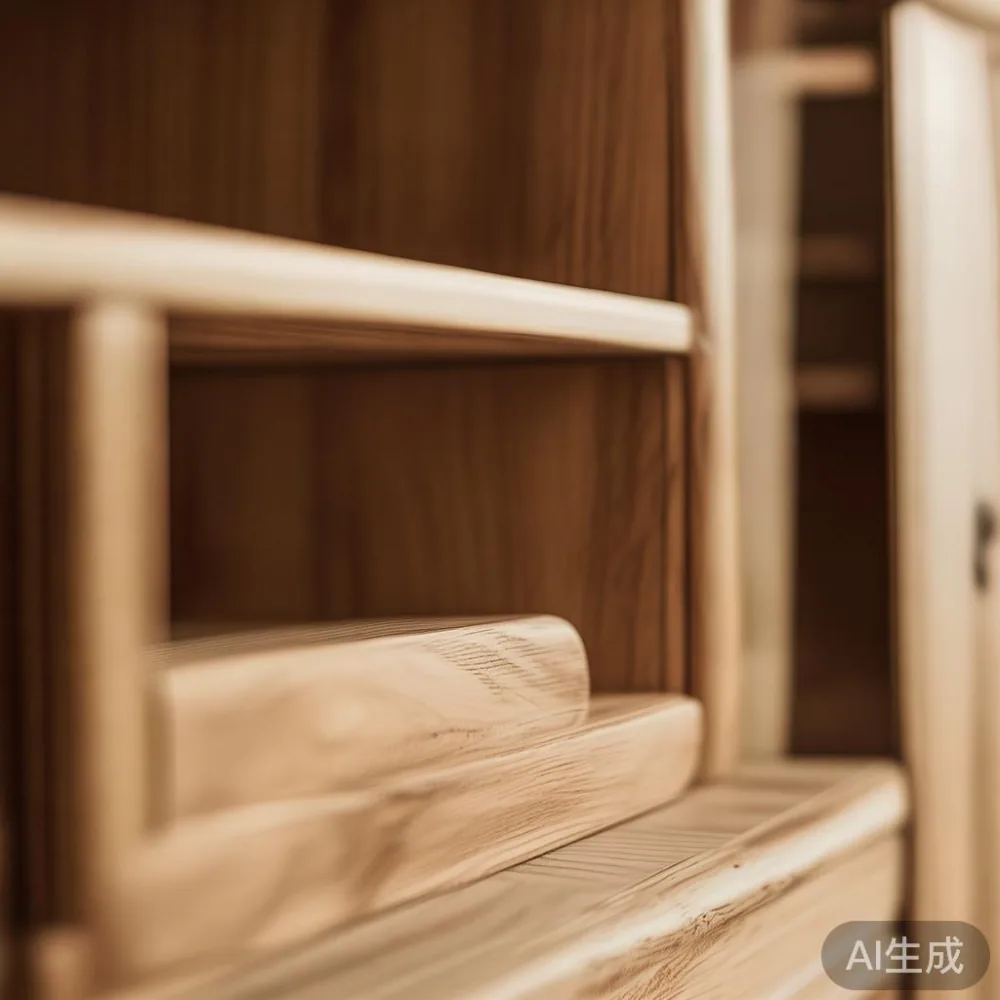
The bigger lever is joinery. A solid wood dining table joined with pocket screws and glue can be assembled in 25 minutes on a factory line; the same table joined with mortise-and-tenon, dowels, and corner blocks takes closer to 90 minutes. The labour difference is real, the jigging is more expensive, and the finished product will outlast a screw-and-glue table by decades. When I visited a Bedok condo last month, the owner showed me a 14-year-old rubberwood dining table held together with hidden brackets: every joint had loosened, the top had cupped 4 mm, and the table now wobbled at full length. The replacement she ordered was a mortise-and-tenon white oak piece at S$2,650, almost three times the original ticket, and she was comfortable with that because she understood the joinery line on the spec sheet.

Does the finish and the finish count really move the needle that much?
Yes, quietly. A two-coat sprayed lacquer finish on a 2 m wardrobe exterior uses about 1.4 litres of finish and adds roughly S$90 in material cost; a hand-rubbed oil-and-wax finish on the same wardrobe uses 0.6 litres of oil and 0.4 kg of paste wax, lands at about S$55 in material, but adds around 4 hours of artisan labour per panel. At Singapore workshop rates, that labour line alone is S$80-120 per panel. Over a three-door wardrobe, the finish choice swings the final price by S$350-500.
Buyers also pay for finish count, which is the number of separate coats applied. A three-coat open-pore finish that lets the grain breathe is different from a seven-coat high-gloss piano finish that requires sanding between every coat and a dedicated dust-free spray booth. The piano finish is what you see on post-modern light luxury display cabinets and on marble topped dining tables where the wood edge is meant to disappear into the surface. It is also what you pay for when a bedside nightstand lists at S$780 rather than S$420 for the same shape in matte lacquer.
What role does shipping and access play in the final Singapore price?
More than people budget for. A standard HDB corridor in Singapore is 1.2 m wide, and the lift cab on most blocks is 1.5 m deep by 1.1 m wide with a 630 kg capacity. A solid wood king-sized bed frame in flat-pack form weighs 38-46 kg per box and arrives in four to five cartons. A fully assembled dining table for six, however, weighs 65-78 kg and may not fit through the lift at all if the table top is 1.8 m long. Delivery teams that have to hand-carry a fully assembled table up a 12th-storey corridor in Punggol will add a S$120-180 access surcharge, and that line item is now part of your "furniture price".
This is one area where buying from a factory direct exporter with a Singapore friendly logistics partner changes the math. MIDHILL, for example, ships flat-pack to a Singapore consolidator at no charge above US$350 (roughly S$475) and the local last-mile courier handles the lift and corridor in the base price. The GST line on the invoice is then calculated on the landed value, which for a S$2,000 dining table works out to about S$140 at the current 9% rate. Knowing which suppliers absorb the access fee and which ones add it after the fact is a real S$200 swing on a typical three-piece bedroom set.
How do light luxury aesthetics change what you are actually paying for?
Light luxury is a styling umbrella, not a materials category. French light luxury leans on curved cabriole legs, hand-carved aprons, and a bleached or whitewashed finish that highlights grain rather than hiding it. American light luxury is straighter, more horizontal, and tends to use thicker posts (typically 75-90 mm) with a darker walnut or smoked oak tone. Post modern light luxury mixes the two with marble table tops, brass tipped legs, and a slim 25-30 mm apron profile that looks delicate but actually requires very stable, very dry stock to machine.
The premium you pay for light luxury is mostly in the detailing and the surface prep, not in the wood species. A French provincial guest room chair in solid beech with a hand-carved backrest might cost S$540 because the carving takes 3 hours per chair, not because beech is an exotic timber. If you have ever asked whether is light luxury bed worth it, the honest answer is that the styling premium is real but the structural premium is small; you are paying for curves, carving, and a specific sheen, and those costs come from labour hours and finish steps rather than from the board foot price.
Is there a meaningful price difference between American, European, French provincial, Nordic, and Scandinavian builds?
Yes, and the differences show up in three places: leg profile, panel thickness, and hardware. American bed frames tend to use 90 x 90 mm posts, through tenons, and 22 mm thick side rails, which gives a heavier, more architectural feel. A Nordic for dining room table, by contrast, often uses 70 x 70 mm tapered legs with a 20 mm top and exposed finger joints at the corners. The American build uses more wood per piece; the Nordic build uses less wood but more accurate machining.
When you compare an American bed vs Nordic bed at the same width, the American piece usually weighs 8-12 kg more and costs S$200-350 more. A European bed vs French provincial bed comparison is similar: European tends toward clean shaker lines and a 20 mm top, while French provincial adds the curved headboard and the carved detailing we just discussed. For tight Singapore layouts, Scandinavian for small living room pieces is popular because the slimmer leg profile visually opens the floor, and many of those pieces are designed to flat-pack below 1.1 m to clear HDB lifts.
Are there hidden cost lines that show up only after the order is placed?
Several. The most common one is the "custom size" surcharge, which can be S$150-300 per piece if you ask for a 165 cm wardrobe rather than the standard 180 cm. The second is the hardware upgrade line: soft-close hinges cost S$18-25 per door over standard hinges, and a four-door wardrobe quietly adds S$80-100 to the bill. The third is the aftercare line, which is usually free with reputable brands but worth confirming in writing.
MIDHILL, for instance, includes a lifetime refinishing service on most seating and table tops and a 14-day return window for stock items, and those promises are written into the proforma invoice rather than buried in a terms page. If you are buying from a smaller workshop, ask whether refinishing is offered, what the turnaround time is, and whether the wood is sealed on all six sides of every panel (it should be). Unsealed panels cup within 18-24 months in air-conditioned Singapore flats, and that cup is not covered by any warranty.
How can a Singapore buyer sanity check a quote before paying a deposit?
Five steps, in order. First, ask for the timber species in the Latin name (Quercus alba for white oak, Hevea brasiliensis for rubberwood) and the kiln-dried moisture content, which should be 8-12% for Singapore. Second, ask for the joinery method in writing, with a photo of a sample joint. Third, ask for the finish type, the number of coats, and whether the panel backs are sealed. Fourth, confirm the flat-pack box dimensions and the assembled weight per piece, and compare those against your lift capacity and corridor turns. Fifth, ask for the warranty document and the aftercare contact, which for MIDHILL is reachable at midhillco@gmail.com for both warranty claims and refinishing bookings.
If the quote you are holding cannot answer those five questions clearly, the price you are looking at is not the price you will end up paying. The cheapest quote on paper often becomes the most expensive piece in the room once access fees, hardware upgrades, and a shortened warranty are added back in. The honest price of a solid wood bed frame, dining table, or wardrobe is the sum of species, joinery, finish, access, and aftercare, and a good Singapore quote lists all five on a single page rather than burying them in the small print.
Final thoughts on budgeting for a kids room that still has to grow with the child
A kids room is a stress test for any piece of solid wood furniture. Beds get jumped on, wardrobes get climbed, nightstands get dragged across laminate flooring. Budgeting for that reality means spending slightly more on joinery and slightly less on decorative finish, because the structural pieces need to outlast the styling preferences of a ten year old who will want a different look by fifteen. A S$1,800 solid wood bed frame in white oak with mortise-and-tenon joinery and a matte lacquer finish is a more rational purchase than a S$1,600 version in the same species with cheaper joinery and a glossier finish that will show every scratch.
For parents furnishing a kids room in Tampines, Bedok, or Punggol, the practical path is to choose one hero piece (usually the bed frame or the wardrobe), spend the structural budget there, and then fill the rest of the kids room with simpler pieces that can be replaced when taste changes. Ask for the warranty in writing, confirm the access plan with the delivery team, and keep the aftercare email where you can find it. The furniture that costs a little more up front is almost always the furniture that still looks right ten years later, which is the only honest measure of value in a kids room.