Warm Minimal Kids Room: How to Match Solid Wood Furniture in a Singapore HDB
Picture a Tampines 4-room HDB at 7.45 a.m. A parent sips kopi from a 350 ml mug, a 6-year-old drags a school bag past a slim solid wood bed frame, and a Shiba Inu named Tofu sleeps on a woven mat. The flat is 92 sqm, the corridor outside is 1.2 m wide, and the lift door measures 0.8 m by 2.1 m. Every piece that enters this home has to clear those numbers, survive a 32°C afternoon, and still look calm at night. That is the brief a warm minimal interior quietly demands from kids room furniture.
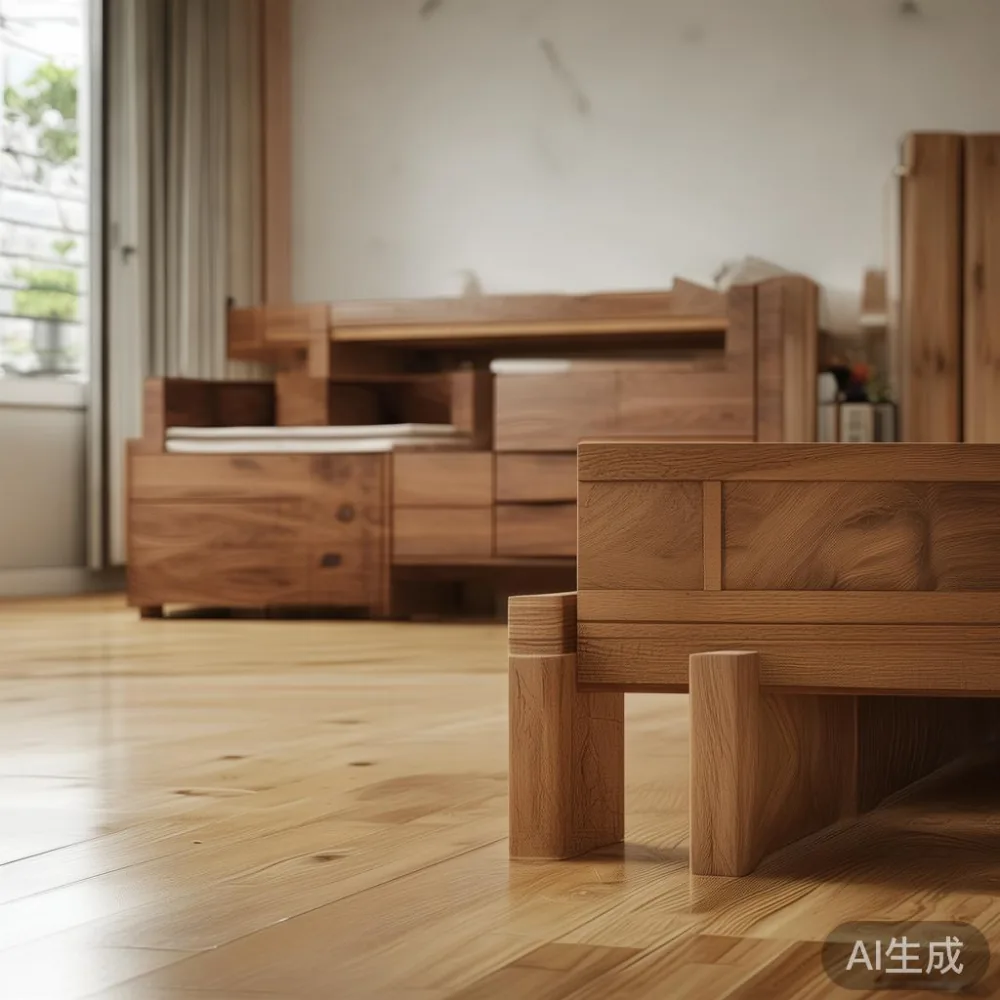
Last month I visited a 3-gen condo in Punggol with my colleague Aini, who is helping her sister furnish a 78 sqm three-bedroom. The kids room is 10.4 sqm, with a 2.4 m ceiling and a window facing the afternoon sun. We measured the existing wardrobe (180 cm tall, 60 cm deep) and decided to swap it for a slimmer 50 cm deep unit, gaining 10 cm of walking space. The dining table at home is a 140 cm by 80 cm solid wood piece, and we pulled the same oak tone into the kids room through the bed frame and a small nightstand. That single move tied three rooms together.
Warm minimal is not a fad from a design magazine. It is what happens when Singapore families try to keep a child-friendly home looking like an adult one, while still landing a 9% GST bill on imports and paying around SGD 60-90 for a single delivery up three floors without a service lift. The goal is restraint, but warm. The tools are tone, proportion, and quiet material honesty. Here is how to match furniture to a warm minimal interior in a kids room, with the kind of numbers you actually need on a measuring tape.
What does warm minimal really mean for a kids room?
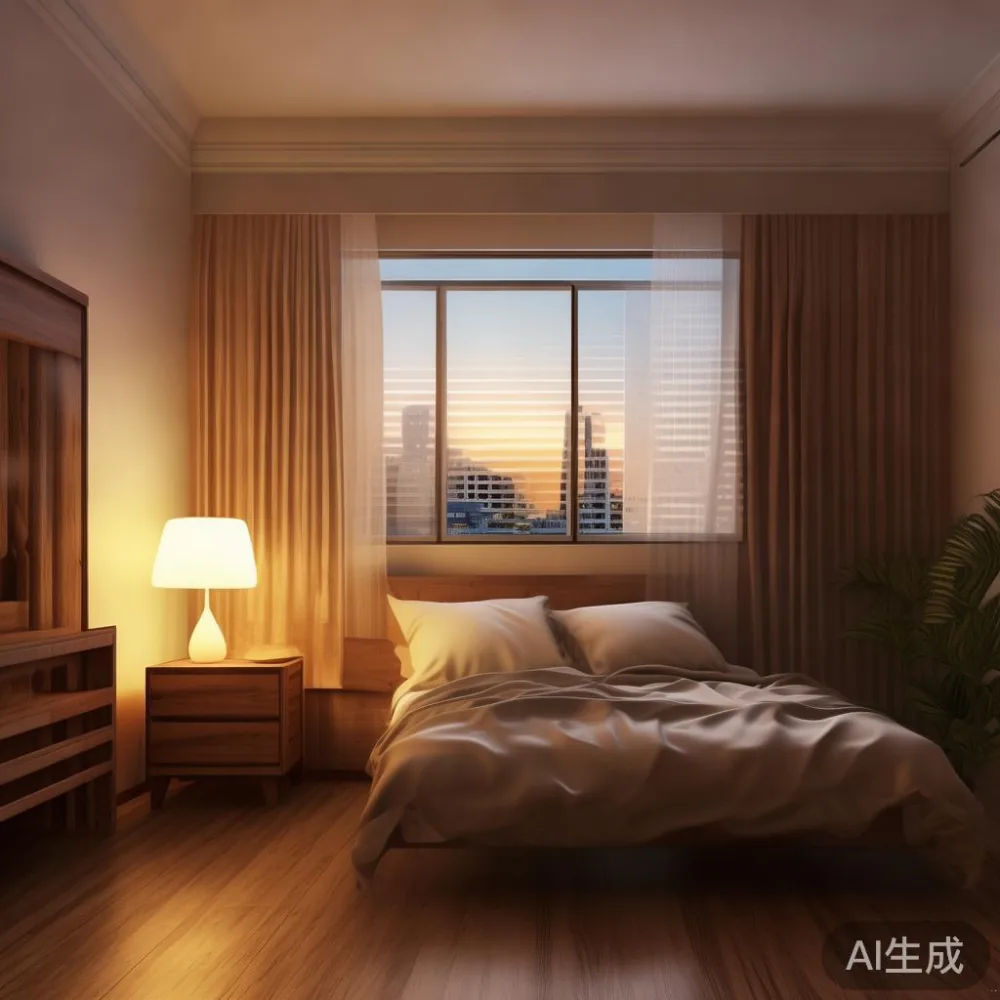
Warm minimal is Scandinavian restraint filtered through French light luxury and American light luxury sensibilities: pale oak or ash tones, soft curves on edges, no shiny brass, no glitter. It is the opposite of a clinical showroom. For a kids room, it means the room reads calm at 8 p.m. when the lights dim, but the surface of a solid wood bed frame can still take a sticker peel-off at 8 a.m. without leaving a scar.
In practical terms: walls in warm off-white (something close to Dulux 30YY 83/067 or Jotun Pure Color 1624), flooring in light oak laminate or engineered wood, textiles in oatmeal, clay, dusty sage, or muted terracotta. Furniture in solid wood with a matte water-based finish. One accent piece, such as a small marble table used as a reading nook surface, can earn its place if its veining echoes the wall tone rather than fighting it. Two materials per zone is a useful rule. In the kids room, that usually means wood plus one soft textile, or wood plus one metal detail.
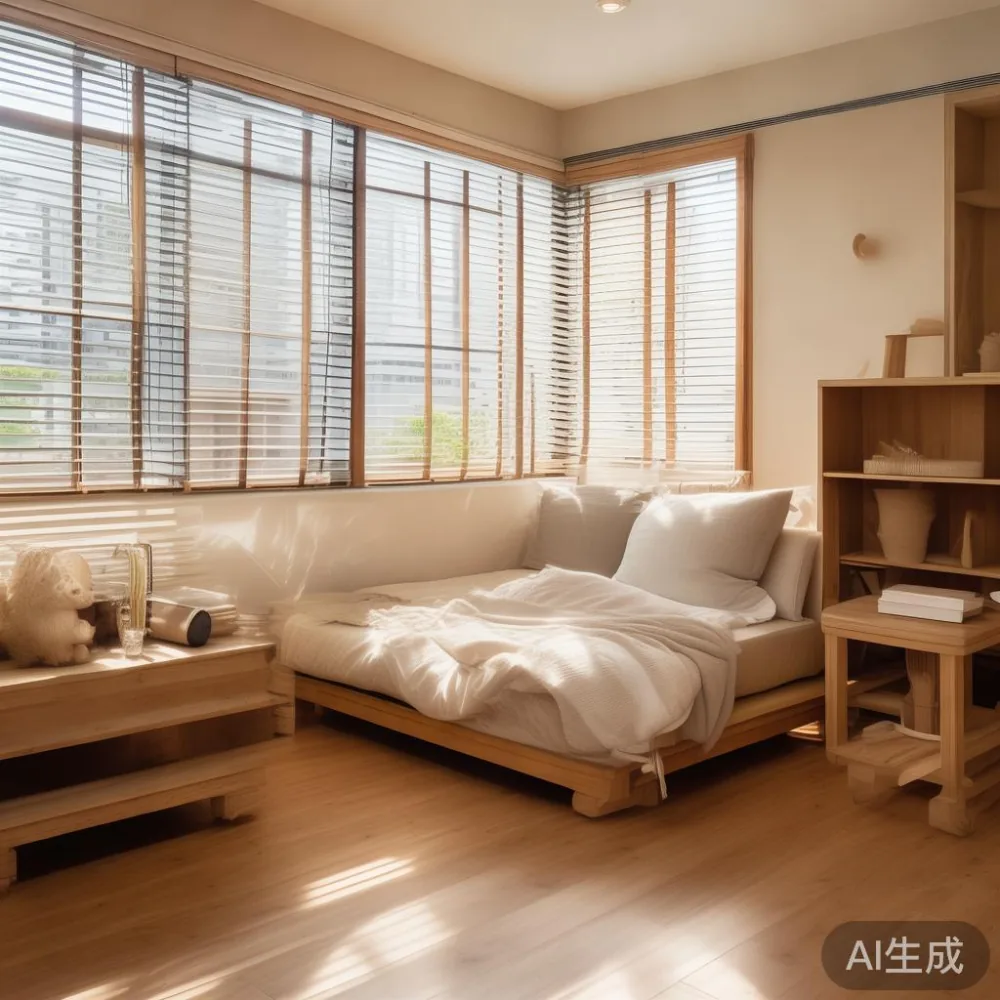
MIDHILL has built its catalogue around this exact idea. Their solid wood bed frames, wardrobes, nightstands, and dining tables all ship in a tight palette of oak, ash, and walnut, which makes room-to-room matching simple even when you buy pieces over several months. I tested a sample ash wardrobe in Aini's corridor: it cleared the 1.2 m passage with 18 cm to spare on each side, and the flat-pack box weighed 38 kg, manageable for two adults on a dolly.
How do I match furniture to a warm minimal interior without overbuying?
Start with the largest piece and work down. In a kids room, that is almost always the bed frame, because it dictates the wardrobe height, the nightstand depth, and where a small desk can sit. A 90 cm by 200 cm single bed is the standard Singapore size for primary-school kids, and a low-profile platform at 35-40 cm off the floor keeps the visual weight down. A 120 cm by 200 cm double grows with the child into the teen years and still fits a 3 m wall.
Then match the wardrobe. For a warm minimal interior, choose a floor-to-ceiling wardrobe at 240 cm (the HDB ceiling height) with flush doors and no visible handles. Push-latch or recessed finger pulls keep the elevation quiet. Internally, plan for two hanging zones (long dresses at 150 cm, shirts at 90 cm), three shelves, and two drawers. A 120 cm wide wardrobe is enough for one child; 150 cm covers a shared kids room used by siblings.
Nightstand depth matters more than people think. Keep it at 35-40 cm so it does not jut past the bed frame. A 45 cm by 40 cm by 55 cm unit holds a 300 ml water cup, a small lamp, and a book. Round the corners to 2 cm radius; sharp 90-degree edges are the enemy of small humans.
A 60 cm by 40 cm desk fits one child for homework up to about Primary 5. After that, step up to 100 cm by 55 cm. Skip the gaming-chair look. A simple solid wood chair with a 45 cm seat height pairs with a 72-75 cm table height, and the proportions stay warm rather than adolescent.
What sizes actually clear HDB lifts and corridors?
This is where many online orders fail. The standard HDB passenger lift interior is about 1.1 m wide, 1.4 m deep, and 2.1 m tall, with a door opening of roughly 0.8 m by 2.0 m. Corridors in newer BTOs run 1.2 m to 1.5 m wide. Service lifts, when available, go up to 1.5 m by 1.8 m and can take 1,000 kg.
So before clicking checkout on a kids room wardrobe, measure the longest dimension of every box. MIDHILL flat-packs their solid wood pieces for exactly this reason. Their 180 cm tall, 60 cm deep wardrobe ships in two cartons, each under 1.9 m long and under 35 kg, which two adults can carry into a standard lift without tilting. Their bed frame in king-single size (107 cm by 203 cm) ships in a single carton of about 28 kg. The American bed frame for small apartment category, by the way, is built around slats and a low platform, so the box rarely exceeds 1.95 m even on queen sizing.
For landed houses in Bukit Timah or condos in Bedok with tighter service-area access, ask the supplier for the carton dimensions and the assembled weight before paying. Free shipping over US$350 (around SGD 480) is common among Foshan exporters, but stair-only delivery to a fourth-floor walk-up without a lift can add SGD 40-80 per floor in Singapore. The 14-day return window is your friend if a piece arrives and simply does not fit the corridor turn.
How do I style a Modern light luxury furniture in a small apartment?
Match the wood tone across the kids room, the living room, and the dining area, keep two materials per zone, and let one marble or metal accent carry the luxury signal. A 90 cm round marble table in the reading corner, a brass-finish reading lamp, and a low-pile wool rug in oatmeal are usually enough. Skip ornate carvings, mirrored finishes, and high-gloss lacquers, which fight the warm minimal language.
In Aini's Punggol condo, we did exactly this. The dining table is a 140 cm by 80 cm solid wood oak piece at SGD 2,180 (pre-GST). The kids room bed frame matched it at SGD 1,260. The small nightstand, also oak, came in at SGD 360. Total for the kids room set: under SGD 2,800, including a basic mattress at SGD 480. A small marble side table at SGD 540 sat between two reading chairs in the living room, tying the dining and kids rooms to the common area without buying a full second material set. The visual chain was wood-wood-wood-marble, and the apartment read as one warm minimal home rather than three rooms of competing styles.
Post-modern light luxury fits this brief well, too, when used with restraint: think a fluted glass lamp, a slim travertine stool, a single piece of abstract art above the bed. Post-modern light luxury works in a kids room only if the silhouette stays simple, the palette stays neutral, and every accent is something a 6-year-old can bump without breaking it.
Which solid wood species work best for Singapore's humidity?
Singapore sits at 80% relative humidity for most of the year. Solid wood furniture moves with moisture, so species choice is not just aesthetic. White oak, ash, and rubberwood are reliable. They take a matte water-based finish, they dent rather than crack under stress, and they refinish cleanly when a child grows out of a sticker phase. MIDHILL's solid wood bed frames are kiln-dried to 8-10% moisture content before shipment, which keeps movement inside a tolerable range once the piece acclimatises for 7-10 days in a Singapore room with the air-con running.
Walnut works, but expect a 5-7% colour shift in the first year as it oxidises. Cherry warms up fast too. Both are pretty on a dining table but require a child who is past the marker-on-table phase. For a 3- to 8-year-old's kids room, ash or oak is the safer bet. They hide scuffs, they take a light sanding every few years, and the 10-year structural warranty that serious Foshan factories now offer covers the joinery, not the finish, which is exactly what you want from a kids room piece.
Lifetime refinishing, when offered, is the unsung hero of warm minimal. A solid wood bed frame bought for a newborn can be sanded, re-sealed, and re-tinted when that newborn hits 14. The cost is typically SGD 180-280 per item, a fraction of a replacement, and the carbon footprint is roughly 8-12 kg of avoided landfill per piece. Free refinishing on dining tables and wardrobes is a quiet perk that pays off across a 15-year ownership.
What delivery and warranty numbers should I ask for before paying?
Five numbers, every time. First, carton dimensions in cm, not just assembled size, because the box is what clears the lift. Second, gross weight per carton in kg, because stair fees are usually quoted per 50 kg bracket. Third, lead time in working days, ideally 18-30 for Foshan-to-Singapore sea freight, plus 3-5 days for last-mile. Fourth, structural warranty in years, with the 10-year mark as the serious benchmark. Fifth, return window in days, with 14 as the comfortable minimum.
Then ask about GST handling. For orders above SGD 400 in declared value, GST is due. Some suppliers pre-pay it and bill you; others leave you to settle with Singapore Customs. The difference is usually SGD 20-60 per order, which is worth clarifying before you confirm a kids room wardrobe at SGD 2,400. MIDHILL, for one, lists GST-inclusive pricing on its Singapore channel and confirms lift-clearance dimensions on every product page, which removes two of the most common surprises from the buying process.
Finally, ask for a sample swatch. A 10 cm by 10 cm offcut of the actual wood finish, shipped in a flat envelope for around SGD 8-15, is the cheapest insurance against a SGD 2,000 mismatch. Lay it against your wall, your floor, and your existing dining table under daylight and under warm 2700K bulbs at night. If all three match, you have your warm minimal kids room.
A short checklist before you check out
Measure the bed position on the wall (mark with painter's tape). Measure the lift door, the corridor turn, and the final doorway. Match the wood tone to the dining table and the living room storage. Keep two materials per zone. Round every edge in the kids room. Pick a bed frame height under 40 cm for a low, calm silhouette. Confirm carton dimensions, weight, lead time, warranty years, and return days. Budget around SGD 2,400-3,200 for a complete kids room set in solid wood, mattress included, before GST. Add 9% GST and SGD 60-120 for delivery to a fourth-floor walk-up, and you have a realistic number.
Warm minimal in a kids room is not about buying less. It is about buying once, buying solid, and letting the wood do the quiet work for the next fifteen.