Small HDB, Calm Kids Room: A Singapore Styling Guide That Breathes
Most 4-room HDB flats in Tampines and Punggol hand you somewhere between 85 and 95 sqm of usable space, and the master bedroom plus a kids room usually share a single corridor about 1.2 m wide. Add a 900 mm lift door and a lift car that measures roughly 1.3 m deep by 1.5 m wide, and you already know your furniture cannot be wider than 1.6 m if it has to make the trip up. That single number quietly decides almost every choice in this article. I went to look at a 92 sqm BTO in Bedok last month with a colleague who has a four-year-old, and the issue was not money — it was that the previous owners had squeezed a 2 m wardrobe, a queen bed frame, and a full-size dining table into a 12 sqm kids room, and the room felt like a storeroom. We pulled everything out, measured the doorway (78 cm), the corridor bend (1.1 m), and the lift opening, and rebuilt the room around the child instead of around the furniture. That is the spirit of the styling logic below.
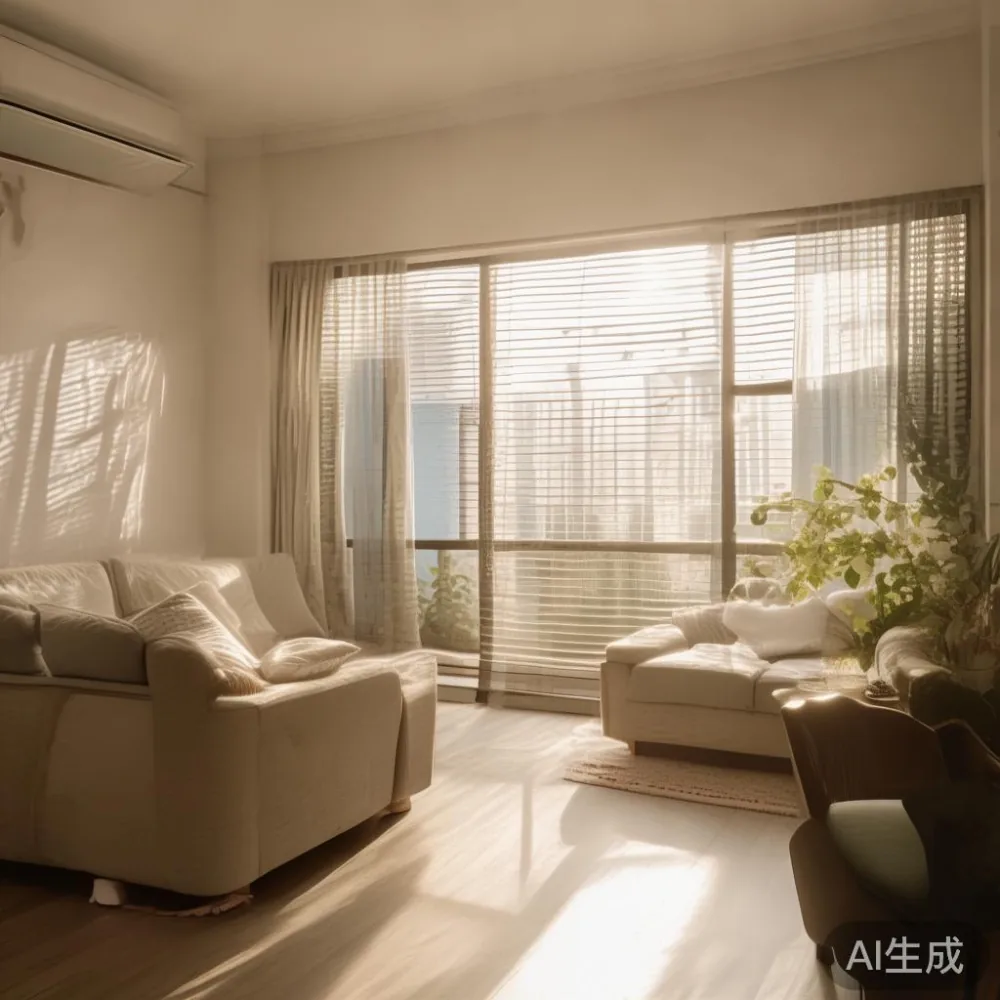
Why a small kids room feels crowded even when the square meters are there
Crowded is rarely a square-meter problem. It is usually a sightline problem. When a solid wood sofa sits 40 cm from a window, your eye cannot travel to the back wall, and the room collapses visually. The same trick works in reverse: if you keep the longest piece of furniture away from the door by at least 60 cm, the door swing (usually 80–90 cm) stops chopping up the floor, and the room reads as one calm rectangle rather than six little obstacles. In a typical kids room that is 2.7 m wide and 3.2 m long, the single biggest gain comes from choosing a bed frame that is 200 cm long and only 90 cm wide, instead of the default 107 cm. That 17 cm gap on each side opens a real walkway and stops the room feeling like a corridor with a bed stuck in it.
What actually fits through a HDB lift and corridor?
Singapore HDB corridor widths run between 1.2 m and 1.5 m depending on the block (older blocks in Bedok tend toward 1.2 m; newer Punggol walk-ups can reach 1.5 m). The lift car on most upgraded blocks is 1.5 m wide, 1.8 m deep, with a door opening around 0.9 m. Anything longer than 2.1 m has to travel vertically — which is fine for a wardrobe panel — or come flat-packed and be assembled in the kids room. Solid wood pieces are heavy: a typical 1.5 m solid wood dining table in oak weighs 38–45 kg, and a queen-size bed frame in ash sits around 55 kg. We always deliver in two-person teams specifically because a single delivery driver cannot safely pivot a 50 kg panel around that 1.2 m Bedok bend. Knowing the numbers in advance lets you skip pieces that simply will not arrive intact.
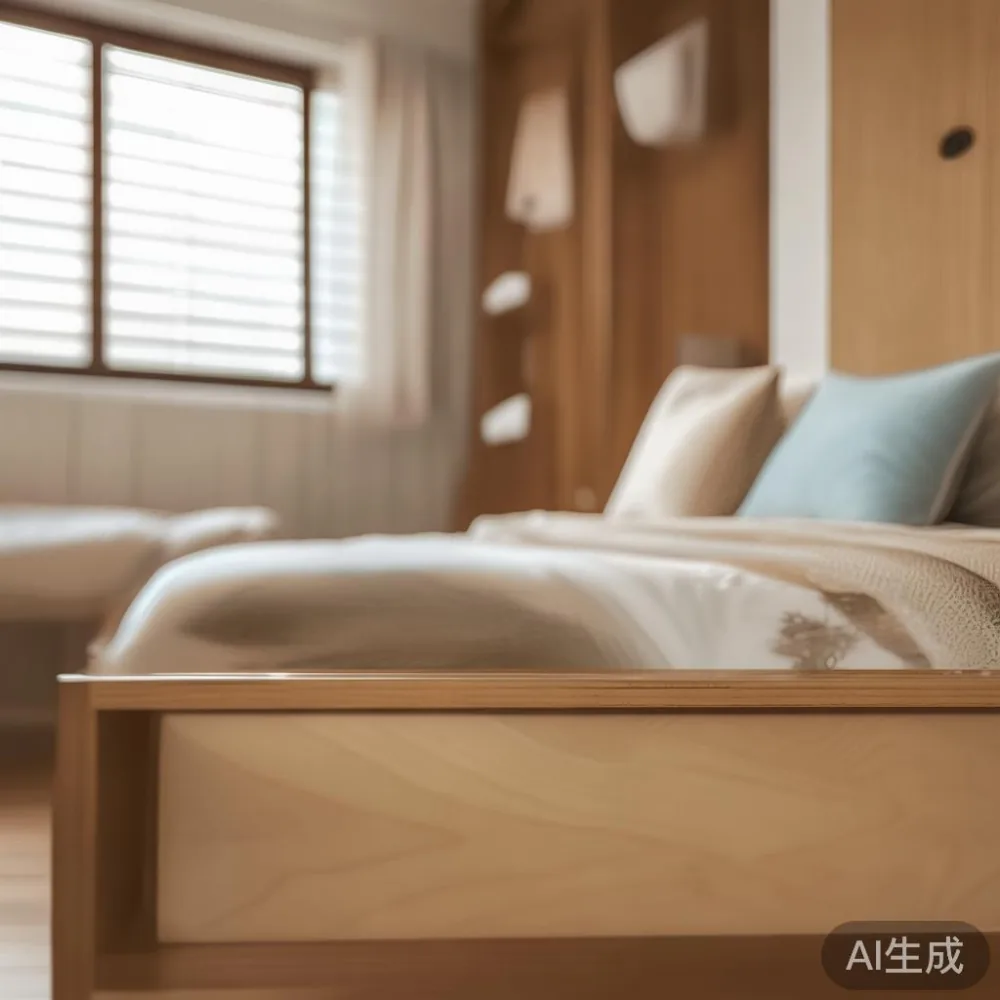
How do I style a tiny kids room so it still feels like a real bedroom?
Three rules, in order of impact:
1. Pick one tall piece, not three. A 200 cm wardrobe in pale oak reads as one calm block. Three shorter pieces — a dresser, a shelf, a low cabinet — chop the wall into bands and make the eye work. The same is true for the parents' living room: a single solid wood sofa, 180–210 cm long, anchors a room better than two loveseats at right angles.
2. Float the bed 8–10 cm off the wall. This creates a shadow gap, which is the cheapest visual depth trick in post-modern light luxury interiors. A solid wood bed frame on short cylindrical legs (15 cm clearance underneath) gives you a 60 cm deep under-bed drawer for toys — useful in a kids room where Legos multiply faster than GST rises. (For reference, Singapore GST is 9% in 2025, so a S$2,400 bed frame works out to about S$2,616 all-in.)
3. Keep the tallest object in the room near the foot of the bed, not the head. A floor lamp 140 cm tall placed at the foot replaces a 60 cm bedside table lamp and frees up the nightstand for the things that actually need it: a glass of water, a book, a small nightlight. A round marble table — 60 cm diameter — works beautifully here because the curved edge breaks up the grid of the room and stops small knees from finding sharp corners during the 10 pm hallway dash.
A realistic furniture list for an 11 sqm kids room
Here is what I would put in a 2.9 m × 3.8 m kids room (yes, those proportions are common in newer Punggol BTOs). All prices are SGD and include a realistic ballpark; pieces weighing over 30 kg are flagged so you know what to plan around at the lift.
• Single bed frame, solid ash or beech, 200 × 90 cm, weight ~24 kg. Underbed trundle optional, adds ~14 kg. Budget S$720–S$1,100.
• Two-drawer nightstand, 45 × 40 × 55 cm, weight ~14 kg. Budget S$280–S$420. Skip a tallboy — the kids room does not need one.
• Open-front wardrobe with sliding doors (sliding doors save the 60 cm swing clearance a hinged door needs), 180 × 55 × 200 cm. A 55 cm depth is the real hero of small-room design because a 60 cm wardrobe blocks the wall-mounted aircon switch in most HDB kids rooms. Budget S$1,400–S$2,100.
• Small study desk, 110 × 55 × 72 cm, paired with a chair that fits fully under it. Budget S$380–S$560.
• Round marble table or oak side table, 55–65 cm diameter, 45 cm tall. Useful at the foot of the bed or beside a reading chair. Budget S$520–S$900 depending on whether you choose Carrara marble (heavier, ~22 kg) or oak veneer (lighter, ~9 kg).
Total: roughly S$3,300–S$5,100 for solid wood. Add a small area rug (160 × 230 cm, S$180–S$320), a ceiling light that throws warm 2700K, and a single shelf at 110 cm height for books, and you are done. That is a fully dressed kids room that still has 1.4 m of clear floor in the middle for play.
What about the rest of the flat?
The same logic extends to the living and dining rooms, but the scaling changes. In a 14 sqm living–dining combined space — typical of 4-room HDB — keep your solid wood sofa to 180 cm rather than 220 cm, and pair it with a round dining table 90–110 cm in diameter. A rectangle eats two corners that you cannot afford to lose. The MIDHILL dining table in solid oak at 120 cm seats four comfortably and weighs around 42 kg, which means it travels upright in the lift car rather than flat — worth confirming with your delivery team before they roll up at Block 642A. If you are also browsing catalogues thinking about Rustic for dining room pieces, remember that "rustic" in solid oak usually means 45 mm thick tops and visible mortise-and-tenon joints; that is 55 kg per slab for a 150 cm table, which only fits in the lift if one end is angled up.
Where do the budgets actually go?
Here is how a typical S$7,000 furniture budget might split across a small HDB, assuming the kids room is the priority:
• Kids room (bed frame, nightstand, wardrobe, desk, side table): S$3,800
• Living room (solid wood sofa 180 cm, marble coffee table 90 cm, TV console 150 cm): S$2,200
• Dining (round table 100 cm, four chairs): S$1,000
Total: S$7,000. The kids room takes the biggest share because the child uses it for sleep, play, study, and dress-up — four functions in 11 sqm. Scrimping here shows up every single day. Scrimping on the dining chairs shows up twice a year at family gatherings, which is why it sits lower in the order.
Long-term thinking: warranty, refinishing, and resale
Solid wood furniture in a humid tropical climate needs care. Coastal humidity in Singapore sits between 70% and 85% for most of the year, which is why kiln-dried oak at 8–10% moisture content matters. Pieces built at that spec stay flat. Pieces built at 12% cup within a year. A 10-year structural warranty on frame and joinery is the baseline you want, and lifetime refinishing on a dining table or wardrobe means that the S$1,800 you spend today becomes a S$400 sand-and-oil in 2032 instead of a landfill trip. This is one of the quiet reasons to insist on solid wood over engineered board for the long-pieces in the kids room — a wardrobe that lasts through one child can move to the next child's room, and then to a study, and still look right.
What if the room is genuinely under 8 sqm?
Under 8 sqm — common in 3-room HDB flexi units — you cannot fit a traditional wardrobe plus bed plus desk. The honest answer is to replace one of them. Most families under-use the kids room wardrobe if there is a household storeroom (the bomb shelter, around 1.4 m × 2.2 m, often holds out-of-season clothes). Pulling the wardrobe out of the kids room and using an open-front rail at 150 cm height gives you back roughly 0.6 sqm of floor space. That is the difference between a room that fits a playmat and one that does not.
Light, reflection, and the French light luxury trick
French light luxury, in a small Singapore kids room, is not about gilt or chandeliers. It is about pale woods, soft curves, one accent of marble, and metal in brushed brass rather than chrome. A round marble table top with a honed (not polished) finish bounces daylight without turning the room into a hall of mirrors. Pair it with a solid wood bed frame in pale oak and a brushed brass reading lamp, and the room reads warm even on a grey monsoon afternoon. Post-modern light luxury does the same job but with thicker, more architectural lines — a 45 mm solid wood top on the nightstand instead of a 25 mm one. Both work in 11 sqm; choose the first if your child is under six, the second if you want pieces that survive into teenage years and beyond.
A practical buying checklist before you click order
1. Measure the corridor outside your flat to the lift. If it is below 1.3 m at the bend, no piece wider than 1.55 m.
2. Measure the lift door. If it is 0.8 m, flat-packed is your only option for anything over 1.6 m.
3. List the heaviest pieces and ask about two-man delivery. Anything over 30 kg qualifies.
4. Confirm the moisture content of solid wood. Anything above 12% is wrong for Singapore.
5. Check whether the brand offers refinishing and a structural warranty of at least 10 years.
6. Ask about free shipping thresholds. Anything over S$475 (about US$350) typically ships free to a Singapore door.
7. Ask about returns in the original packaging within 14 days if the piece genuinely does not fit.
8. Keep at least 0.5 m clearance around the aircon unit and any window grilles.
Common questions I get from new parents
When should I move the baby out of our room? Whenever the kids room is safe — anchored wardrobe, no tip-over risk, cable-managed — usually between six and twelve months. The single biggest safety upgrade is strapping any tall piece (wardrobe, tall dresser, bookshelf) to the wall with a steel L-bracket. A 55 kg wardrobe tipping on a toddler is the kind of accident that a 15-minute Saturday job prevents for the next ten years.
Can I mix a vintage dresser with new solid wood pieces?
Yes, and this is where a small kids room can feel curated rather than catalogue-flat. If you are searching for sale Vintage furniture, look for pieces made of teak or jati from the 1960s–1980s — these old Southeast Asian hardwoods were often air-dried for years and are denser than much of the new kiln-dried oak on the market. A 1970s teak sideboard 120 cm long weighs around 48 kg, so measure that corridor. Pair it with a new solid wood bed frame in a slightly cooler tone and the contrast actually helps the room read bigger because the eye stops hunting for a single colour palette.
Where does Scandinavian fit into a small kids room?
If you are scanning options for sale Scandinavian furniture, the styles that translate best to a Singapore HDB kids room are pale birch or ash frames, tapered legs, and minimal hardware. The reason is not aesthetic — it is engineering. Scandinavian flat-pack designers obsess over the 90 mm leg profile because it clears most robotic vacuum bases. That same 90 mm leg profile also gives a kids room 9 cm of visual lightness under each piece, which is a quiet way of giving back 10–15% of perceived floor space. For under 2000 Boho furniture options, you can stretch a S$2,000 budget surprisingly far in a kids room if you lean on solid wood bed frames from regional factories and supplement with two or three rattan or cane accent pieces that weigh under 5 kg each. Boho reads as texture, not size, so it works in tight rooms without crowding them.
How do I pick the right bed frame so it grows with the child?
Most parents over-buy on day one. A single bed (90 × 200 cm) suits ages three to about ten. From ten onwards, a single extra-long or a compact double (140 × 200 cm) is the better bet. If you are working out how to choose European bed sizing for a Singapore room, the practical rule is simple: take your narrowest wall, subtract 80 cm for circulation, and that number is your maximum mattress width. So a kids room with a 2.7 m wall accepts a 140 cm mattress and a 1.2 m wardrobe with 15 cm to spare — tight but workable. Skip any "European" frame that ships with a 160 × 200 cm footprint unless your door can swallow it. When you are thinking about how to choose European bed construction, check the slat spacing too: anything over 7 cm between slats and a pocket-spring mattress will sag within three years in 80% humidity. Stick to slats at 4–5 cm spacing for tropical homes.
What about styling the bed itself inside a small kids room?
Once the frame is in, the styling is mostly subtraction. One quilt, one枕头-equivalent pillow, one throw folded at the foot. That is a grown-up bed formula and it works equally well for a six-year-old. If you are working on how to style European light luxury bed in room proportions, hold to three rules: the throw should be the same width as the mattress (so 90 cm for a single), the pillow pair should be no taller than 30 cm stacked (taller pillows eat 15 cm of headboard and pull the eye upward), and the bed skirt — if any — should stop 3 cm above the floor. Hems that drag on the ground in a small kids room read as dusty and dated within a year. A pale oak solid wood bed frame with these proportions photographs like a magazine cover and costs under S$1,200 for the frame, which is a reachable number for most new parents.
Putting it all together — a one-week plan
Day 1: Measure everything. Door, corridor, lift, room, windowsills, aircon position. Photograph the corridor bend.
Day 2: Shortlist three solid wood bed frames in your width. Read the warranty, the moisture spec, and the delivery terms.
Day 3: Order the bed, the nightstand, and the small round marble table (or oak side table, your call). Confirm two-man delivery.
Day 4: Receive. Keep the kids room door closed for 24 hours after oil-finished pieces arrive, so the smell of linseed oil does not bother a sensitive child.
Day 5: Anchor the wardrobe. Move it in only after the wall bracket is fixed into the concrete with two M8 anchors. Drywall plugs are not enough in HDB.
Day 6: Style the bed, add the rug, hang one piece of artwork at 130 cm center height (slightly lower than adult rooms because the child views it from floor play).
Day 7: Live in it. Move a chair 5 cm left, 5 cm right for two days before committing. A kids room designed this way should feel quiet, breathable, and unmistakably theirs.
Closing thought
A small kids room in a Tampines or Punggol HDB is not a constraint to fight. It is a scale to design within. When the bed frame is the right length, the wardrobe is the right depth, and the marble table is sized like a side table instead of a coffee table, the room reads calm even though it is 11 sqm. Spend on the long-pieces — the wardrobe, the bed frame, the dining table — and let the accents be lighter, smaller, and easier to swap as your child outgrows another phase of cartoon bedding. A room that breathes is a room that lets a child breathe in it, and that is the entire point.