Sizing a Solid Wood Sofa, Bed Frame and Wardrobe for a Singapore HDB Living Room
Last month I visited a 4-room HDB in Punggol with my colleague Ah Hock. We were there to measure for a new solid wood sofa, a bed frame for the kids room, and a dining table that had to survive two toddlers and a cat. The flat looked spacious on the floor plan, but once we unrolled the tape, the corridor between the kitchen and the living room was 92 cm wide, the service lift at Block 218A accepted only 1.6 m of depth on its longest side, and the staircase landing outside the unit would not accept anything taller than 2.1 m. None of this was on the HDB brochure. All of it changed what we could order.
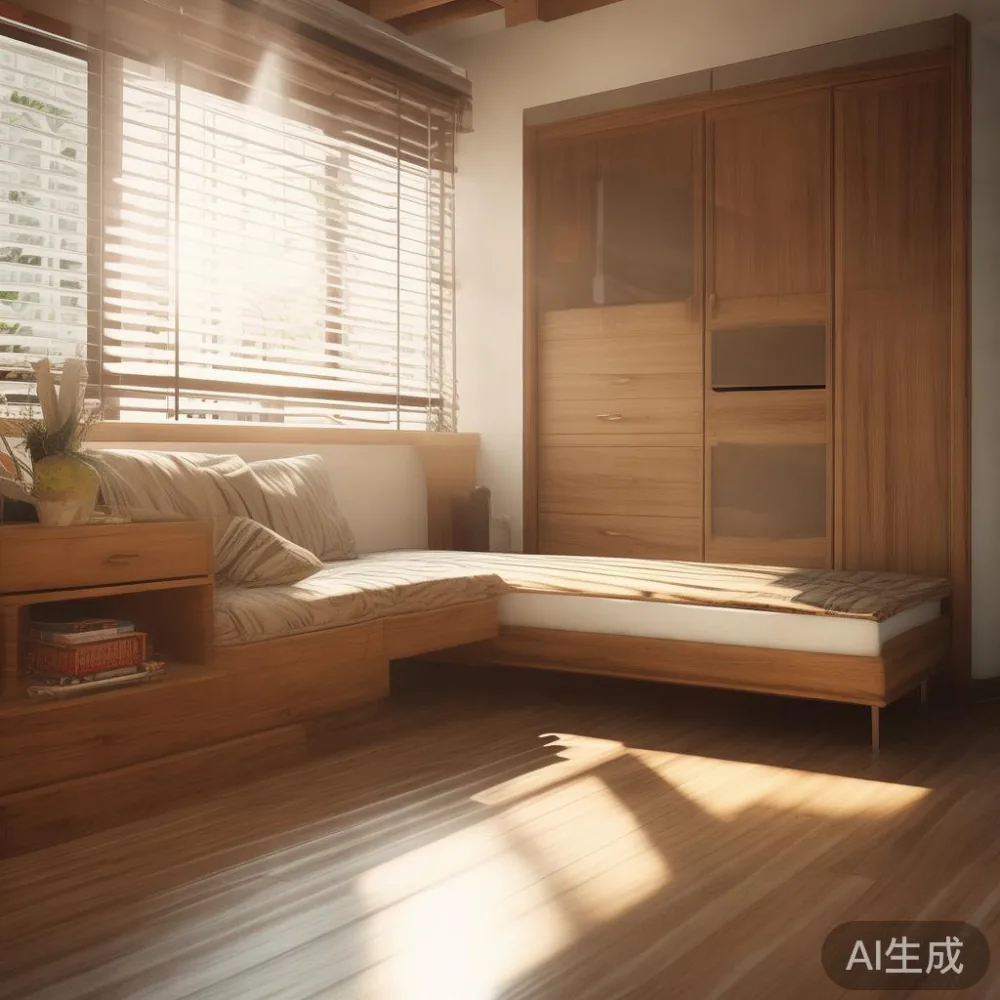
That afternoon is the reason I now treat "size" as three separate problems: the size of the room, the size of the access route, and the size that still lets a child sleep, climb, and spill. Below is the checklist I walked Ah Hock through, calibrated for Singapore HDB and condo living. The numbers work for Tampines, Bedok, Punggol, and most resale blocks along the East-West line. If you are reading this from a 5-room or executive flat, the same logic applies, just with 30 to 40 cm more to play with.
What size solid wood sofa actually fits a 4-room HDB living room?
A typical 4-room HDB living room measures between 3.2 m x 3.0 m and 3.8 m x 3.2 m once you exclude the air-con ledge, the DB box, and the walkway to the kitchen. After you lose another 60 cm to a TV console and a walkway of 80 cm (the minimum two adults need to pass without turning sideways), the usable seating wall is usually 2.6 m to 3.0 m long.
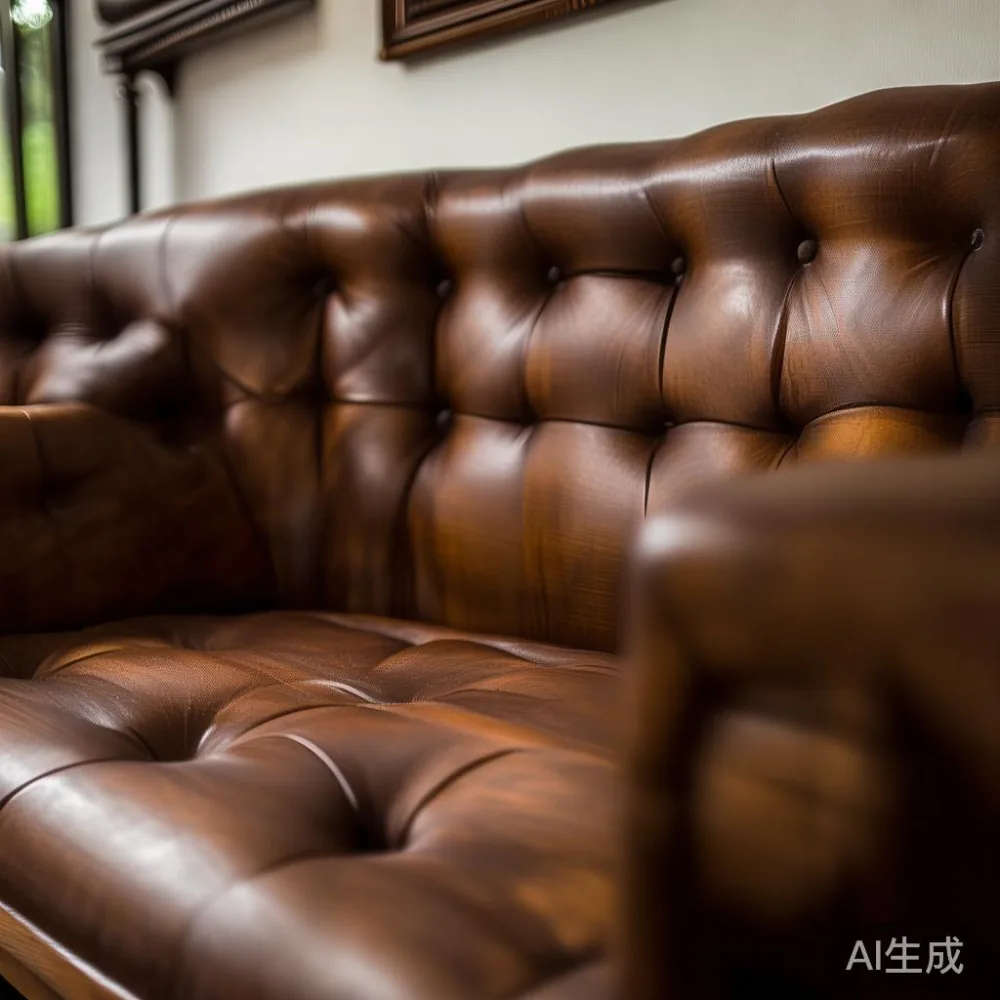
That means a three-seater solid wood sofa at 2.2 m to 2.4 m will fit cleanly, with a nightstand or side table slotting at one end at 45 cm x 45 cm. A 2.6 m three-seater pushes the cushions hard against the TV console and forces anyone walking past to angle their shoulders. I have measured both. The 2.4 m version wins every time in a 4-room flat.
For a 5-room flat or a condo at Punggol Waterway, the seating wall can stretch to 3.5 m, which is where a three-seater plus an armchair, or an L-shape configuration with a chaise at 1.7 m x 0.9 m, starts to make sense. Keep the seat depth between 55 cm and 60 cm if anyone in the household is above 1.75 m, and below 55 cm if the kids room is just down the hall and you want the sofa to double as a nap spot for a 4-year-old.
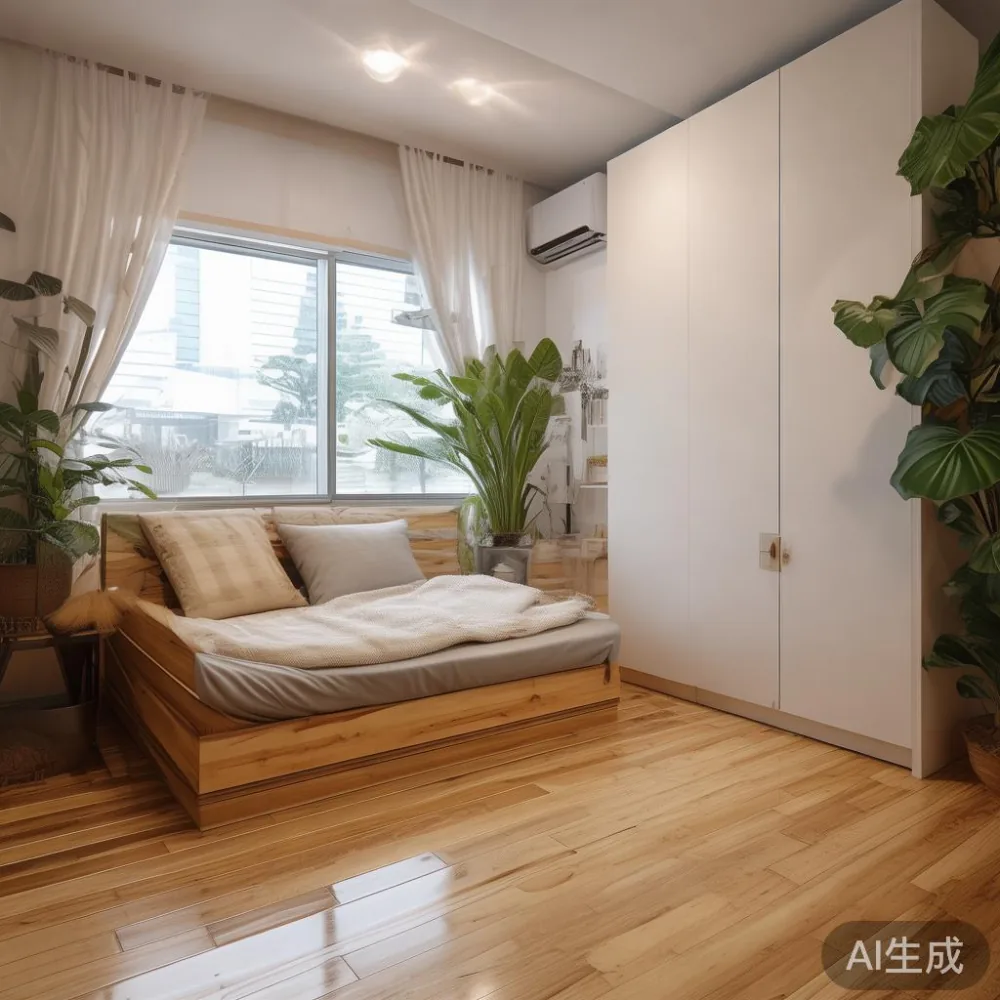
If you are weighing a light luxury sofa against a French provincial sofa for a compact HDB, the math usually settles it. Provincial silhouettes carry rolled arms and carved legs that eat 15 to 20 cm of clearance each side. Light luxury sofa designs tend to be 5 to 8 cm slimmer on the arm and 3 to 5 cm lower on the back, which is exactly what a 3.2 m room needs. That is the practical side of the light luxury sofa vs French provincial sofa question, beyond looks alone.
How do you get a bed frame and wardrobe through the lift and corridor?
This is the part most Singapore buyers skip, then regret. HDB service lifts in blocks built after 2015 typically have an internal cabin of about 1.4 m wide x 1.7 m deep x 2.2 m high. Older blocks in Bedok and Tampines run smaller, around 1.2 m x 1.5 m x 2.0 m. A king-size bed frame at 1.8 m x 2.0 m will physically fit in the cabin only if it is disassembled, and a wardrobe at 1.8 m x 0.6 m x 2.0 m will not fit if the corridor turn outside your unit is tighter than 1.5 m.
I keep a printed rule on my desk: the largest single piece that should leave the workshop is 1.5 m long x 0.6 m deep x 1.9 m tall. Anything bigger gets broken down into modular panels, even if it costs an extra SGD 80 to SGD 120 in assembly labour on site. Ah Hock's Punggol flat was a useful test: we shipped his dining table in two halves at 1.2 m each, plus four legs at 0.7 m, and the installers were done in 35 minutes. A one-piece 2.4 m marble table would have stayed at the warehouse.
For the kids room specifically, this matters twice over. A single bed frame at 1.07 m x 1.93 m disassembles into a headboard, footboard, side rails, and slats, each under 1.1 m. A bunk bed, which most families in 4-room flats eventually consider, has ladder and guardrail components that must each clear the lift. Plan for that on day one.
MIDHILL has shipped more than a thousand sets to Singapore since opening the export line in 2014, and the warehouse team keeps a card file of lift sizes by estate. When a customer sends a unit number, they check the card before confirming the wardrobe depth. It is one of the small reasons their 10-year structural warranty has so few claims on this island.
What is the right dining table size for a HDB with 4 to 6 people?
For a family of four in a 4-room HDB, a 1.4 m x 0.8 m dining table seats four comfortably, six at a squeeze. For a family of five or six, or for anyone who hosts parents on weekends, step up to 1.6 m x 0.9 m. Beyond 1.8 m, you start eating into the 90 cm walkway that the SCDF recommends between table and wall for emergency egress.
Allow 60 cm of table edge per diner, 70 cm if you want a placemat and a soup bowl without elbows touching. For a rectangular solid wood dining table at 1.6 m, that is two diners per long side and one at each end, five in total, with the sixth pulled in on a stool from the kitchen island.
If you are choosing between an extendable table and a fixed table at the same price point, the extendable version usually wins for HDB living. A 1.2 m table that extends to 1.6 m or 1.8 m fits daily life and reappears for CNY and Hari Raya. The mechanism, though, adds 6 to 8 kg and a metal track that you should ask the workshop about in writing.
Is Italian light luxury furniture worth the premium in a Singapore HDB?
This is the question I get every other weekend at the Simei showroom. The honest answer is that "Italian light luxury wardrobe" is a category, not a single factory, and the price spread inside it is wide. Entry-level Italian light luxury pieces start around SGD 4,800 for a three-door wardrobe. Mid-range sits at SGD 6,200 to SGD 8,400. The top tier crosses SGD 12,000.
What you are paying for in the upper tiers is mostly the finish: hand-rubbed lacquer, dovetail joinery, soft-close runners rated for 100,000 cycles, and a marble top on the nightstand rather than a stone-veneer top. In a HDB where the wardrobe sits 10 cm from a wall that sweats in March, a cheaper lacquer will bloom within 18 months. The better Italian light luxury finishes hold for 6 to 8 years before you see clouding.
So is Italian light luxury wardrobe worth it for a resale HDB you might sell in 5 years? Probably not at the top tier. Is it worth it for a condo you plan to keep through your child's PSLE? Often yes, because the resale value of the unit and the wardrobe follow similar curves. A solid wood wardrobe with a mid-grade Italian light luxury finish is the practical sweet spot at SGD 5,800 to SGD 7,200 for a 1.8 m three-door.
How to style Japandi wardrobe in apartment layouts that feel cramped?
Japandi, the mash-up of Japanese restraint and Scandinavian function, suits HDB rooms because both schools hate visual clutter. The trick is to choose a wardrobe at 1.6 m to 1.8 m tall rather than a ceiling-fitted 2.4 m box. A 30 cm gap above the wardrobe lets you run a curtain rod, hide the curtain, and stop the wardrobe from looking like a wall. The same gap also reduces the wobble that plagues tall, narrow cabinets on HDB floors that are not perfectly level.
Doors matter. Sliding doors save 60 cm of swing clearance, which is half the wardrobe depth itself. Hinged doors look cleaner but need that 60 cm of floor to open into. In a kids room shared by two siblings at 9 sqm, sliding wins on space; in a master bedroom at 12 sqm, hinged wins on feel.
Handles are the part most people get wrong. Long vertical pulls at 30 cm read as American light luxury, recessed finger pulls read as Japanese, and small round knobs read as French provincial. Pick one and stay with it across the wardrobe, nightstand, and bed frame. If you are working out how to style Japandi wardrobe in apartment settings without it feeling sterile, add one warm element per room: a linen runner, a ceramic vase, a woven basket.
Japanese bed vs Nordic bed: which one suits a kids room better?
Japanese bed frames sit lower, at 25 to 35 cm from the floor, with a platform that often replaces the need for a box spring. Nordic bed frames sit higher, at 40 to 50 cm, with visible wood grain and often a storage drawer underneath.
For a kids room in a HDB, the Japanese platform has two real advantages. The first is fall height. A toddler rolling out of a 30 cm bed lands softer than from a 50 cm bed, and parents of 2-year-olds notice this. The second is dust. A platform with a sealed wood top and a mattress on it traps less dust underneath than a Nordic frame on legs, and Singapore humidity makes that gap a magnet for mites.
Nordic frames win on storage. A 1.07 m x 1.93 m Nordic bed with two drawers adds 0.18 cubic metres of hidden storage, which is roughly 12 toy bins' worth. If your kids room is also your storage room, the Nordic frame earns its keep.
In the Japanese bed vs Nordic bed debate, the deciding factor is usually the child's age and the storage pressure on the rest of the flat. Under 6, Japanese. Over 8 with shared storage, Nordic. In between, pick whichever frame uses solid wood over engineered panels; the difference at year five is obvious.
Is a Japanese wardrobe worth it for Singapore humidity?
Japanese wardrobes, the kind shipped from factories in Vietnam and Malaysia that supply the Osaka market, are usually 1.8 m tall x 0.6 m deep x 1.2 m wide, with sliding doors and a cedar lining. The cedar matters. It absorbs moisture in the wet months from December to February and releases it in the dry months from June to August, which keeps the inside humidity within 5 percent of the ideal 55 percent for stored cotton.
The honest answer to is Japanese wardrobe worth it depends on what you store. For cotton clothes, school uniforms, and bedding, yes. For leather bags and cameras, no, because cedar off-gassing can tarnish metal fittings over 3 to 5 years.
A 1.8 m three-door Japanese wardrobe at 0.6 m depth costs SGD 2,800 to SGD 3,600 from the regional factories. The same-shape custom piece from MIDHILL in solid ash or beech, with a cedar lining option, runs SGD 3,400 to SGD 4,200 and arrives with a 10-year structural warranty. For a kids room that will see crayon, sweat, and the occasional spilled milk, the solid wood option is the safer pick.
Can a European sofa bed with storage work in a HDB living room?
A european sofa bed with storage combines three pieces of furniture into one footprint of roughly 2.1 m x 0.95 m when closed. Opened, the sleeping surface is 1.4 m x 1.9 m, which fits a standard HDB single bed mattress topper. Under the seat, the storage bin holds 0.35 to 0.45 cubic metres, enough for three jumbo storage bins of kids room overflow.
For a HDB living room that doubles as a guest room for visiting grandparents, this is the most space-efficient purchase in the whole flat. The catch is mechanism weight. A proper European mechanism with a metal frame and a fabric sling adds 18 to 22 kg over a regular sofa. The floor loading is fine, but the daily pull-out effort is real, and cheaper mechanisms bind after 12 to 18 months.
Pick one with a 5-year mechanism warranty on top of the frame warranty, and ask for the cycle rating. Anything under 5,000 open-close cycles is too low for a daily-use sofa bed. Anything over 15,000 is overkill for a HDB. Settle in the 8,000 to 12,000 range and you will have 8 to 10 quiet years.
How much should you budget for a full living-and-kids-room set in SGD?
For a 4-room HDB, a reasonable full set in solid wood runs from SGD 9,500 to SGD 16,500 before GST. The breakdown that has worked in Tampines is filled with real numbers: a 2.4 m solid wood sofa at SGD 3,200 to SGD 4,500, a 1.6 m dining table at SGD 1,800 to SGD 2,600, a single bed frame at SGD 900 to SGD 1,400, a 1.8 m wardrobe at SGD 2,400 to SGD 3,400, two nightstands at SGD 350 to SGD 500 each, and a marble table for the entryway at SGD 900 to SGD 1,200. Add a TV console at SGD 1,000 to SGD 1,500 if the bundle does not include one.
Add 9 percent GST for delivery to a Singapore address, and ask about the customs paperwork for Valora, which is the standard broker most Foshan exporters use. Free shipping usually applies above a threshold that varies by factory; for MIDHILL the cut-off is US$350, which at current rates is roughly SGD 480, so most full-room sets ship free. Delivery from Foshan to a Singapore door runs 28 to 42 days by sea, plus 5 to 7 days for customs and last-mile delivery.
Returns are accepted within 14 days for stocked items, which covers the gap between the unit arriving and the family deciding the marble table is the wrong shade. Refinishing, which is the more useful promise, runs for the lifetime of the piece. A solid wood dining table that gets scratched by a chair five years in can be sanded and re-oiled for a fee of around SGD 180 to SGD 280, well below the price of a replacement.
What about the kids room specifically: what sizes keep a child safe past age 10?
A kids room in a HDB usually measures between 8 sqm and 12 sqm. Furniture that fits today will feel small by the time the child is 10, so plan for the older child, not the toddler.
A single bed frame at 1.07 m x 1.93 m carries a child up to about 1.55 m in height, which covers most 12-year-olds. A wardrobe at 1.5 m wide x 0.5 m deep x 1.8 m tall holds roughly 80 hanging pieces, enough for a school wardrobe plus two weeks of changed climate. A nightstand at 45 cm x 40 cm x 55 cm fits a lamp, a book, and a glass of water without crowding the bed.
Leave at least 60 cm of walking space on the side of the bed that the child uses to get in and out. Leave 90 cm at the foot if the room also hosts a study desk. Anchor the wardrobe to the wall with two L-brackets; HDB walls are concrete and will hold, but a climbing 5-year-old and a top-heavy wardrobe is the most common furniture accident I see in Singapore flats each year.
Pick finishes that hide the small damages a kids room will collect. A solid wood bed frame in ash with a matte oil finish forgives scratches better than a painted MDF frame. A wardrobe door in oak veneer forgives bumps better than a high-gloss lacquer. Order one sample swatch, tape it to the wall for a week, and look at it at 7pm under the room's actual lighting before you confirm the order.
Quick measurement checklist before you click pay
Measure the service lift door width, the lift cabin depth, the corridor turn at your floor, the front door width including the hinges, and the staircase landing if the lift is out. Photograph each one with a tape measure in the frame. Send those four photos to the workshop before you place the order. Any workshop that does not ask for them is one that has not yet shipped to a HDB.
Measure the wall where the wardrobe goes, the wall where the bed frame goes, and the corner where the dining table sits. Subtract 5 cm from each wall measurement for skirting and uneven plaster. Subtract another 5 cm if you plan to run a curtain behind the wardrobe. The number you end up with is the largest wardrobe, bed frame, or dining table you should order.
Measure the distance from the curb to the service lift, because some HDB blocks have a long walk on the ground floor that affects delivery scheduling. Add SGD 40 to SGD 80 if your block charges for lift booking outside of office hours. None of these numbers are glamorous, but each one is the difference between a Saturday morning delivery and a Saturday afternoon of arguing with two drivers in a Tampines carpark.