Kids’ Room Furniture in Singapore: What Actually Fits, Lasts and Works
A practical Singapore guide to sizing, materials, safety, costs and delivery for HDB and condo kids rooms, with useful furniture comparisons.
- How big should a Singapore kids’ room be before buying furniture?
- What size bed and desk fit a child without wasting Singapore space?
- Which materials survive Singapore humidity and a child’s daily mess?
- Is a bunk bed safe in a small Singapore bedroom?
- How much should kids’ room furniture cost in Singapore?
- How do I avoid dead space in a 7–10 square metre kids’ room?
- What safety features should I check before handing over a kids’ room?
- How do Singapore delivery and assembly services actually work?
- How do I make a kids’ room feel good without spending more?
How big should a Singapore kids’ room be before buying furniture?
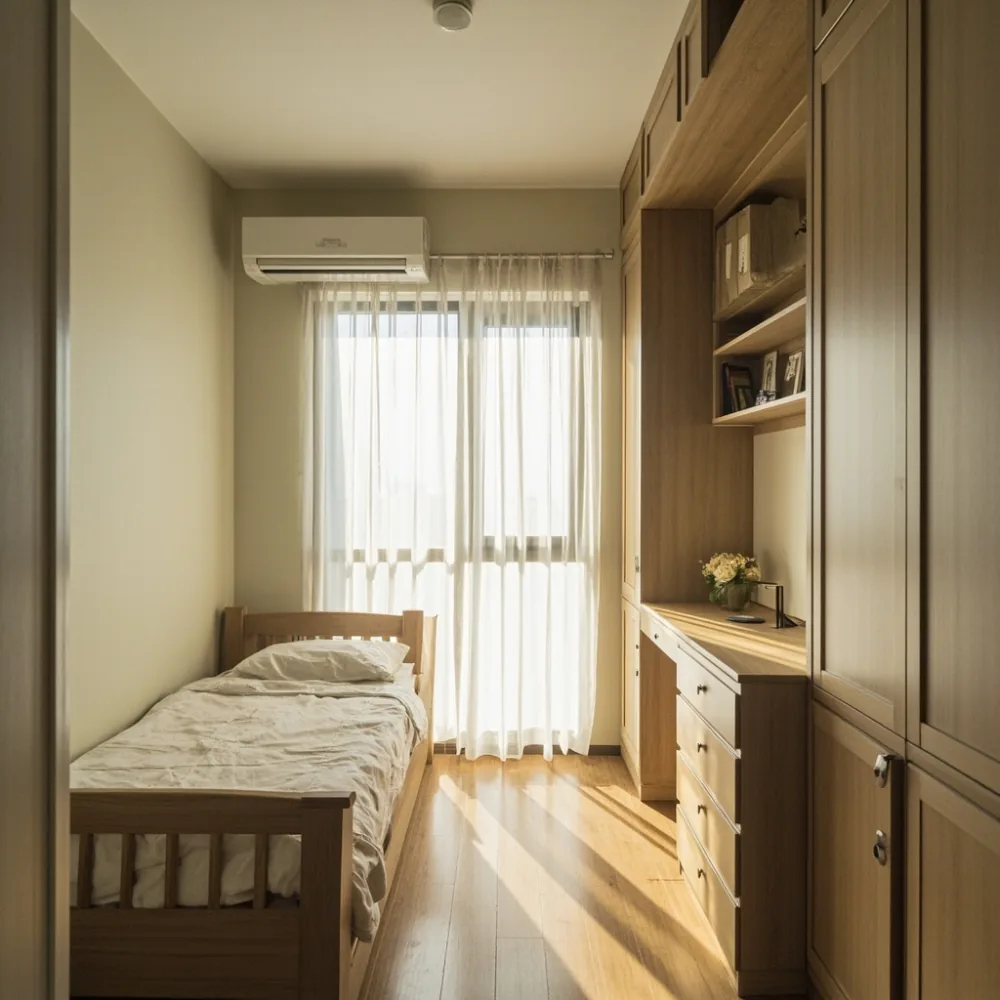
Measure the usable space, not just the floor area
Leave 75–90 cm for circulation
Match the layout to the room type
I start by measuring the usable wall length, not relying on the bedroom’s advertised floor area. An HDB 3-room flat may give a child about 7 to 9 square metres, while a compact condo bedroom can be closer to 5 square metres. Furniture dimensions matter more than broad room labels.
Leave at least 75–90 cm beside a bed for someone to walk, make a bed and carry laundry. The wardrobe door needs another 60 cm of opening space unless it uses sliding panels. A desk chair should pull back around 60 cm, and the desk itself should sit deep enough for an open laptop, homework and a water bottle.
- Small HDB child’s bedroom: aim for a 90–120 cm bed, 90–110 cm desk and 80–100 cm wardrobe.
- Typical condo child’s room: a 120–135 cm bed can work if storage is vertical and circulation remains clear.
- Shared bedroom: keep the bed against the longest uninterrupted wall and use a narrow desk, ideally 50–60 cm deep.
The best test is to tape the footprint on the floor with painter’s tape. If the arrangement feels pinched, I simplify it before shopping. This is where small space furniture earns its keep: a 35 cm-deep bedside table, wall-mounted shelving or a desk with a floating drawer can recover practical room without making the space look cluttered.
What size bed and desk fit a child without wasting Singapore space?
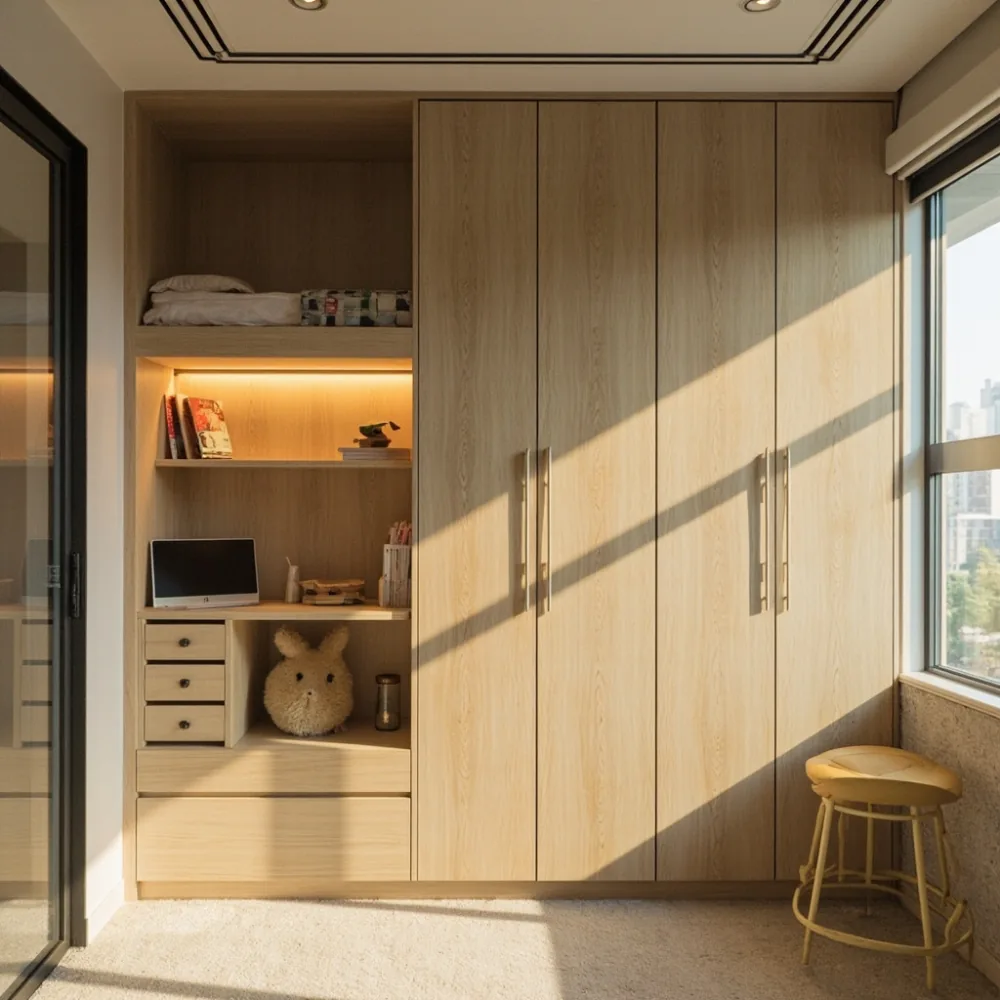
Choose the bed for present needs
Size the desk for real study habits
Check mattress and ceiling clearance
I usually avoid buying a full-size bed too early. A Singapore cot or junior bed with a 90–120 cm sleeping surface gives a child useful years of service, while the frame can later be extended if it is designed for conversion. Children above about 150 cm often need a 135 cm bed with a 200 cm mattress, though height and growth pattern should guide the decision.
For the desk, I look for a width of at least 90 cm and a depth of 50–60 cm. A 100 × 50 cm desktop fits a 14-inch laptop, a notebook and a pencil case with little waste. A 120 × 60 cm desk is more comfortable for daily homework, art supplies or a desktop monitor.
- Bed frame allowance: add 5–10 cm to the mattress length for the headboard and footboard.
- Desk chair clearance: reserve about 60 cm behind the desk when the chair is occupied.
- Ceiling clearance: check that the top bunk, wall shelf or study lamp will not conflict with a ceiling fan.
Before ordering, I compare the packaged dimensions with the doorway. Lift access in many older HDB blocks can be narrower than the interior room suggests, and corner turns near the staircase or lift lobby are often the limiting point. A furniture plan that looks fine in the room can still fail at delivery day.
Which materials survive Singapore humidity and a child’s daily mess?
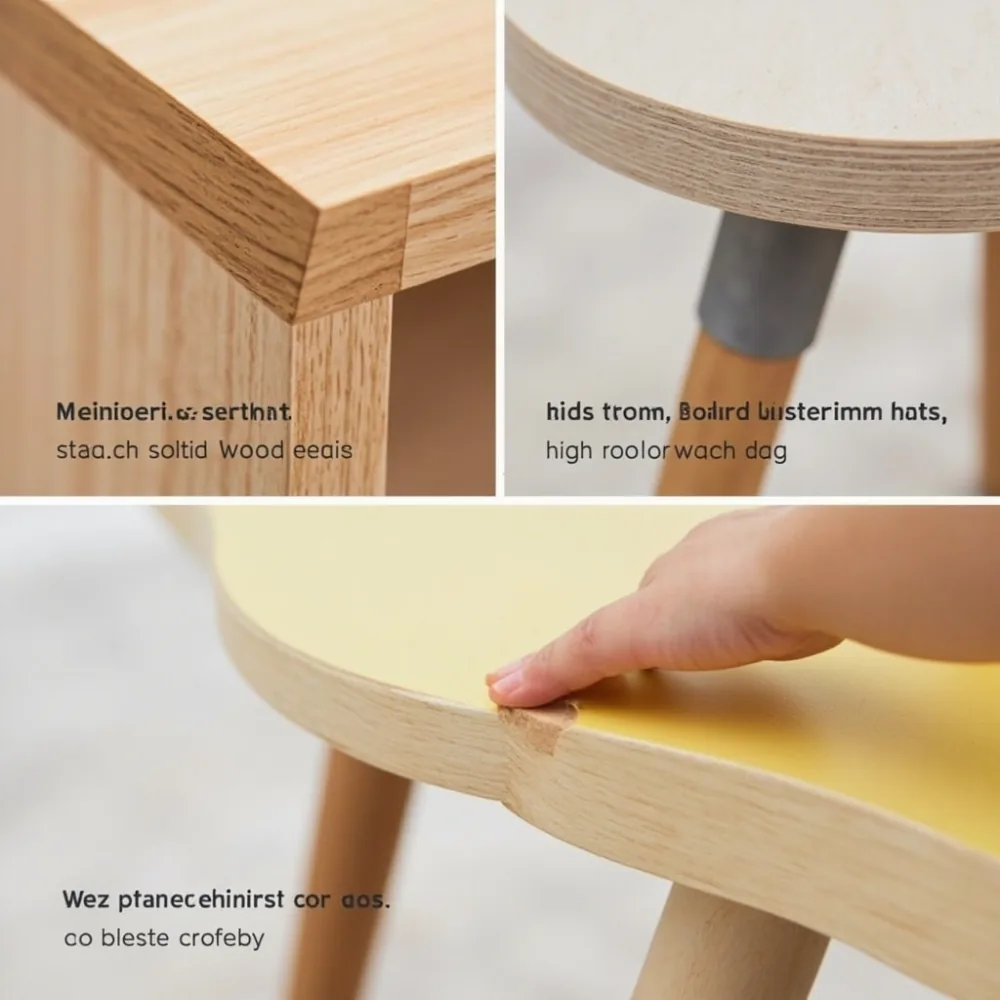
Understand solid wood movement
Choose moisture-resistant finishes
Test surfaces for cleaning
Singapore’s high humidity makes material selection more important than appearance alone. Engineered board can be sensible for a child’s wardrobe or desk carcass because it is dimensionally stable, but exposed edges, joints and drawer runners still need reliable construction. Solid wood furniture is attractive and repairable, yet it can move slightly as the season changes.
For solid wood, I look for kiln-dried timber and a finish that protects the grain without forming a fragile plastic film. The material should be allowed to acclimatise in the room for 24–48 hours before installation. I also check whether the maker offers a moisture-related care guidance note rather than promising that wood will never change.
- Best for high-touch surfaces: powder-coated metal legs and a wipe-clean lacquered finish.
- Best for repairable casework: solid wood with dovetail or dowelled joints and replaceable drawer components.
- Best for compact storage: moisture-resistant engineered board with sealed edges.
- Best for soft furnishings: removable, washable covers with colourfast fabric.
Durable furniture does not mean indestructible. A plastic or coated desktop may better handle glue, paint and spilled drinks, while a wood desk may need a placemat and sensible habits. I would rather choose the finish based on the child’s age than pay for a premium material that is treated as delicate.
Is a bunk bed safe in a small Singapore bedroom?
Check load and guardrail dimensions
Plan the ladder and headroom
Follow local safety guidance
A bunk bed can work in a compact HDB or condo room, but only if I measure the full vertical and horizontal envelope before ordering. I avoid placing the upper bunk directly beneath a ceiling fan. The ladder needs a secure grip and about 30–45 cm of clear floor space, while the guardrail should be at least 20 cm above the mattress surface.
I also check the upper berth’s usable width. A 90 cm mattress may fit the frame, but a narrow frame can feel cramped. The maker’s stated maximum load matters, and I would not exceed it or allow heavy jumping. Most responsible suppliers recommend an age of at least six for the upper bunk, depending on the product and local safety advice.
- Minimum practical ceiling height: 210–220 cm from finished floor for a typical low bunk.
- Upper mattress position: maintain at least 30 cm clearance below the guardrail before compression.
- Floor protection: use a non-slip mat and keep the ladder zone clear.
If a second child needs the room later, a loft bed with a study desk underneath may be more adaptable than a fixed two-level bunk. It also reduces the need for two separate pieces of furniture, which can help in a 7 square metre bedroom.
How much should kids’ room furniture cost in Singapore?
Set a realistic budget by category
Compare delivery and assembly separately
Judge value over hidden extras
I budget by the complete set rather than by the lowest headline price. A practical HDB package with a bed, wardrobe, desk, chair and storage can range from about SGD 1,200 to SGD 3,500. A more substantial solid wood set may cost SGD 3,000 to SGD 6,500, while a fully custom compact room can begin around SGD 5,000.
The price comparison below is a planning guide, not a quotation. Promotions, exact dimensions, materials and delivery conditions can change the final figure.
| Furniture set | Typical dimensions | Approx. weight | Planning price | Lead time |
|---|---|---|---|---|
| Compact engineered-wood set | 120 × 200 cm bed; 100 × 50 cm desk | 95 kg | SGD 1,200–2,200 | 2–4 weeks |
| Solid wood bed, desk and chair | 135 × 200 cm bed; 120 × 55 cm desk | 130 kg | SGD 2,800–4,800 | 4–7 weeks |
| Custom built-in room package | Layout based on room measurements | 220–350 kg | SGD 5,000–12,000 | 6–10 weeks |
I also reserve SGD 100–300 for delivery, carrying and assembly if the supplier does not include them. HDB floor-level units can be easier to move than high-rise lifts, but stairs, narrow corridors and parking distance still affect the final work. MIDHILL is a Foshan solid-wood furniture maker established in 2008 and offers a 10-year structural warranty, so its warranty terms and finish details are worth comparing alongside price.
How do I avoid dead space in a 7–10 square metre kids’ room?
Use vertical storage carefully
Choose dual-purpose furniture
Keep the floor visually open
In a small HDB bedroom, I try to keep the centre of the room clear. The bed, desk and wardrobe can sit around the perimeter, but I do not fill every corner with a separate shelf. A wall cabinet up to 35–40 cm deep is enough for books and closed storage; deeper open shelving becomes a visual block and difficult to clean.
Dual-purpose pieces earn their space. A bed with under-bed drawers, a desk with a shallow pedestal and a wardrobe with a loft cabinet reduce the need for extra units. A narrow 30–35 cm bedside table can hold a book and lamp while keeping the walkway open.
- Use one large art panel or pinboard instead of many scattered display shelves.
- Choose a mirror with a closed storage section rather than adding a separate dressing table.
- Place the desk near a window for daylight, but add a blind to control glare and heat.
- Keep toys in labelled lidded bins that can slide beneath the bed.
Custom furniture can be useful where standard dimensions leave an awkward gap, but I only customise when the saving is measurable. Full-height built-ins maximise storage, yet they can make maintenance harder and limit future layout changes. A modular desk, wardrobe and bed system is often more practical if the child’s needs will change quickly.
What safety features should I check before handing over a kids’ room?
Inspect furniture joints and hardware
Secure shelves and heavy items
Check cords, windows and lighting
I inspect every joint, hinge, screw and anti-tip fixing before the room is used. Drawers should stay open without dropping, doors should close cleanly, and no sharp edge should be exposed at a child’s head height. For tall wardrobes and wall units, I use the supplied or manufacturer-recommended wall straps even when the unit is against masonry.
- Furniture: verify stability, load limits, rounded corners and non-toxic finishes.
- Shelving: anchor tall units and keep heavy books on lower shelves.
- Electrical: route lamp and device cables away from the bed edge and reachable cords.
- Windows: fit cordless safety stays that prevent opening beyond about 10 cm.
- Small parts: keep screws, magnets and accessories beyond a young child’s reach.
I check window fall risks, blind cords and furniture placed near an openable window. A low bookcase should not be positioned where a child can climb onto it and reach the opening. For sleep, I follow the child’s age and size, keep soft toys and loose bedding appropriate, and avoid placing cords near the sleeping area.
How do Singapore delivery and assembly services actually work?
Measure access points first
Confirm what the quoted service includes
Plan for a realistic installation window
I give the supplier the building block, floor, unit and lift dimensions before making a large order. The key measurements are the lift door width and depth, the lift car’s diagonal, hallway turns, staircase width and the door opening of the bedroom. I also ask whether the delivery crew can carry the item to the door, place it in the room, unpack it and remove the packaging.
For a standard HDB flat, delivery usually takes 30–90 minutes once the crew reaches the unit, although access or parking may add time. A custom wardrobe or bed assembly can take another 1–3 hours. Condo deliveries may require a loading-bay booking, service-lift reservation, vehicle-parking approval or a move-in permit, so I allow 2–4 hours rather than expecting a rapid drop-off.
- Confirm whether stairs, a lift or both are included in the price.
- Ask whether assembly, anchoring and packaging removal are included.
- Provide clear access photos if the unit has tricky corners.
- Check whether a failed delivery attempt incurs a redelivery fee.
Buyers ordering from Foshan or other overseas factories should also confirm the total landed timeline, including production, sea freight, customs clearance and local delivery. A production time of four weeks does not mean the furniture arrives in four weeks.
How do I make a kids’ room feel good without spending more?
Choose a repeatable colour palette
Add soft lighting and storage
Keep toys easy to put away
I begin with the fixed finishes already in the room. If the wardrobe is warm wood, I use cream, muted blue, soft green or charcoal around it rather than adding several competing colours. One main accent colour on a chair, rug or pinboard makes the room feel intentional without repainting everything.
Storage is the biggest visual upgrade. Closed cabinets reduce noise and hide clutter, while one open display area can show books, artwork or trophies. I use baskets with clear labels because children manage their belongings better when each category has a defined home.
- Lighting: use a dimmable desk lamp and a warm ceiling light, ideally on separate switches.
- Rugs: choose a washable, non-slip rug that leaves at least 15 cm clearance from furniture edges.
- Walls: use a simple noticeboard for school work and rotate displays instead of applying many stickers.
- Furniture: coordinate the bed frame, desk and wardrobe finish so the room does not look pieced together.
The best children’s room is easy to reset in five minutes. I prioritise a clear floor, a reachable toy system and a comfortable study chair over decorative pieces. A good chair for a child aged 6–12 often needs a seat height around 43–48 cm, matching the desk at roughly 68–76 cm, so both can be adjusted as the child grows.
Frequently asked questions
What is the best furniture for a small HDB kids’ room?
A bed with under-storage, a 50–60 cm-deep desk and a wardrobe or shelving system with closed compartments usually works best. Keep at least 75 cm of circulation space and avoid filling every corner. Choose moisture-resistant finishes, rounded edges and furniture that can be moved when the child’s needs change.
Is solid wood furniture suitable for Singapore’s humid climate?
Solid wood can work well if the timber is properly dried and the finish is durable, but it may expand or contract slightly with humidity changes. Look for sealed edges and good joinery, and follow the maker’s care instructions. Engineered board is also sensible for wardrobes and desk carcasses where stability is important.
How much should I budget for a complete kids’ room?
A practical HDB set with a bed, wardrobe, desk, chair and storage often costs around SGD 1,200–3,500. Solid wood packages generally fall around SGD 2,800–6,500. Custom built-ins can start near SGD 5,000. Allow an extra SGD 100–300 for delivery or assembly if these are not included.
How long does custom kids’ furniture take to arrive in Singapore?
Production commonly takes 4–8 weeks, while custom built-ins may require 6–10 weeks. Sea freight, customs clearance and local delivery can add several more weeks. Confirm the estimated arrival date, not just the production time, and book condo loading-bay or service-lift access in advance.
Questions about sizing, fabric or delivery?
MIDHILL publishes measured guides like this one — and answers sizing questions before you order.
See the collection