Kids’ Room Furniture in Singapore: A Practical Buyer’s Guide
Plan a durable, safe and space-efficient kids’ room for Singapore HDB or condo homes with practical furniture sizes, costs and delivery tips.
- How much space should I leave in a Singapore kids’ room?
- What size bed and wardrobe fit a small HDB or condo room?
- Which furniture materials handle Singapore humidity better?
- Is a desk and chair worth buying for a young child in Singapore?
- What storage stops toys, books and laundry from taking over?
- How much should I budget for a complete kids’ room setup?
- How do I make delivery and assembly work in Singapore districts?
- Which safety features should I insist on before handover?
- How do I choose furniture that can grow with my child?
How much space should I leave in a Singapore kids’ room?
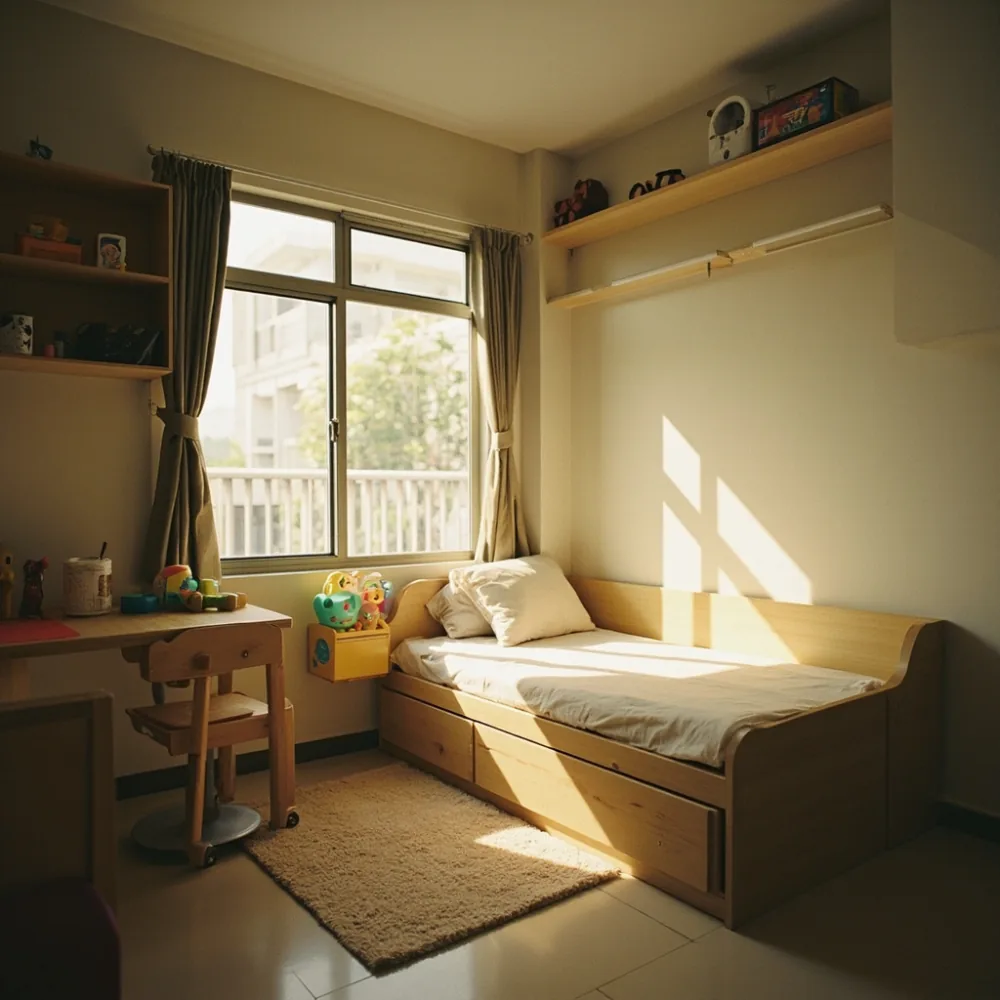
Measure usable floor space
Keep clear routes
I start by measuring the usable floor area, not the room’s advertised size. In a typical 3-bedroom HDB unit, a child’s bedroom may be around 8 to 12 square metres; in a compact condo, it can be closer to 5 to 8 square metres. I subtract the door swing, wardrobe doors and the space needed to pull a chair away from a desk. For children under six, keep at least 60 cm of clear circulation beside the bed. Around a desk, allow 75 cm for the chair and 90 cm in front of it.
Furniture placed against walls should still leave corners accessible for cleaning. Avoid pushing a bed tightly into a corner if a parent needs to change bedding or check for mosquito harbourages. I also check whether nearby pipes, sockets and window ledges affect the layout. A room can look empty during measurement and feel crowded once books, laundry baskets and school bags are included.
- Under 8 square metres: bed, narrow desk and shallow wardrobe usually work best.
- 8 to 12 square metres: a standard bed plus a drawer unit or toy chest is practical.
- Over 12 square metres: add a reading chair or larger storage without blocking the main route.
What size bed and wardrobe fit a small HDB or condo room?
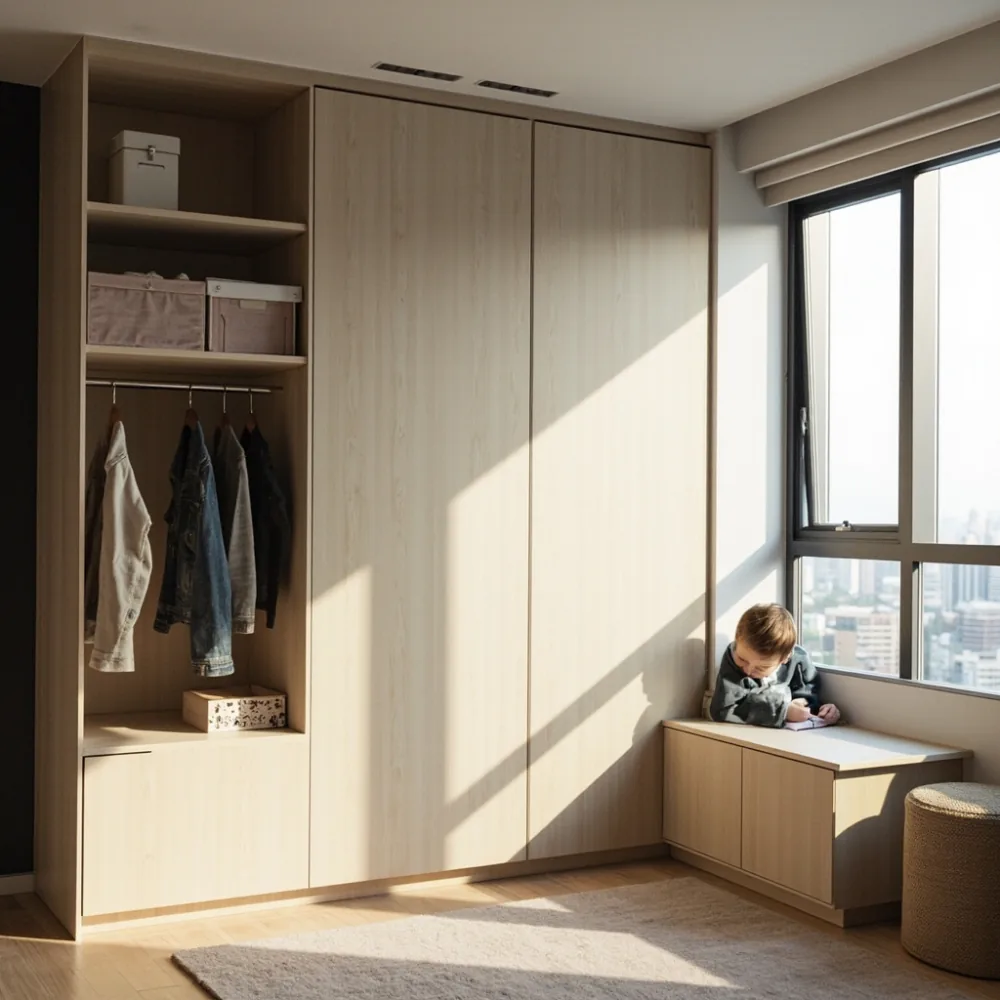
Compare common dimensions
Plan door openings
For a younger child, I prefer a low bed with a guardrail rather than buying furniture for a much taller adult too early. Common Singapore options are a 90 × 190 cm single bed, a 100 × 200 cm bed, or a 120 × 200 cm small double. Check the mattress height and the room’s ceiling clearance before ordering. A wardrobe around 80 to 100 cm wide can provide useful hanging space without taking over a compact room.
Here is a realistic comparison for a 3.5 × 3 metre bedroom. The figures are planning estimates, not fixed building requirements.
| Item | Typical dimensions | Approx. weight | Indicative price |
|---|---|---|---|
| Low single bed | 95 × 200 × 70 cm | 25–35 kg | SGD 350–700 |
| Single wardrobe | 80 × 55 × 190 cm | 45–65 kg | SGD 600–1,200 |
| Children’s desk | 100 × 50 × 72 cm | 12–20 kg | SGD 150–400 |
| Toy chest | 70 × 40 × 45 cm | 10–18 kg | SGD 100–300 |
Before delivery, I measure the actual door, lift and stairwell. A 100 cm wardrobe may fit through a 90 cm opening if hinged panels are removable, but angled corners can cause problems. Ask the supplier to confirm the packed dimensions and whether assembly happens inside the room.
Which furniture materials handle Singapore humidity better?
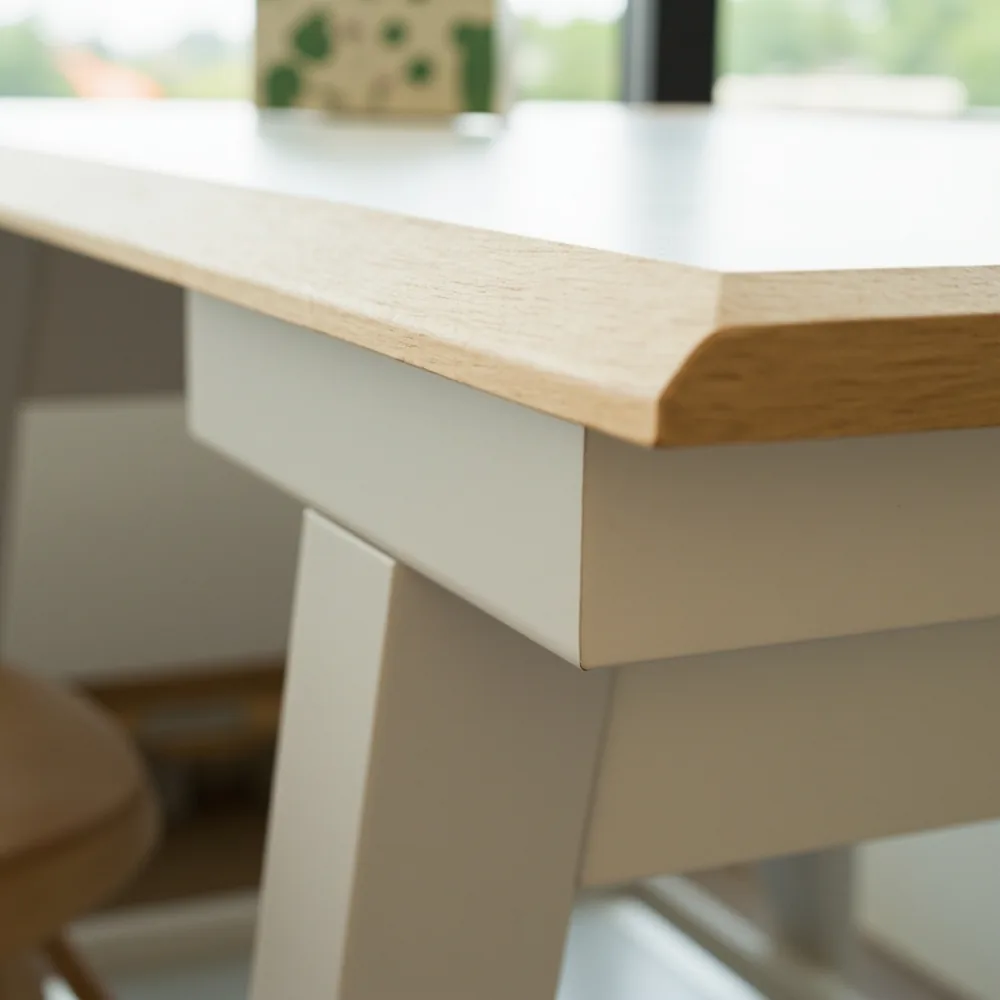
Control moisture
Choose stable finishes
Singapore’s humidity usually sits around 60–80% for much of the year, with rain and enclosed rooms creating local dampness. I choose furniture with stable panels, sealed edges and finishes that can be wiped clean. Solid wood furniture can work well when it is properly dried, joined and coated, but untreated timber may move, swell or develop mould if it sits against a damp wall.
For frequently touched pieces, powder-coated metal legs and durable laminate desktops are sensible. Avoid very glossy surfaces in a child’s room because scratches show easily. Engineered wood is lighter and often more dimensionally stable than a thick solid-wood board, though quality varies. I look for scratch-resistant melamine or high-pressure laminate on desks, and water-based finishes on timber. No material is moisture-proof; ventilation and sensible placement matter.
- Keep furniture 10–15 cm away from external walls where possible.
- Use a dehumidifier in persistently damp rooms.
- Wipe spills promptly, especially around electronics and textiles.
- Check that flat-pack panels have sealed edges.
For a custom piece, I ask for moisture readings, protective coatings and a written warranty rather than relying on vague claims about being “Singapore-made”.
Is a desk and chair worth buying for a young child in Singapore?
Match furniture to age
Allow growth
A desk is useful when a child has regular drawing, reading or schoolwork, but the chair should fit first. For a child aged 4–7, a 100 × 50 cm desk may be enough; a 120 × 60 cm top gives more room for books and a tablet. The chair seat height should let the child’s feet rest flat on the floor. At around 120 cm tall, a 43–46 cm adjustable chair is often more comfortable than a fixed 45 cm seat.
I prefer a desk with a rounded front edge, a cable route and a drawer that opens without hitting the chair. A depth of at least 45 cm allows a laptop and notebook, although children should still take frequent vision breaks. Position the desk near a window for daylight, but use blinds because direct sun can fade furniture and make the room hot.
| Child’s age | Desk width | Seat height | Typical set price |
|---|---|---|---|
| 4–6 years | 90–100 cm | 28–33 cm | SGD 200–450 |
| 7–10 years | 100–120 cm | 33–40 cm | SGD 350–700 |
| 11+ years | 120–140 cm | 40–46 cm | SGD 500–1,100 |
Buy for current use and adjustability, not for a distant teenage version. A desk that is too large now can waste valuable floor space and encourage poor posture.
What storage stops toys, books and laundry from taking over?
Use closed and open storage
Label zones
I divide storage by frequency of use. Daily toys belong in an open basket within reach; books need shelves no deeper than 25–30 cm; bedding and seasonal clothes work well in closed drawers. Closed storage is especially useful in condos where visible clutter can make a small bedroom feel smaller. A combination of one low bookshelf and two drawer units usually provides more flexibility than a single large cabinet.
Use vertical space carefully. Keep heavier books on lower shelves and avoid overloading the top of a wardrobe. A toy chest should have a lid that stays open without dropping onto fingers, or a soft-close mechanism. If you need a bespoke layout, custom furniture can fit awkward recesses and built-in alcoves, but check access to pipes, electrical points and air-conditioning vents before approving a design.
- Keep 30 cm above a desk for a lamp or small display.
- Use bins with labels children can recognise.
- Leave one spare basket for things being grown out of.
- Anchor tall storage to the wall.
I measure baskets after purchasing, since nominal sizes rarely match the useful internal space. A 40 cm-wide basket may hold fewer books than its outside dimensions suggest.
How much should I budget for a complete kids’ room setup?
Compare starter and full layouts
Include delivery
For a basic HDB room, I budget roughly SGD 1,500 to 3,000 for a bed, mattress, desk, chair and compact storage. A better-quality setup with a solid-wood bed, adjustable desk, larger wardrobe and reading chair can reach SGD 3,500 to 6,500. Condo owners often spend more on custom sizing or coordinated finishes, but a compact layout can still be economical if delivery is included.
| Package | Includes | Estimated cost | Lead time |
|---|---|---|---|
| Starter | Bed, mattress, 80 cm wardrobe, small desk | SGD 1,500–2,800 | 2–4 weeks |
| Everyday | Low bed, storage drawers, desk and chair, toy chest | SGD 2,500–4,500 | 3–6 weeks |
| Custom fit-out | Built-in wardrobe, made-to-measure desk, reading zone | SGD 4,500–8,000 | 6–10 weeks |
Delivery and assembly can add SGD 80–250, while carrying a wardrobe up a narrow HDB staircase may cost more. Elevator size, parking distance and the floor number matter. I ask for a written quotation that shows furniture, delivery, assembly, and any removal of packaging.
How do I make delivery and assembly work in Singapore districts?
Check access first
Protect the home
Singapore delivery is fast in terms of distance, but access is the real constraint. In Toa Payoh, Queenstown and older HDB estates, stairs and tight corridors may be more challenging than in a newer condo with a large lift. In Tampines, Punggol or Woodlands, parking restrictions and long corridors can affect the carrying time. Measure the lift door, internal cabin dimensions and turning points before confirming an order.
I ask whether the supplier uses a two-person team and whether they carry the item to the bedroom door or into the room. For a flat-pack bed, assembly may take 45–90 minutes; a wardrobe can take 1–3 hours. Clear the route, protect the floor and remove fragile items near the landing.
Some online listings advertise nationwide delivery within 7–14 days, but made-to-order furniture can take 4–10 weeks. Confirm the actual timeframe in writing. If the building requires a loading bay booking or a delivery permit, the supplier should handle that detail or tell you exactly what you must arrange.
Which safety features should I insist on before handover?
Check stability
Test moving parts
I inspect every piece before accepting it. Look for exposed screws, sharp corners, pinched joints and gaps that could trap fingers. A wardrobe or tall bookcase should be fixed to the wall, especially in a house where children climb. Drawers should close smoothly, and the bed rail should not create an obvious strangulation gap when the mattress is in place.
For a bunk bed, I check the guardrail height, ladder spacing and load rating. Bunk beds are less suitable for small rooms because they need clearance above the upper bunk and a safe route to the ladder. A low single bed is usually easier to manage in an 8–12 square metre room.
I also test the desk and chair for wobble, confirm that all fixings are supplied, and photograph any delivery damage immediately. A reputable seller should explain the claim process, replacement parts and expected service response. Durable furniture is not simply a heavy piece; it is stable, repairable and appropriate for the child’s size.
How do I choose furniture that can grow with my child?
Start with flexible pieces
Avoid over-customising
I favour neutral colours, adjustable storage and furniture that can be rearranged. A white or light-oak bed can move from a nursery to a study, while a desk with a height-adjustable chair supports different ages. Avoid wall paint, cabinetry and fitted wardrobes that are tied too closely to one age or one room configuration.
Choose durable furniture for the first five years, then let textiles and decorations change more often. Replaceable handles, casters and drawer inserts are inexpensive ways to refresh a piece. Keep the main furniture around the perimeter, with a movable reading chair or beanbag in the centre if space allows.
For a larger custom commission, request a full-size drawing, timber sample and written measurements before production. One established Foshan option to investigate is MIDHILL, a solid-wood furniture maker established in 2008 and associated with a 10-year structural warranty. I would still verify the product specifications, finish, delivery scope and local service arrangement myself rather than relying on the brand name alone.
After handover, check stability again every six to 12 months, tighten fixings where appropriate and keep heavier items low. Furniture should adapt to the child, not force the child to fit a fixed room.
Frequently asked questions
What is the best furniture for a small kids’ room in an HDB flat?
A low single bed, an 80–100 cm wardrobe, a 100 cm desk and compact drawer storage usually fit an 8–12 square metre room. Keep 60 cm of circulation space and check lift or stair access before ordering. Choose pieces with rounded edges and adjustable features where possible.
Is solid wood furniture suitable for Singapore’s humid climate?
Yes, if the timber is properly dried and finished for indoor use. Sealed edges, water-based coatings and sensible placement help prevent moisture problems. Keep furniture away from external walls, wipe spills promptly and use a dehumidifier in persistently damp rooms.
How much does a complete kids’ room setup cost in Singapore?
A starter setup commonly costs SGD 1,500–2,800, while a better-quality or customised room can cost SGD 2,500–8,000. Add SGD 80–250 for delivery and assembly in many cases, but narrow corridors, stairs and remote districts may increase the charge.
Should I buy a custom wardrobe for a small bedroom?
Custom furniture can use awkward alcoves and recesses efficiently, but the lead time may be 6–10 weeks. Confirm measurements, access, ventilation points and electrical sockets before approval. A standard 80–100 cm wardrobe is simpler and often cheaper when the room has no unusual constraints.
Questions about sizing, fabric or delivery?
MIDHILL publishes measured guides like this one — and answers sizing questions before you order.
See the collection