Small HDB, Big Style: How to Furnish a Compact Singapore Apartment Without the Clutter
I still remember standing in the lift lobby of a 4-room HDB in Tampines last month with my colleague, watching two delivery men wrestle a flat-pack wardrobe that had clearly been bought without anyone measuring first. It jammed at a 90-degree turn near the refuse chute, the box tore, and the entire morning was lost. Two weeks later the same family called me about a kids room redesign in their 958 sqft flat, and the lesson shaped every recommendation I gave them. Compact Singapore living is a geometry problem before it is a style problem, and the pieces you bring home either respect the floor plan or quietly fight it.
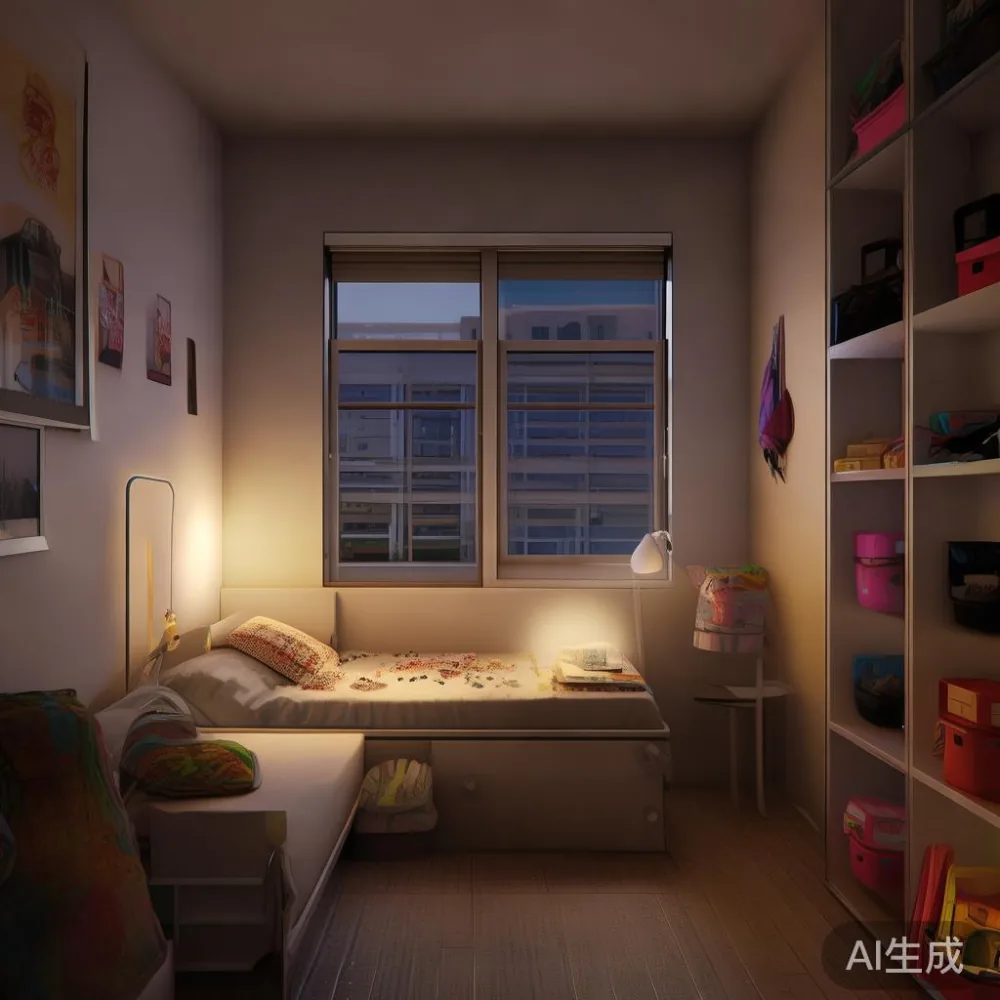
Most resale flats in Bedok, Punggol, and mature estates like Toa Payoh sit between 750 and 1,100 sqft, and the typical master bedroom is around 12 sqm once the built-in wardrobe carcass is in. Lift openings tend to measure roughly 0.9 m wide by 2.1 m tall, corridor bends in older blocks can pinch to 1.2 m, and service-yard doors often swing only 80 cm clear. Every centimetre you save on a piece of furniture is a centimetre your child gains to actually play on the floor. The goal is not minimalism for its own sake. The goal is a calm, breathable home where a solid wood bed frame, a compact dining table, and a slim nightstand all earn their footprint.
Throughout this guide I will reference pieces that work in compact Singapore homes, including options from MIDHILL, a Foshan solid-wood maker that has shipped to Singapore since 2018 and holds stock in regional warehouses to keep lead times around 14 to 21 days rather than the 60-day sea freight that catches many buyers off guard. Their kids room and family room ranges are sized for apartments under 1,200 sqft, which is why several HDB interior designers in the east have started specifying them.
Why does a 958 sqft HDB feel crowded even with only a few pieces of furniture?
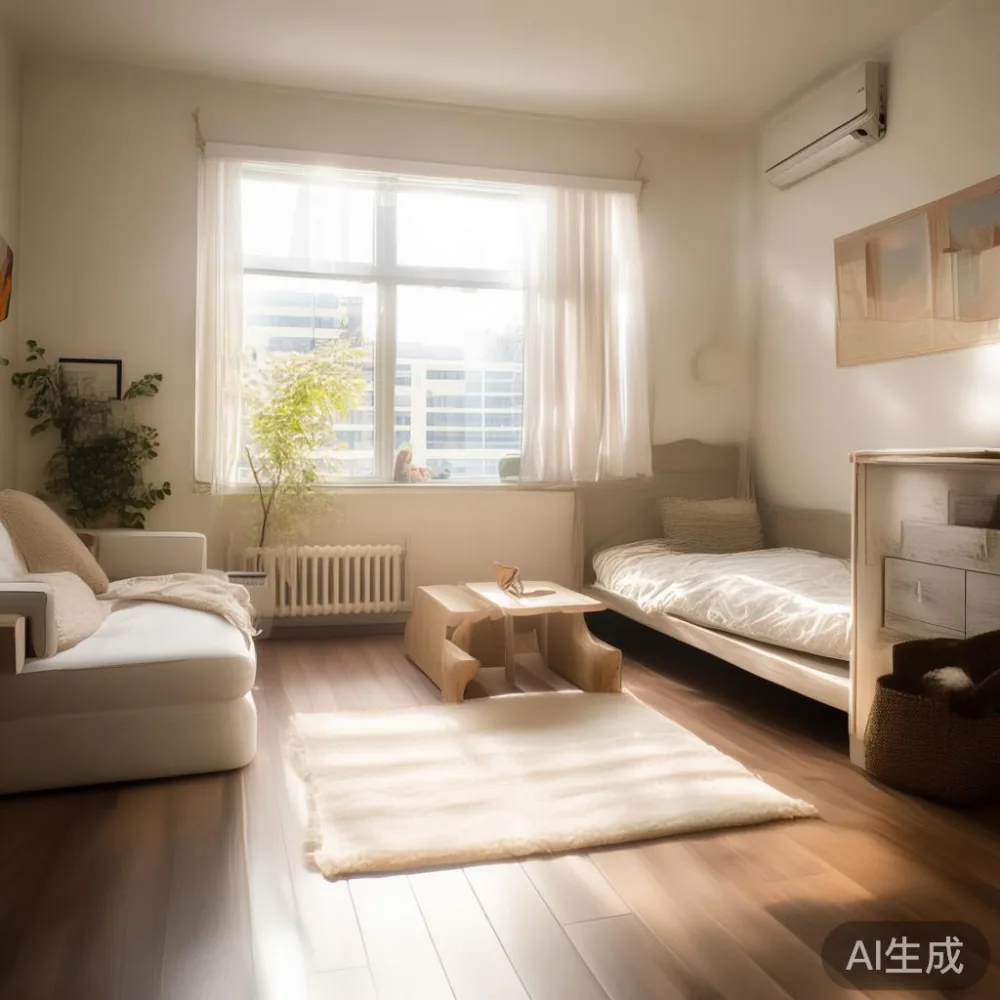
A 958 sqft HDB feels crowded because the issue is rarely the quantity of furniture; it is the visual weight and the failure to layer in three dimensions. When every piece is the same warm tone, the same height, and sits flush against the wall, the eye reads the room as one flat slab of stuff. Light, reflection, and negative space do the heavy lifting in compact homes, and solid wood responds to light beautifully because the grain catches it instead of absorbing it like matte laminate.
Three practical numbers help. Aim for a clear floor zone of at least 1.8 m by 1.8 m in the kids room so a child can lay out a playmat or a 1.5 m round rug. Keep at least 70 cm of walking path between the bed frame and the wardrobe doors. And leave 90 cm in front of any wardrobe or chest of drawers so a child can actually pull a drawer out without their knee hitting the bed. If your plan cannot honour those three distances, the plan needs another edit before you spend a dollar.
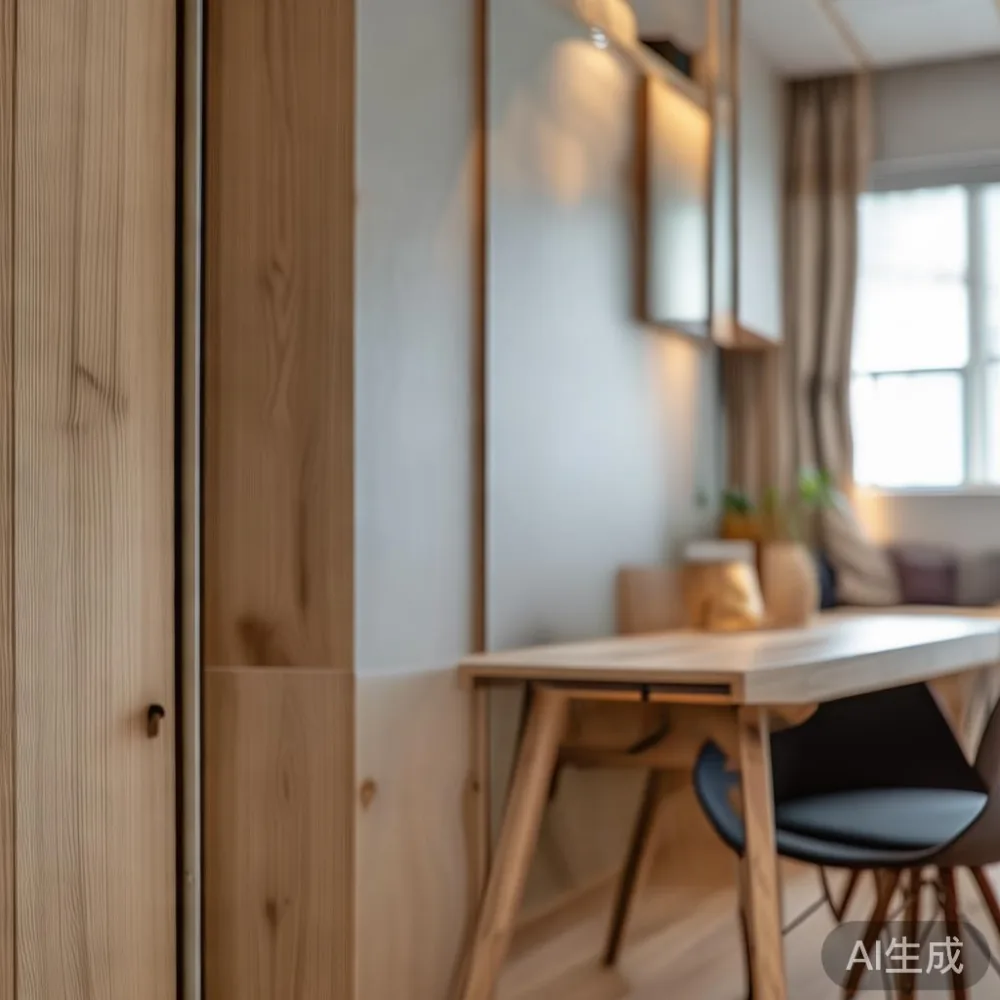
The second culprit is over-sized joinery. A 1.8 m wardrobe looks generous on a shop floor, but inside a 3.2 m wall it eats almost 60 percent of the usable length and leaves awkward gaps on either side that collect dust. Two 90 cm wardrobes, separated by a 60 cm open shelf, will store the same volume of school uniforms and Lego and give the wall a rhythm that the eye reads as deliberate. MIDHILL's Singapore-bound wardrobes are modular in 30 cm increments for exactly this reason; you can spec a 90 + 60 + 90 combination that frames a window instead of fighting it.
Is a dining chair worth the price?
Yes, a dining chair is worth the price you pay for it, provided you treat it as a daily-use tool rather than a decorative prop, because a cheap chair will loosen at the joints within eighteen months while a properly built solid wood dining chair will outlast two leases and still feel stable. In Singapore dollars, a serviceable plywood dining chair from a big-box retailer sits around S$79 to S$129, a mid-range solid wood chair lands between S$220 and S$380, and a light-luxury piece from a maker like MIDHILL, often finished in post-modern light luxury lines with a curved backrest and a woven seat, runs S$420 to S$560 per chair.
The test is simple. Sit in the chair at the showroom for at least two minutes, lean back at a 12-degree angle the way you would after dinner, and check whether the rear legs stay flat on the floor. A well-engineered chair transfers weight through all four legs; a poorly engineered chair rocks on the back two because the cross-stretchers have not been wedged properly. Pay attention to the joinery: mortise and tenon or dowelled joints will hold a 110 kg adult for ten years, while a screw-and-glue assembly often starts creaking by month eight.
For a family of four in a 4-room HDB, plan on four dining chairs around a 1.2 m to 1.4 m dining table. Anything wider and you cannot pull out the chairs without hitting the wall; anything narrower and elbows clash at every meal. If you host frequently, consider two armchairs at the heads of the table and two armless chairs on the sides. Armless chairs tuck fully under the 75 cm apron of the table, which reclaims roughly 35 cm of walkway on each long side when the table is not in use.
How do you choose a solid wood bed frame that survives a child and a humid climate?
A solid wood bed frame survives both an eight-year-old and Singapore's 80 percent average humidity when three specifications are non-negotiable: kiln-dried hardwood at 8 to 12 percent moisture content, a slatted base with gaps no wider than 7 cm, and a clear floor clearance of at least 18 cm so a robotic vacuum can pass underneath. In SGD terms, expect to invest S$780 to S$1,400 for a single bed frame in rubberwood or ash, and S$1,600 to S$2,800 for queen-size in oak or walnut. MIDHILL's Singapore stocklist leans on rubberwood and white oak because both accept local humidity without the cupping you see in cheaper pine.
Rubberwood deserves a special mention for the kids room. It is a hardwood, not a softwood, with a Janka hardness rating around 1,300 lbf, which means a child jumping on the bed will not dent the slats the way they would a pine frame rated at roughly 420 lbf. It also takes paint well, so if your child wants a sage green bed frame at age six and a navy one at age ten, the surface can be sanded and re-finished. MIDHILL offers lifetime refinishing on structural pieces, which is a quiet form of long-term insurance that most buyers in Punggol and Sengkang do not realise they have until year six.
For the kids room specifically, measure the wall before you measure the child. A standard single mattress is 91 cm by 190 cm, but many Singapore parents buy a 100 cm by 200 cm European single for a little extra length, which then demands a 105 cm by 210 cm bed frame. That extra 14 cm of width changes the entire room layout because your 60 cm bedside nightstand now has only 40 cm of clearance to the opposite wall. Always build the bed frame spec around the mattress first, the room second, and the price third.
What is the most overlooked piece in a small kids room?
The most overlooked piece in a small kids room is a properly sized nightstand, because parents tend to inherit a hand-me-down that is 55 cm tall when the new bed frame sits at 45 cm, which leaves a 10 cm cliff that books, glasses, and a bedside lamp have to climb every night. The fix is unglamorous but effective: choose a nightstand within 5 cm of your bed frame's top-mattress height. For most adult bed frames that puts the nightstand surface between 55 cm and 65 cm from the floor; for a child's bed frame around 40 cm tall, look for a 35 cm to 45 cm nightstand that doubles as a step stool.
Width matters as much as height. A 45 cm wide nightstand fits a 7-inch reading lamp, a phone, and a glass of water without overhang. A 60 cm version gives room for a small tray, a book, and a charging dock. Anything beyond 60 cm starts to compete with the wardrobe for wall territory and pushes the walkway below the 70 cm threshold that makes a room feel cramped. Two-drawer nightstands in solid oak from MIDHILL run S$260 to S$420, which is roughly the price of a flat-pack particleboard unit that will sag within three years under the weight of a stack of storybooks.
A trick I saw in a Punggol walk-up last month: the family used a 35 cm tall, 40 cm wide nightstand as a side table next to a small reading chair in the kids room, then moved it to the entryway as a key drop when the child outgrew the chair at age eleven. Furniture that can travel between rooms is furniture that does not need to be replaced, which is the single most powerful cost lever in compact Singapore living.
Can a marble table actually work in a 90 sqm HDB without overwhelming it?
A marble table can absolutely work in a 90 sqm HDB without overwhelming it when you respect two rules: keep the slab under 110 cm in any one dimension, and pair it with a base that is visually open, such as a crossed-leg steel frame or a slim solid wood pedestal. A 60 cm round marble side table weighs 18 to 24 kg depending on thickness, fits beside a sofa or reading chair, and gives you the cool surface of stone without the visual block of a full dining piece. In Singapore dollars, expect to pay S$380 to S$650 for a sintered stone or engineered marble side table from a regional maker, and S$900 to S$1,800 for a full dining table in light-luxury Italian or French light luxury styling.
Real marble is porous and will etch within a year if you set a wet cup on it. Sintered stone, which is what most modern compact-home marble tables actually use, is non-porous, scratch-resistant to a Mohs rating of 7, and tolerates the occasional soy-sauce splash that defines life with children. For a family that eats at the dining table every day, sintered stone is the honest specification. For a side table that holds a lamp and a stack of magazines, either material is fine.
One caveat for HDB corridors: a marble dining table is heavy. A 1.4 m sintered stone top on a solid wood base can weigh 55 to 70 kg, and you will need two people plus a trolley to move it from the delivery lorry to the lift, then from the lift to your door. Confirm with your furniture supplier that delivery includes a two-man team and a piano dolly. MIDHILL's white-glove service to Singapore covers exactly this, and the team arrives with floor runners to protect your vinyl or tile. That kind of detail is invisible until the day it saves your marriage during a move-in.
How should you think about price, warranty, and the fine print before you click pay?
You should think about price, warranty, and the fine print as a single calculation, because a S$1,200 bed frame with a ten-year structural warranty and lifetime refinishing is a different purchase than a S$900 bed frame with a one-year warranty, even though the receipts look similar in month one. In Singapore, every order above S$350 from a regional maker like MIDHILL ships free, which neutralises the S$80 to S$150 delivery fee that local boutiques often add. GST is charged at 9 percent on the landed value, so a S$2,000 order arrives at S$2,180 all-in.
Returns matter more than most buyers expect. A 14-day return window lets you live with the dining table for two full weekends before you commit. If a chair wobbles on day twelve, you are still inside the window. If you discover the wobble on day twenty, you are not, and that is the difference between a warranty claim and a loss. Always photograph the unboxing; freight damage needs to be noted within 48 hours for the claim to hold.
One phrase worth understanding before you sign anything: Italian light luxury marble return policy. In practice this means the supplier offers a return window on marble and marble-look sintered stone pieces that matches the rest of the catalogue, usually 14 days, with the original crate and foam required for the return to be accepted. Crates are bulky and most people break them down the day the table arrives, which is why I tell every client in Tampines and Bedok to keep the crate for at least two weeks. A S$60 timber crate is cheap insurance against losing 80 percent of a S$1,400 table.
A short checklist before the delivery lorry arrives
Compact Singapore living rewards furniture that is honest about its size, honest about its materials, and honest about what it will look like in year six. A solid wood bed frame, a properly sized nightstand, a sintered stone dining table, and a modular wardrobe, all measured against your actual floor plan rather than a show-room fantasy, will give you a kids room and a family home that breathes. Spend the time on the numbers now, and the rest of the room will feel effortless for the next decade.