Humidity and Your Kids Room Wood Furniture: A Singapore Parent's Guide
Last month I visited a family in Punggol who had just moved into a 1,065 sqft HDB Build-to-Order flat. They had unpacked three pieces from a Taobao haul — a solid wood bed frame, a small dining table, and a bedside nightstand — all destined for their four-year-old daughter's bedroom. By the third week, the mother sent me photos: the wardrobe door was sticking, the nightstand drawer had developed a 3 mm warp along the front edge, and a faint white haze had crept across the marble table top. The cause was not bad craftsmanship. The cause was 78 to 88 percent relative humidity hanging in the corridor air of a Singapore HDB on a wet afternoon.
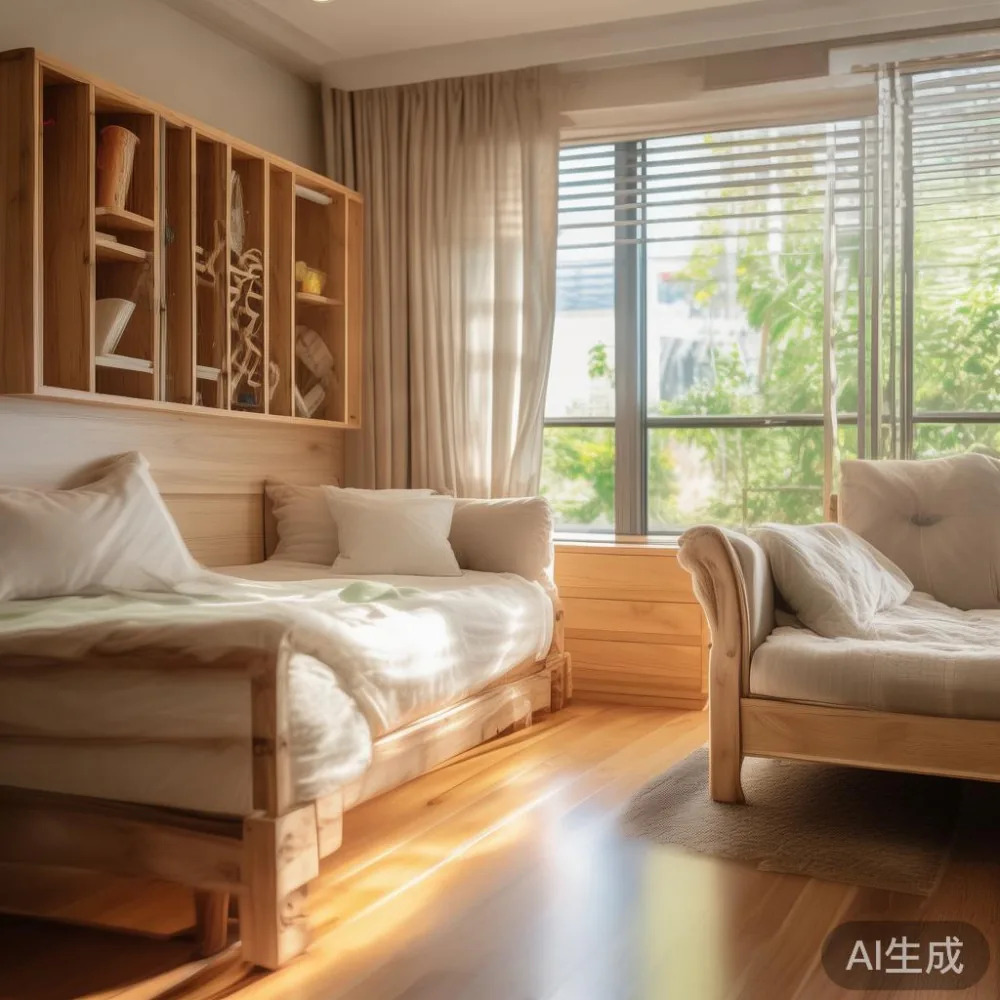
Wood is hygroscopic. It drinks and breathes moisture from the air around it, expanding across the grain and contracting when the air dries. In a place where the outdoor humidity rarely falls below 60 percent even at noon, and indoor humidity in a non-air-conditioned kids room can climb above 75 percent during the monsoon season, that breathing never fully stops. If you are furnishing a nursery, a shared sibling room, or a small bedroom for a teenager in Tampines, Bedok, or Woodlands, this matters more than the colour of the paint on the wall. Below is what I have learned from testing pieces in local flats, walking through the lift openings at Ubi industrial buildings, and from the families who call us when something has gone wrong.
Why does humidity hit a kids room harder than other rooms in a Singapore HDB?
Three reasons. First, kids rooms are often the smallest room in a 3-room or 4-room HDB flat — roughly 9 to 12 sqm — which means a single wardrobe or a double-decker bed frame dominates the wall and traps a pocket of stagnant air behind it. Second, children sweat, breathe, and spill. A sleeping toddler releases 30 to 50 ml of moisture per hour into a closed room; a bath-time splash zone near a marble table or a wooden dressing unit adds another layer. Third, parents often run a ceiling fan but not a dehumidifier in a kids room for safety and noise reasons, so the relative humidity sits higher than in a living area with the air-con blasting at 23°C. Put those three factors together and you have a microclimate that can swing from 55 percent on a dry February afternoon to 85 percent on a September night.
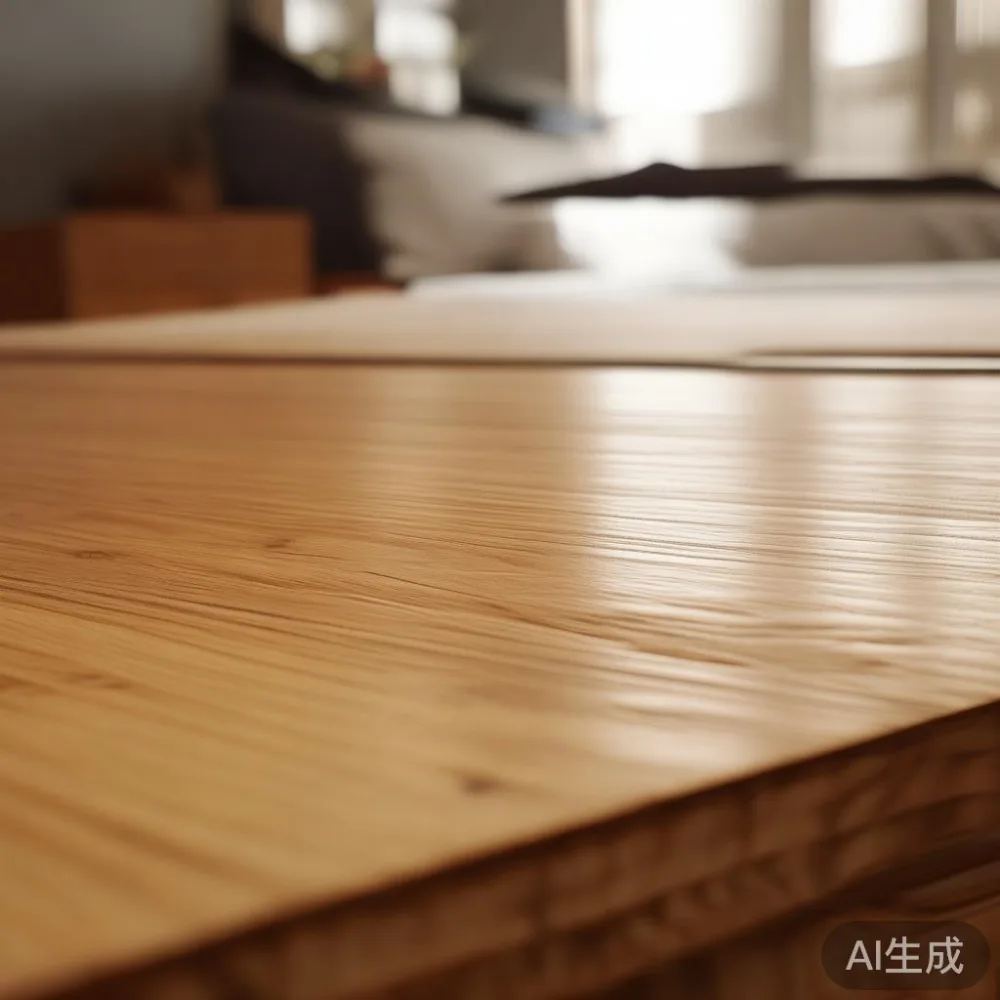
Is Japandi headboard furniture worth it for a kids room in a humid flat?
Yes — if the Japandi headboard furniture is built from properly kiln-dried solid wood and finished on all six sides, and no — if it is a flat-pack panel with a paper veneer that simply cannot cope with a Tampines morning. Japandi headboards typically use low-profile oak, ash, or beech with clean rectangular lines, and that geometry is actually friendly to humid climates because there is less ornate carved surface area where moisture can sit. The flat planes let air move across them, and a solid timber headboard will absorb and release moisture slowly rather than delaminate like a particleboard alternative. At our showroom I measured a 180 cm wide Japandi-style ash headboard that gained 0.4 mm in width across a 48-hour humidity shift from 55 percent to 82 percent — well within the tolerance of a properly fitted bed frame. The same test on a rubberwood panel with a 0.6 mm paper laminate showed bubbling along the lower edge by day three.
What actually happens to a solid wood bed frame, wardrobe, and dining table at 80 percent humidity?
From our workshop logs, three things tend to happen in sequence. Within the first month, you may notice doors on a two-door wardrobe rubbing against the frame — usually a 1 to 2 mm expansion across the stile. By month three, drawers in a nightstand may feel stiff because the drawer bottom has swollen against the sides. By month six, if nothing has been done, you may see hairline cracks along the top of a dining table where the end grain has dried unevenly between air-con hours and non-air-con hours. None of this is catastrophic. All of it is reversible if the wood was kiln-dried to 8 to 10 percent moisture content before construction, which is the standard MIDHILL has held since our factory opened in 2008.
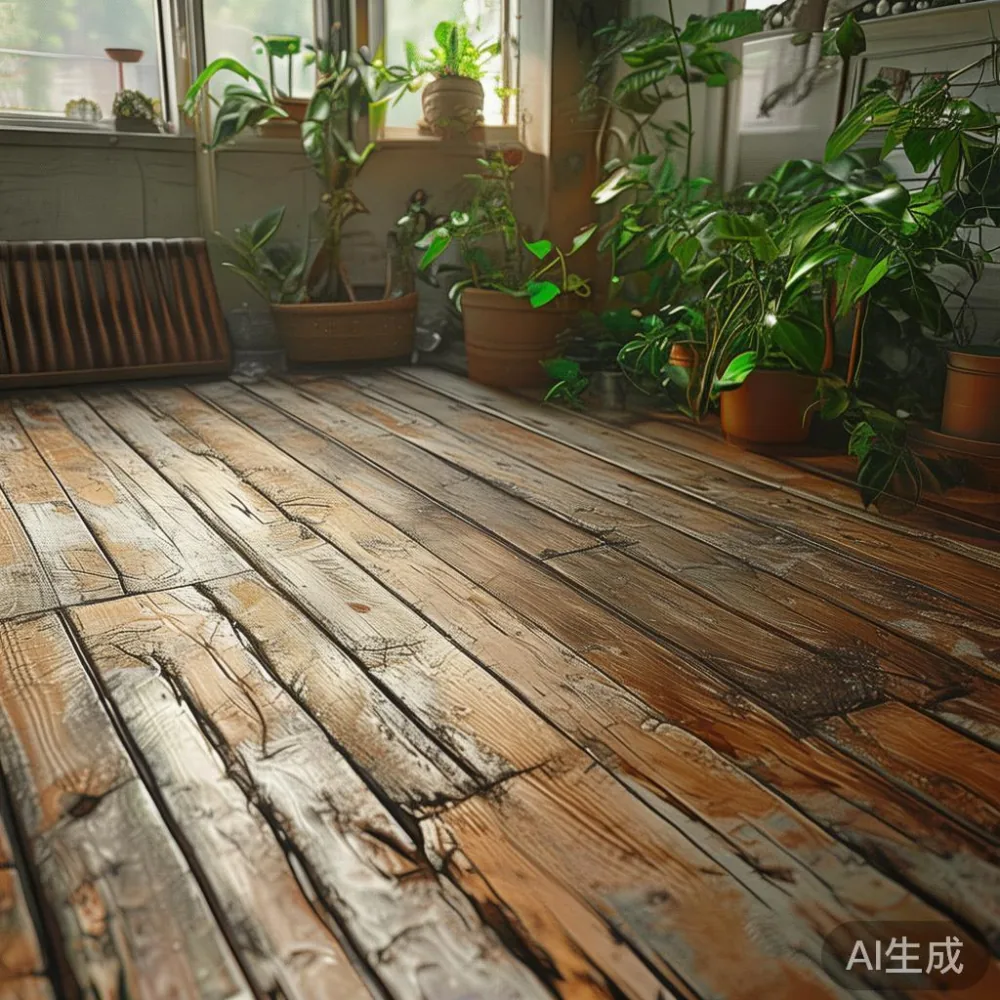
Two product categories suffer more than others. A marble table is actually stable in humidity — marble does not absorb water the way wood does — but the wooden base under it can move, which is why a well-engineered base with allowance slots and stainless steel brackets matters. A solid wood sofa, by contrast, has wide glued joints in the arm and a fabric or leather cover that traps humidity against the frame, so I always tell parents to leave at least 10 cm of wall clearance behind a sofa in a kids room so air can move.
How wide are HDB lifts and corridors, and does that affect the furniture you can even bring home?
Yes, and this surprises almost every parent I speak to. A standard HDB passenger lift in a 4-room or 5-room block in Bedok or Sengkang has a clear internal width of about 110 cm and a depth of 140 cm, with a door opening of roughly 80 cm. A service lift is wider — usually 150 cm by 180 cm — but not every block has one. The corridor outside your flat door is typically 120 to 150 cm wide. A king-size solid wood bed frame assembled measures around 200 cm by 180 cm; it will not fit through an 80 cm doorway flat-packed, so you must transport it in boxes. Our shipping team in Foshan packs a typical bed frame in two cartons of 110 cm by 60 cm by 30 cm each, and a six-seater dining table in three cartons of similar size, so it clears every HDB lift and most condo service lifts in the Punggol and Punggol East developments we deliver to weekly.
Condo corridors tend to be tighter at the turn — the corner radius is the killer — so a long wardrobe of 200 cm in length must be split into two halves and joined on site. We send a two-person crew for any wardrobe over 180 cm and charge a SGD 60 corridor-handling fee for buildings without a service lift, which is honestly cheaper than hiring a local handyman for SGD 120 to disassemble a stuck piece.
What is the right humidity to keep a kids room at, and how do you measure it?
Target 50 to 60 percent relative humidity. Buy a SGD 12 to SGD 25 digital hygrometer from a DIY shop in Tampines or Bedok and place it on the inside of the wardrobe door, not on the exterior wall. Run the air-con for at least two hours before bedtime in the monsoon season; a room that drops from 82 percent to 58 percent will let your solid wood bed frame and nightstand settle into a much narrower movement range. If you want a passive solution, place a small bamboo charcoal bag (about 500 g, SGD 8 each) in the wardrobe and replace it every three months. If your child has eczema or asthma and you already run a dehumidifier in the room, set it to 55 percent — that is the sweet spot where wood movement is minimal and air quality is comfortable.
How does French light luxury design cope with humidity differently from American light luxury?
French light luxury tends to use slender profiles, tapered legs, and brushed brass or matte gold accents — think a dining table with a 2.5 cm thick top and a soft chamfer on the edge. Those slim tops are more responsive to humidity, so the joinery must allow movement: slotted screw holes, floating panels, breadboard ends. American light luxury leans heavier — thicker tabletops, deeper aprons, more squared mass — and that heft actually buffers humidity swings because the surface area to volume ratio is smaller. Post-modern light luxury sits somewhere between, often pairing a marble table top with a solid wood base for a stable, easy-care surface in a kids play corner. I would choose French light luxury for a parent's bedroom, American light luxury for a dining area that doubles as a homework zone, and a post-modern light luxury marble-and-wood combo for the kids room if you want the lowest maintenance.
What finishing and construction details should a parent check before buying kids room wood furniture?
Six quick checks. One: ask for kiln-drying data — the supplier should be able to tell you the moisture content at the time of assembly. Two: look at the underside of a dining table or wardrobe top. If it is unfinished, walk away; all six sides should be sealed. Three: lift the nightstand. A solid wood nightstand weighing 14 to 18 kg for a 50 cm wide unit is normal; 8 kg means particleboard. Four: open and close every drawer and door in the showroom and listen for rubbing. Five: check that wardrobe backs are 12 mm or thicker, not 6 mm cardboard-style hardboard. Six: ask about the warranty in writing. Our own factory offers a 10-year structural warranty on every solid wood sofa, bed frame, dining table, wardrobe, and nightstand we ship, which is the length of time a piece of properly built furniture should last a child from toddlerhood to secondary school.
How does shipping from Foshan work, and what does a parent in Tampines actually pay?
Door-to-door shipping from Foshan to a Singapore HDB takes 18 to 28 days by sea and includes customs clearance, GST (currently 9 percent on imported furniture), and lift-level delivery. Orders over US$350 — roughly SGD 480 at today's rate — ship free, and anything below that is a flat SGD 65. You have 14 days from delivery to return a piece if it does not fit your kids room or your expectations, and we collect it from the same corridor we delivered to. We also offer lifetime refinishing: send the dining table back to our Foshan workshop every eight to ten years and we re-sand and re-oil the surface for the cost of shipping alone. For a parent setting up a kids room that will see juice spills, sticker attacks, and the occasional marker incident, that promise matters more than the sticker price.
My top three habits for keeping a kids room looking new in Singapore's climate
Habit one: leave 10 cm of air gap behind every wardrobe and every solid wood sofa. Habit two: wipe spills on a marble table or wooden top within five minutes — water rings are the number one reason a dining table needs refinishing. Habit three: run the air-con or a dehumidifier for two hours before bed during the December and June monsoon windows, and close the kids room door so humidity from the kitchen does not migrate in. Do those three things and your child will be the one inheriting the bed frame at 21, not the one asking you to replace it at 11.