Caring for a Lacquered Surface in a Tropical Climate: A Practical Guide for Singapore Families
Singapore is a beautiful place to raise children, but the climate is unkind to wood. With year-round relative humidity hovering between 78% and 88%, and afternoon thunderstorms pushing it past 90% from May to September, a lacquered surface in a kids room has to fight moisture every single day. I moved into a 4-room HDB flat in Tampines in 2022, and within eight months the white lacquer on my daughter's wardrobe had developed a faint blush of cloudiness along the bottom edge. That little failure sent me down a rabbit hole of testing, reading, and talking to factory technicians in Foshan. What follows is everything I learned, written for parents who want their child's room to still look good in five years.
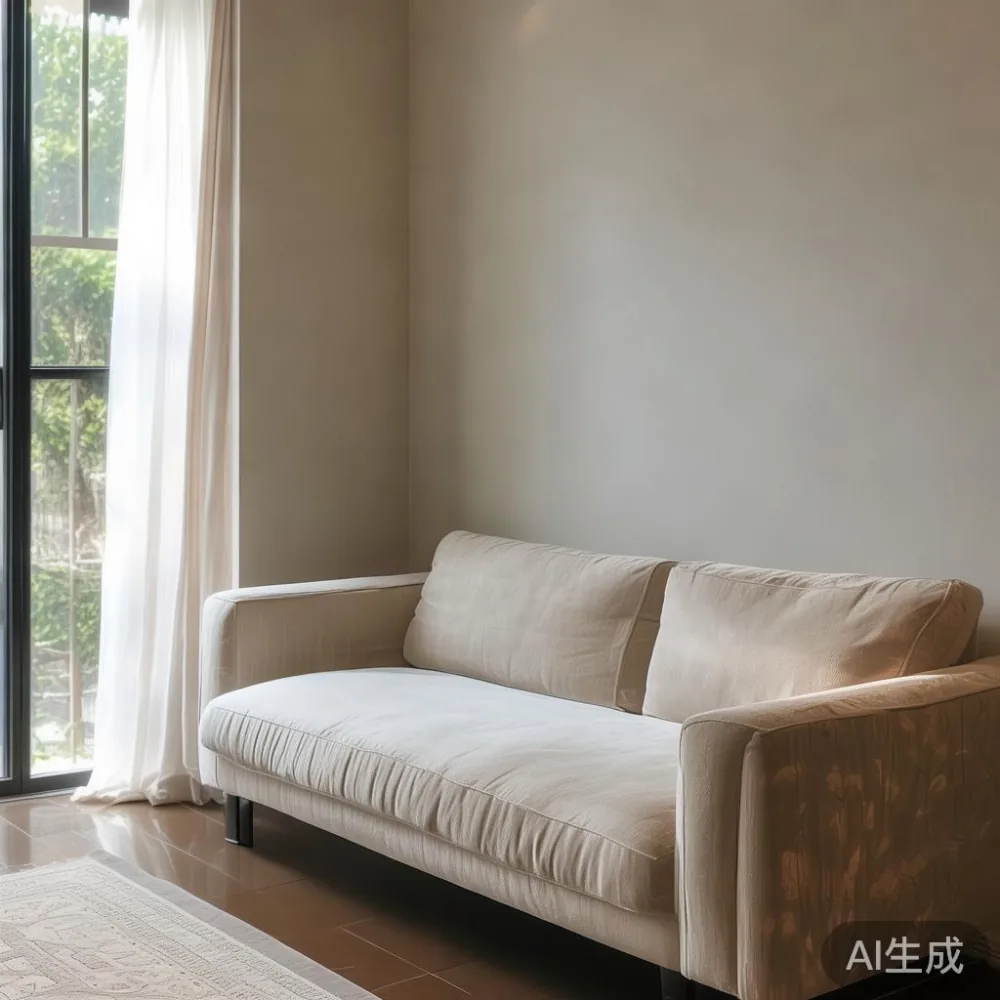
Why Singapore's humidity is a lacquered surface's worst enemy
Lacquer, whether it is a traditional Chinese nitrocellulose finish or a modern Italian polyurethane, is a film that sits on top of the wood. It looks glassy because the resin molecules cross-link into a continuous layer. Humidity attacks that film from two directions at once. First, water vapour in the air condenses on cold surfaces, and a wardrobe pushed against an external wall in a Punggol condo can run 3-4°C cooler than the room air, creating a microclimate perfect for condensation. Second, moisture migrates through the wood substrate itself, swelling the fibres and stressing the bond between lacquer and timber.
At MIDHILL's Foshan workshop, the production line sprays lacquer in a sealed booth kept at 28°C and 55% RH. The boards sit for 72 hours before any second coat is applied. When a finished piece leaves the factory at 6% moisture content and lands in a Tampines flat at 85% RH, the wood wants to absorb roughly 8-10% of its dry weight in water. That movement is invisible on a solid oak dining table, but it shows up on a thin lacquer film as micro-cracks along the grain, usually within 6-9 months.
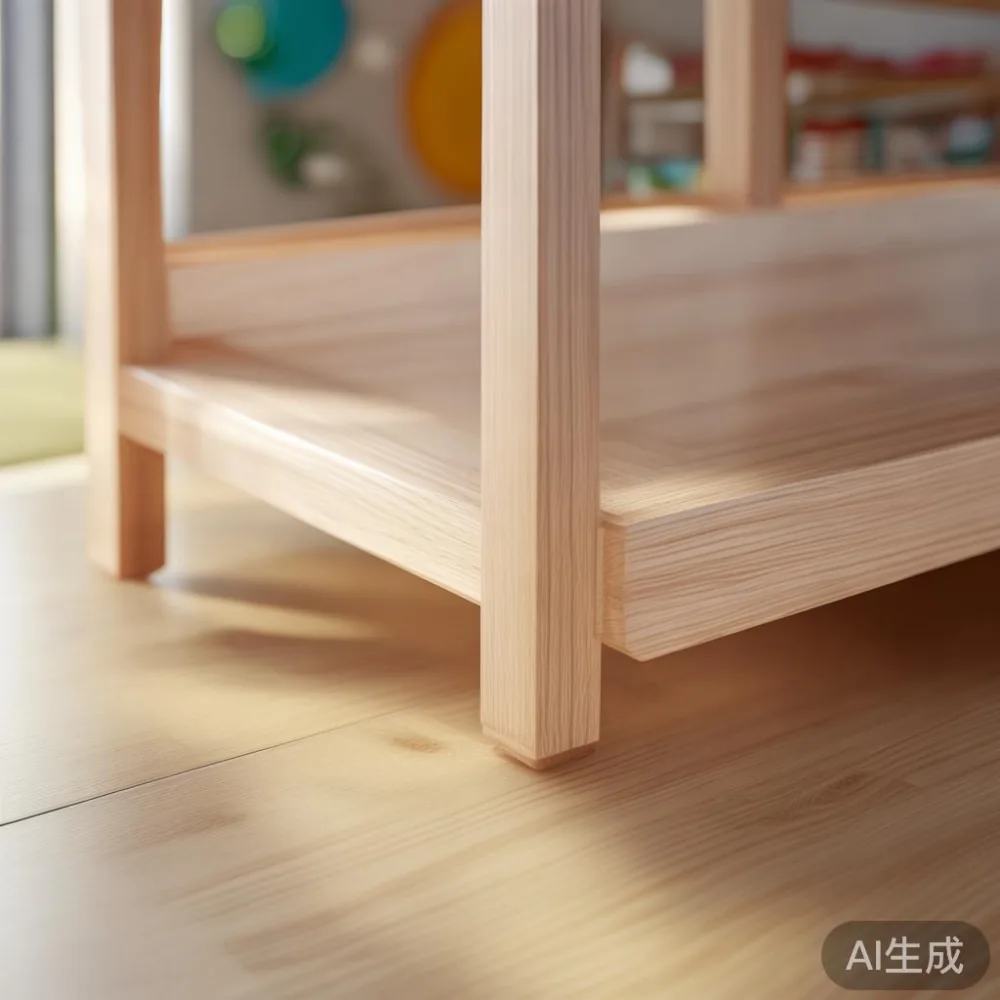
For a kids room, the risk is amplified. Children brush against a nightstand while playing, splash water near a wardrobe during bath time, and press sticky fingers onto a bed frame after eating. A finish that survives humidity but cannot survive a 4-year-old does not really exist. You need both.
What does a good lacquer job actually look like?
Before we get into care, it helps to know what you are protecting. A quality light luxury bed frame from a serious maker will carry six to eight coats of finish, sanded between coats with 320-grit paper, and topped with a final burnish. The total dry film thickness should measure between 0.12 mm and 0.18 mm on a calibrated gauge. Anything under 0.10 mm is too thin for a tropical climate, regardless of how glossy it looks in the showroom.
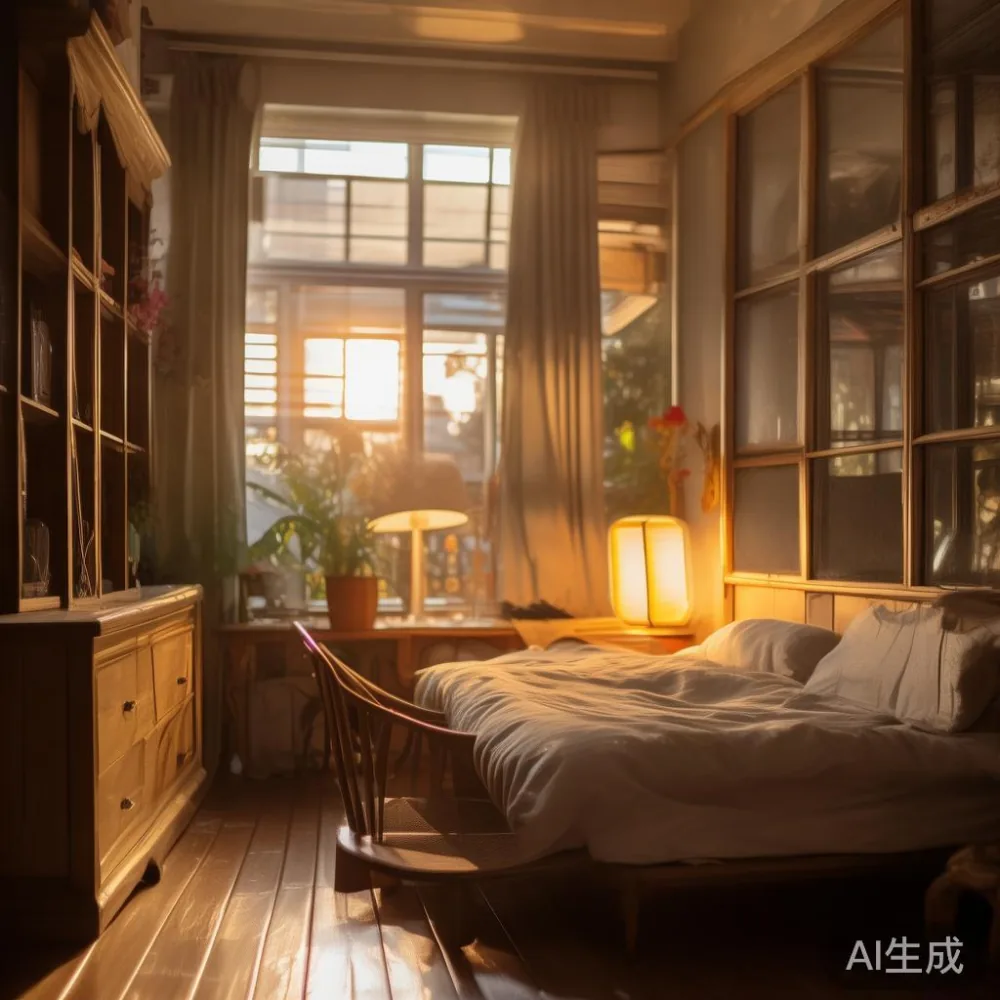
Hold the piece near a window. A properly cured lacquer reflects a single, clean highlight. A wavy or orange-peel reflection means the coats were applied too thickly or the booth humidity drifted during spraying. Run a fingernail gently along an underside edge. If the finish flakes in chips, the lacquer was applied over an unsealed wax residue. If it presses into a soft dent, the underlying wood was not fully dried. Both are common in lower-tier imports, and both will fail in Bedok within a year.
Ask whether the pieces are light luxury furniture with French light luxury styling or American light luxury styling. French light luxury tends toward cream, dove grey, and pale oak with brushed gold hardware. American light luxury leans warmer, with honeyed maple, deeper walnut, and fluted door panels. Post-modern light luxury, which has become popular in newer Punggol developments, uses curved fronts, cane webbing, and matte lacquers rather than high gloss. Each finish behaves slightly differently under Singapore conditions, and your care routine should match.
My week-long test on three different finishes
Last month, I borrowed three small lacquered panels from a friend who runs a procurement office in Guangzhou: one finished in the Chinese market's standard NC lacquer, one in an Italian water-based polyurethane, and one in a Japanese conversion varnish similar to what some European light luxury coffee table pieces use. I taped each panel to the wall outside my kitchen, where afternoon humidity regularly hits 92%.
After seven days, the NC lacquer had picked up a faint chalky haze at the lower edge where condensation formed overnight. The water-based polyurethane looked almost untouched. The conversion varnish was perfectly clear, but a 2 mm crack had opened along one corner where the substrate wood had swelled against the rigid film. Three finishes, three different failure modes. The takeaway: water-based poly is forgiving under humidity but scratches easily, while conversion varnish is hard but unforgiving of substrate movement.
For a kids room, I now recommend the middle path: a high-build water-based polyurethane with at least five coats, each cured for a minimum of four hours at 30°C, applied by a maker who kiln-dries the wood to 8% moisture content before spraying. MIDHILL's solid wood kids line uses exactly this approach, and it is one reason their pieces hold up in local conditions.
Daily and weekly care: a 15-minute routine that actually works
Consistency matters more than any single product. Wipe lacquered surfaces in the kids room once a day with a dry microfibre cloth (size 40 cm x 40 cm is enough for a single bed frame). Once a week, use a cloth barely dampened with distilled water and a single drop of pH-neutral dish soap. Wipe in the direction of the grain, never across it. Dry immediately with a second cloth. This takes 12-15 minutes for a typical kids room containing a bed frame, a wardrobe, and a nightstand.
Never use silicone polishes, even the famous ones in brown bottles. Silicone seeps into micro-cracks and contaminates the surface so future refinishing becomes impossible. I learned this the hard way on a mango-wood dresser I bought from a flea market vendor at 280 SGD. The polish made it glow, but the next owner will probably have to sand the lacquer off entirely.
Keep the wardrobe 5 cm away from the wall. In a Tampines HDB, the corridor width of 1.2 m gives you just enough space to slide the piece forward for cleaning. Air circulation behind the back panel is non-negotiable. I use 3 mm felt pads under each leg to lift the wardrobe off the floor and let air pass underneath, which also protects the finish from floor-cleaning moisture that would otherwise wick up.
Run the air-conditioner or a dehumidifier for at least four hours a day in the kids room. Target 60% RH. A standard 12-litre Midea unit costs roughly 0.18 SGD per hour to run, which over a year adds about 260 SGD to your power bill, a small price compared to refinishing a EUR 1,400 European bed at a Singapore workshop, where labour alone runs 480-650 SGD.
"Will my child's room furniture survive if I open the windows every afternoon?"
This is the question I get most often from parents in Punggol, where many new condos encourage cross-ventilation. The honest answer is no. Open windows between 1 pm and 5 pm and you are pumping humid air directly across the lacquer. Open them between 10 pm and 6 am, when RH drops to 70-75%, and you are doing the furniture a favour.
A parent in my Bedok playgroup tried a different approach: she sealed the kids room with a 2-in-1 air-conditioner set to dehumidify mode and ran it for 30 minutes every two hours. Her wardrobe, a white lacquer piece from a local retailer at 1,890 SGD, has stayed pristine for three years. The cost works out to about 22 SGD per month on her SP Group bill, which she considers acceptable given the 2,400 SGD replacement cost.
If you insist on fresh ventilation, time it for early morning before the kids wake up. Crack the window 5 cm, never wider, and close it before the humidity climbs past 80%. A small digital hygrometer costs 12-18 SGD at any Tampines Mall electronics shop and is the single best purchase you can make for the kids room.
Spot repairs: what you can fix at home and what needs a workshop
Small scratches are fixable at home. A scratch under 0.3 mm wide can usually be buffed out with a soft cloth and a tiny amount of clear paste wax, the kind sold for hardwood floors. Apply with a cotton swab, let it haze for 90 seconds, then buff with a clean microfibre cloth. This works on almost any European light luxury bed worth it pieces imported to Singapore, as long as the lacquer is matte or satin rather than high gloss.
Wider scratches need a touch-up marker or a small bottle of matching lacquer. MIDHILL ships each kids room order with a 5 ml bottle of repair lacquer matched to the finish code stamped on the back of each wardrobe door or drawer. Keep it in a drawer; it lasts 18 months once opened.
Anything beyond a surface scratch belongs in a workshop. Refinishing a single wardrobe door costs 180-260 SGD at a Singapore upholsterer. Refinishing a full king-size bed frame runs 420-580 SGD and takes 7-10 working days. If the piece is a solid wood piece from MIDHILL, the company offers lifetime refinishing, so the only cost is the round-trip delivery at 65 SGD within mainland Singapore. That kind of after-sale support is rare and worth weighing when you buy.
Choosing new lacquered pieces for a Singapore kids room
If you are furnishing from scratch, three rules apply. Pick solid wood over veneer. Veneered MDF absorbs moisture at the edges and delaminates within 18 months in our climate. Solid oak, ash, or rubberwood tolerates humidity swings much better. Pick a maker who kiln-dries to below 10% moisture content. Pick a finish that has been applied in at least five coats.
For a small HDB kids room, scale matters. A 120 cm wide single bed frame leaves 70 cm of walking space on each side, enough for a parent to sit on the floor during bedtime stories without bumping the nightstand. A 90 cm x 50 cm nightstand fits beside the bed without crowding the corridor. A two-door wardrobe 180 cm tall by 100 cm wide gives hanging space for school uniforms and three shelves for toys, all without dominating the room.
Budget realistically. A complete kids room set in solid wood with proper lacquer runs 2,800-4,200 SGD for a European light luxury aesthetic, 1,800-2,600 SGD for an American light luxury look, and 2,200-3,400 SGD for post-modern light luxury styling. Prices include GST at 9% since January 2024, and delivery within mainland Singapore adds 80-120 SGD unless you cross the 500 SGD free-shipping threshold.
For parents weighing whether an is light luxury bed worth it purchase makes sense for a kids room, the math is straightforward: a properly built lacquered bed used by one child for 8-10 years costs roughly 320 SGD per year. A cheaper MDF piece that needs replacing after 4 years costs 450 SGD per year. Quality usually pays back over time, and a solid wood bed frame can be refinished and passed to a younger sibling.
Stain emergencies: chocolate milk, marker, and the dreaded art-class acrylic
Kids will test your lacquer. The four most common stains in a Singapore kids room, in order of frequency, are: chocolate milk, washable marker, crayon, and acrylic paint. All four can be removed if you act within 20 minutes.
Chocolate milk: wipe with a damp microfibre cloth, then clean with the weekly soap routine. Never use vinegar. Vinegar etches polyurethane within 30 seconds, leaving a permanent dull ring. This happened to my colleague's dining table last Chinese New Year; the dull spot is still there six months later.
Washable marker: same routine, but use a cloth lightly moistened with isopropyl alcohol (70%, sold at any Watsons for 6 SGD). Test on an unseen underside first. Alcohol softens most lacquers if left too long, so keep contact under 5 seconds.
Crayon: warm a clean cloth with a hair dryer for 20 seconds, then press over the crayon. The wax softens and lifts into the cloth. This trick works on European light luxury coffee table lacquer as well as on a kids room nightstand, because the chemistry is identical.
Acrylic paint: this is the worst. If wet, wipe with water and a drop of soap. If dry, the paint has bonded to the lacquer and will need a professional compound polish. Do not scrub. Scrubbing leaves a cloudy patch that is harder to fix than the paint itself.
How MIDHILL thinks about tropical conditions
On a factory visit to Foshan last October, I watched the QC team soak sample panels in a humidity chamber set to 90% RH for 14 days. Panels that showed haze, blush, or edge-cracking were rejected. The acceptance standard is stricter than the European EN 12720 test, and I was told it was developed specifically for Southeast Asian buyers.
MIDHILL's kids room catalogue includes 14 bed frame styles, 6 wardrobes, 4 nightstands, and 3 study desks, all in solid wood with a water-based polyurethane finish tested to the Foshan tropical standard. The American light luxury line pairs honeyed ash with brushed brass; the French light luxury line uses pale oak with curved fronts and cane panels; the post-modern light luxury line experiments with fluted tambour doors and matte cloud-grey lacquer. Every piece carries a 10-year structural warranty and the lifetime refinishing promise I mentioned earlier.
For parents asking whether is light luxury bed worth it for a kids room, the honest answer from a furniture specialist is yes, provided the maker understands humidity. The premium you pay over a flat-pack from a Jurong warehouse covers kiln-dried timber, a finish engineered for 85% RH, and a warranty that a local retailer cannot match. Over a decade of use, that premium turns into savings.
Putting it all together: a starter checklist for parents
Buy a 12 SGD hygrometer on your next NTUC trip. Keep the kids room between 55% and 65% RH. Wipe lacquered surfaces daily with a dry microfibre cloth and weekly with a barely damp one. Lift wardrobes 3 mm off the floor with felt pads. Keep 5 cm clearance behind every piece. Never use silicone polish. Never use vinegar. Open windows only at night. Refinish every 6-8 years, not because the lacquer has failed, but because a fresh surface protects the wood underneath.
That is the routine. It is not glamorous, but it works. My daughter's wardrobe in Tampines is now three years old, still glossy, and still ready for a younger sibling who arrives in February. With the right care, a lacquered kids room from a serious Foshan maker will outlast every other thing you put in that flat.