How to Match Kids Room Furniture to a Warm Minimal Interior
A warm minimal kids room is not an empty room with a few child-sized pieces. It is a carefully proportioned space where pale solid wood, soft lighting and practical storage create calm without looking cold. For families in Singapore HDB flats and condos in Tampines, Bedok and Punggol, the challenge is usually the same: fitting a safe, usable kids room into a compact layout while preserving the visual openness of the home.
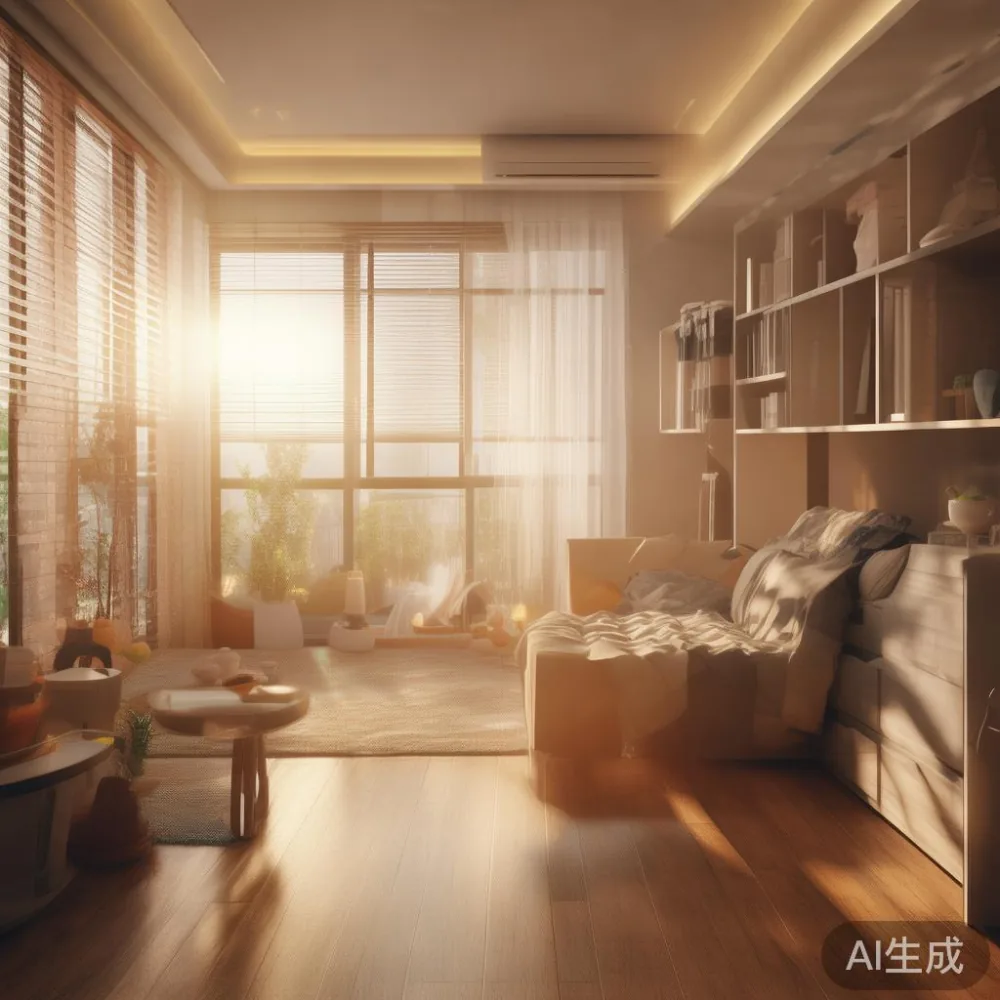
Measure before choosing. Record the room length and width, skirting, door swing, window position and the width of the nearest lift or stair landing. A standard HDB lift may measure around 90 cm by 120 cm internally, although exact dimensions vary by block, while a condominium service lift can be larger. Leave a 5 cm to 10 cm packaging margin around tall or angled furniture, and check whether the lift has a protected corner that reduces usable loading space. The corridor can be more restrictive than the room itself, particularly when turning a wardrobe around a corner.
Light-luxury interiors work well here because they suggest refinement through proportion, material and detail rather than decoration overload. French light luxury, American light luxury and post-modern light luxury each offer useful references, but the best direction for a family is one that can tolerate toys, drawings and daily wear. MIDHILL was established in 2008 and exports to more than 15 countries; its solid wood collection includes furniture for children’s rooms, with a 10-year structural warranty and lifetime refinishing service.
What makes a warm minimal kids room feel practical?
Begin with a limited palette of 4 to 6 colours. Warm white walls, light oak, oatmeal textiles and one muted accent such as sage, dusty blue or clay can make a compact kids room feel larger. Keep the floor visually continuous where possible, and avoid placing every piece against a different wall. A bed with a low solid wood frame, a simple nightstand and a tidy storage wall usually creates more order than several small statement units.
The furniture should also be sized for real movement. Leave 60 cm beside a single bed for access, 75 cm to 90 cm in front of drawers, and 90 cm along a main circulation route. For children aged 3 to 7, choose low shelving no taller than about 100 cm so an adult can see over it. For older children, a full-height wardrobe can be useful, but a 180 cm to 200 cm lift-up bed may be needed before a child can safely use a loft structure.
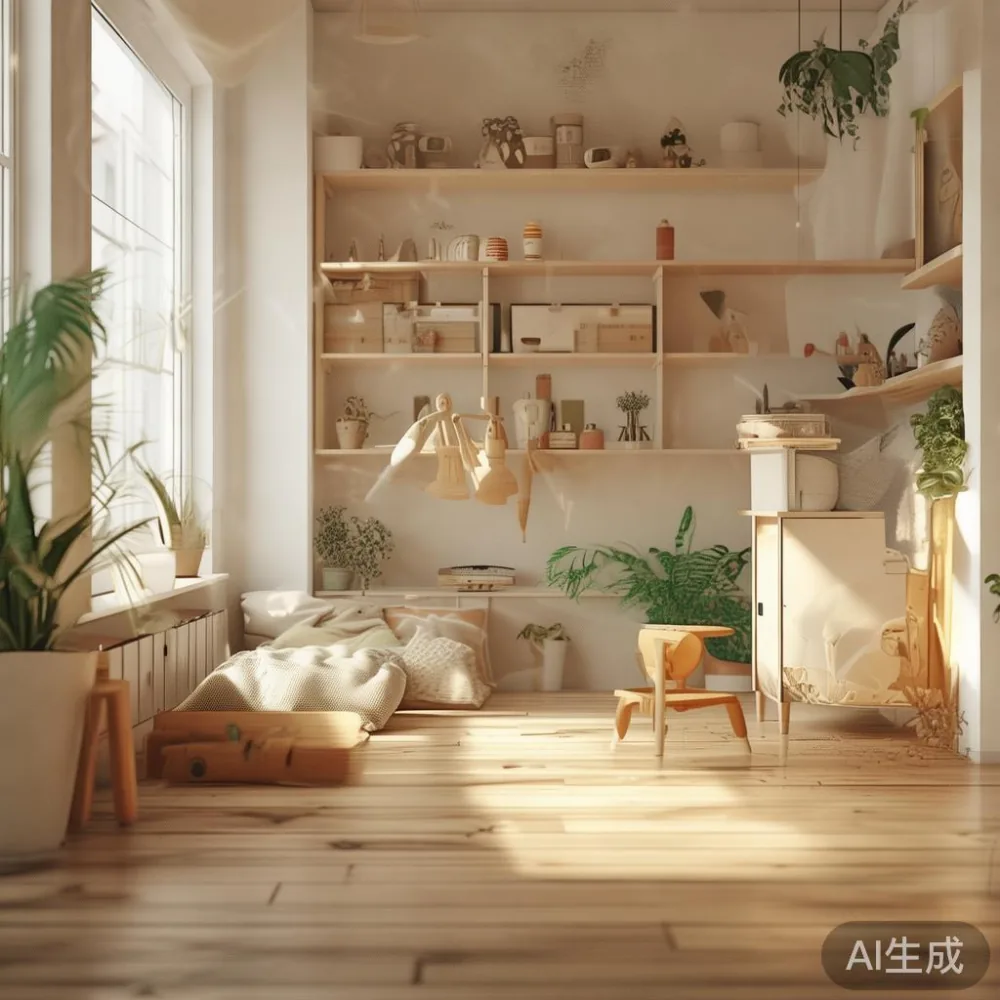
Think in dual-purpose pieces. A solid wood bed frame with a drawer underneath can replace a separate toy chest, while a wardrobe with hanging space, shelves and 2 drawers may remove the need for a freestanding cabinet. A dining table can later serve as a homework and craft surface, provided it can be moved easily and is stable enough for everyday use. In a dining room, a 140 cm to 160 cm solid wood dining table seats 4 to 6 people, and a 90 cm to 110 cm round version can ease movement around tighter layouts.
How should solid wood pieces work with a light-luxury palette?
Solid wood brings natural variation that prevents minimalism from feeling sterile. Select pale oak, ash or beech for a bright Scandinavian effect, or walnut and teak for a warmer French provincial mood. If you are comparing a European bed vs Japandi bed, the former usually carries more shaping, panelling or curved edges, while a Japandi bed tends to use straighter lines, exposed joinery and a restrained finish. Both can work in a kids room, but the Japandi version usually blends more easily with modular storage.
For a room with cool white walls and grey flooring, introduce warmth through textiles rather than dark, heavy furniture. A wool or cotton blanket in sand, rust or muted green is enough. For lighter walls, use oatmeal, blush or pale blue. Keep the palette balanced: if the wood is warm, the curtains can be cool, but repeat one related tone elsewhere so the room does not feel accidental.
Details should be simple but not anonymous. Brushed brass handles, softly bevelled drawer fronts and tapered legs can create an American light luxury atmosphere without ornate decoration. French light luxury often uses curved silhouettes, muted colour and tactile fabric, making it suitable for a child’s reading corner. Post-modern light luxury supports a more playful mix of rounded forms, clean geometry and a controlled accent colour.
Every finish should also be checked for practicality. Water-based coatings are easier to maintain around craft tables, while matte finishes disguise small marks better than high-gloss surfaces. Ask about coating type, cleaning method and repair options. MIDHILL offers lifetime refinishing, which is useful for solid wood furniture that may outlast a child’s current colour scheme.
Which bed and storage layout suits a compact Singapore home?
Choose the bed first, because it determines the circulation pattern. A single bed usually measures 90 cm by 190 cm for a standard mattress, while a junior bed may use 80 cm by 160 cm or 90 cm by 190 cm. In an HDB kids room with only 2.4 m of usable wall length, the bed, nightstand and wardrobe can dominate the room. Position the bed away from the window if direct afternoon sun is an issue, and keep the headboard at least 10 cm from the wall for cleaning.
For narrow rooms, consider a solid wood storage bed with drawers facing into the room. Make sure the drawers can open without striking a door or wardrobe. A 45 cm to 50 cm wide nightstand is adequate for a child’s book and water cup, but a 40 cm round side table can preserve movement in a very tight corner. Wall-mounted shelves should be fixed into suitable masonry or structural backing, not plasterboard alone.
Wardrobes should be planned around hanging lengths. Allow 100 cm to 120 cm for short garments, 140 cm to 150 cm for adult-sized coats and around 160 cm for long dresses. Internal drawer heights of 15 cm to 20 cm work for folded clothes, while open shelves at 25 cm to 35 cm can hold toy boxes. Keep shelves at 30 cm intervals where possible so adjustable fittings remain useful as the child grows.
Before delivery, measure the route from the loading point to the room. Note corridor widths of 100 cm to 120 cm, lift door openings near 80 cm to 90 cm, and any 90-degree turns. Large flat-pack panels are easier to carry than assembled wardrobes, but they still require careful handling. Confirm the delivery timeline in writing; a production lead time of 30 to 45 days is common for custom solid wood pieces, followed by roughly 5 to 10 delivery days within Singapore.
How do you style Japandi bed in bedroom layouts without making the room look empty?
When learning how to style Japandi bed in bedroom layouts, start with function and texture. A plain platform bed in pale timber establishes the central form, then add one substantial rug, 2 cushions and a small lamp. The rug should extend 50 cm to 70 cm beyond the sides of the bed where space allows, or at least tuck 20 cm beneath it. Layering linen, cotton and wool prevents the minimalist composition from appearing unfinished.
Use storage as part of the composition. A 60 cm to 80 cm wide open shelf can display books face-out, but limit this to one section rather than filling every surface. Closed storage keeps visual noise down. A bench at the foot of the bed can hold blankets, but leave 70 cm to 90 cm between it and the opposite wall. A marble table can work as a bedside accent, yet its weight makes it less suitable for a frequently used children’s room than a compact solid wood nightstand.
Light also matters. A warm 2700K to 3000K lamp is gentler for bedtime than a cool 4000K bulb. Aim for enough illumination for reading and organisation, around 300 to 500 lux at desk height, while using a dimmable bedside source for winding down. Conceal cables in a 60 cm to 120 cm cable channel fixed safely along the wall, and keep loose cords out of walkways.
A Japandi approach can still include a child’s personality through artwork, a fabric storage basket or a coloured rug rather than painted wall graphics. Use washable materials and limit fragile objects to high shelves. This is particularly important for a French provincial TV console in a connected living area nearby: choose doors or closed compartments to keep cables and small objects visually contained while the adjacent kids room remains calm.
How can you add light luxury for bedroom details that are child-friendly?
The phrase light luxury for bedroom design does not require fragile styling. It means restrained finishes, comfortable proportions and materials that feel substantial. A solid wood sofa in an adjacent living room might use oatmeal upholstery, while the bedroom could feature a matching wood tone across the bed frame, nightstand and storage. Repetition creates continuity, and 2 or 3 recurring colours bind the entire flat together.
For mixed-age homes, consider a solid wood bed frame that can serve a teenager and later become a guest bed. A slatted base provides ventilation, while a pull-out 90 cm section may accommodate an occasional visitor. European light luxury for guest room planning can be translated into a flexible setup: a slim wardrobe, one upholstered chair and a wall shelf with restrained brass fittings. The result should still work as a children’s study and sleeping area during the week.
Textiles provide an affordable way to change the mood. Cotton sheets are practical in Singapore’s humid climate, while a breathable wool blend works better in an air-conditioned bedroom. Cotton rugs are easier to wash than wool ones in a kids room. For cushions, choose covers with removable, washable sleeves rather than delicate fixed upholstery.
Budget in Singapore dollars and include GST. A practical children’s room package may include a 90 cm by 190 cm solid wood bed frame at SGD 899 to SGD 1,499, a 45 cm nightstand at SGD 249 to SGD 449, a 100 cm wardrobe at SGD 1,299 to SGD 2,099 and a 60 cm toy cabinet at SGD 699 to SGD 1,099. Prices vary with timber, finish, dimensions and construction, so request a quotation rather than relying on a temporary promotion.
What should you check before ordering furniture for a kids room?
Check dimensions at least twice: once for the room and once for the delivery route. Ask for the outer product dimensions, internal drawer clearances and the distance required to open doors. For a solid wood wardrobe, ensure the door can open at least 90 degrees without touching the bed. For a dining table used in a play-and-study zone, confirm that the legs do not create sharp protrusions and that the surface can withstand heat and moisture.
Safety matters as much as appearance. Look for stable joints, rounded corners, properly fixed wall anchoring and non-slip pads. A child’s bed should meet applicable local safety standards and have a guardrail if the mattress sits more than about 30 cm above the floor. Avoid placing a wardrobe directly beneath a window where a child could climb. Secure freestanding shelving to the wall with suitable straps, and keep heavy items on lower shelves.
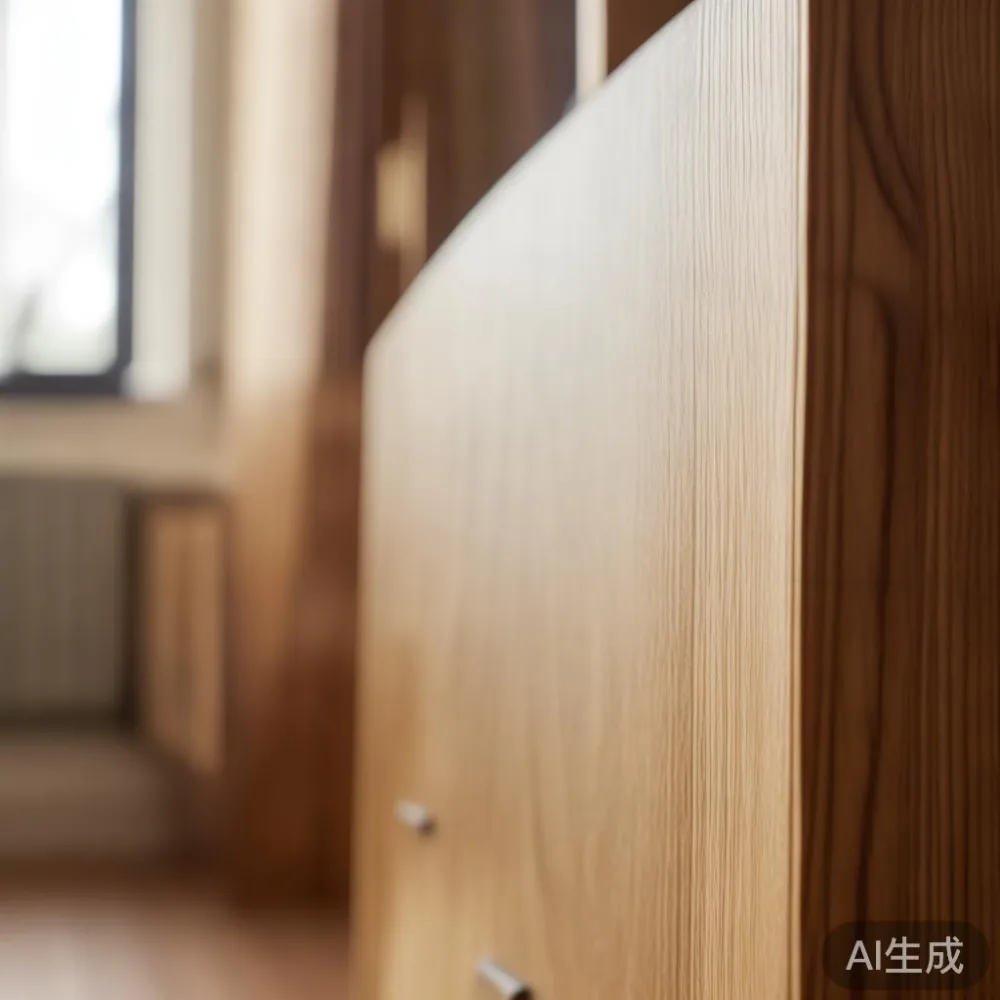
Material information should be clear. Solid wood may include natural grain and small tonal differences; photographs should be treated as representative rather than an exact colour match. Ask whether panels, backs and drawer bottoms are solid wood, veneered or engineered board, because this affects weight, stability and price. For example, a solid wood dining table may weigh 45 kg to 75 kg, while a similarly sized wardrobe may require 2 people to move even when delivered flat-packed.
Service terms are also useful. MIDHILL provides a 10-year structural warranty and lifetime refinishing, and orders above US$350 qualify for free shipping, although Singapore pricing and delivery arrangements should be confirmed at checkout. A 14-day return policy gives families time to assess scale and colour, subject to the stated condition and handling requirements.
How do lighting, flooring and wall colour change the warmth?
Warm minimalism begins with the surfaces surrounding the furniture. Large windows and pale timber reflect daylight, but too much white can feel clinical. Warm white or off-white walls soften it without adding a busy pattern. In a Tampines HDB flat with limited natural light, lighter finishes help. In a Punggol condo with broad glazing, slightly deeper oak tones can keep the room grounded and reduce glare.
Coordinate floor and furniture carefully. Pale flooring with medium-oak furniture creates gentle contrast; dark flooring calls for lighter walls and simple silhouettes. If existing flooring is cool grey, introduce sand-coloured textiles and a warm timber bed frame. If it is warm brown, avoid adding too many orange accessories, and use white, sage or dusty blue for balance.
Layer light from ceiling to task level. A central ceiling fixture can provide general illumination, while a bedside lamp and a shielded desk lamp handle specific needs. For a study desk, position it beside a window rather than directly in front of it to reduce screen reflections. A 100 cm to 120 cm desk is suitable for one child; 140 cm to 160 cm allows two children to work more comfortably.
Daylight should be managed with curtains that do not crowd the window. Light-filtering roller curtains or simple linen panels work well in warm minimal rooms. Avoid heavy blackout fabric if it makes the room feel heavy during the day, unless the child needs a darker rest environment. A washable rug approximately 160 cm by 230 cm can define the sleeping and play zone without overwhelming a 3 m by 3 m room.
Can a warm minimal kids room still grow with the child?
Yes, if the layout is based on storage and adaptable surfaces rather than a fixed themed scheme. A solid wood bed frame, modular wardrobe and dining table with clean lines can remain useful from early childhood through the teenage years. Replace low toy shelves with adjustable units, move the nightstand closer as the bed height changes and update textiles rather than replacing every piece.
Plan around a 10-year horizon. Children outgrow small chairs, narrow desks and low shelves quickly, so reserve most of the budget for durable core furniture. Invest in a strong bed frame and capable storage, then use SGD 100 to SGD 300 for changeable details such as lamps, baskets and artwork. Keep toy rotation to 2 baskets in use and store the rest elsewhere; this alone makes a room look calmer.
For a practical test, remove the bedding, toys and movable accessories, then walk through the room. You should be able to reach the wardrobe, open the drawers and move between the bed, desk and door without scraping furniture. Last month I visited a family in Bedok with a compact HDB kids room and tested this arrangement with the wardrobe open, drawers extended and a 180 cm bed frame in the delivery corridor. The final layout worked only after replacing a deep dresser with a 45 cm nightstand and using a narrower toy cabinet.
That experience highlighted the value of measuring the occupied room, not just the empty one. A warm minimal interior succeeds when every piece has a clear role, every route has enough clearance and the materials can handle family life. Pale solid wood, disciplined storage, warm light and a few personal accents can create a kids room that feels composed now and remains adaptable for the next 10 years.