How to Match Solid Wood Kids Room Furniture to a Warm Minimal Interior
Warm minimalism is not a contradiction, even though people sometimes treat it like one. Pure minimalism leans cool, almost gallery-like — white walls, sharp edges, lots of negative space. Warm minimalism keeps the clean lines and the breathing room, but pulls in materials and colours that make a room feel inhabited rather than staged. For a kids room in Singapore, that balance matters more than it does in any other space in the home. You want the calm of a tidy bedroom, but you also want it to feel safe at 2 a.m. when the lights are low and the air-con is humming.
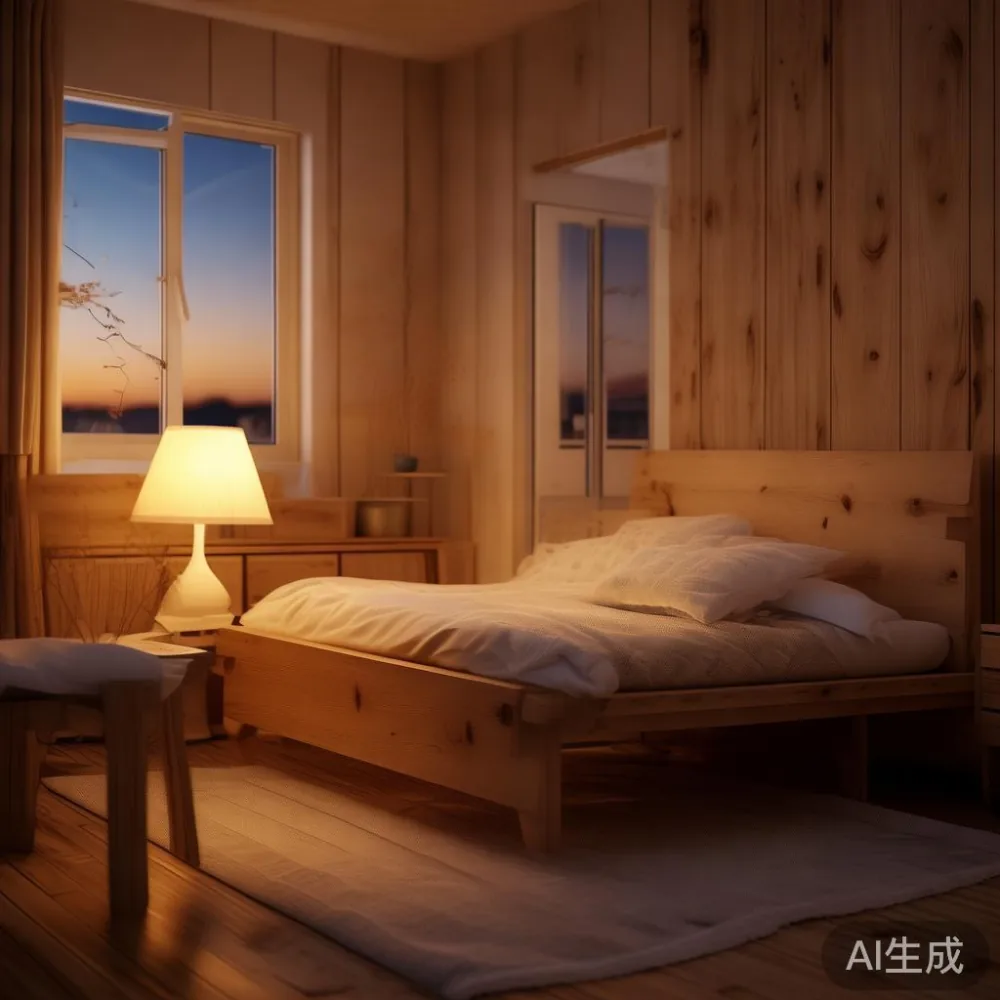
Most of the HDB flats I have walked through in Tampines, Bedok and Punggol share a recurring problem: the kids room is the smallest bedroom, often 9 m² to 11 m², with one window, one air-con ledge and a corridor entrance that swings inward. If you push bulky furniture in, the room shrinks. If you go ultra-sparse, the room feels like a guest bedroom nobody uses. Solid wood kids room furniture, chosen with warm minimal rules in mind, sits right in the middle of that trade-off — light enough visually, warm enough emotionally, and durable enough that a 7-year-old cannot destroy it inside a school term.
This guide is written from the perspective of someone who has spent more afternoons than I care to count in three-room and four-room flats around the east, measuring wardrobes against doorframes and checking whether a queen-size bed frame will actually clear the lift door at Ground Floor. Pricing is in SGD and includes the 9% GST that has applied since 2023. Where I reference a specific brand, it is because the product actually fits the brief, not because I am paid to mention it.
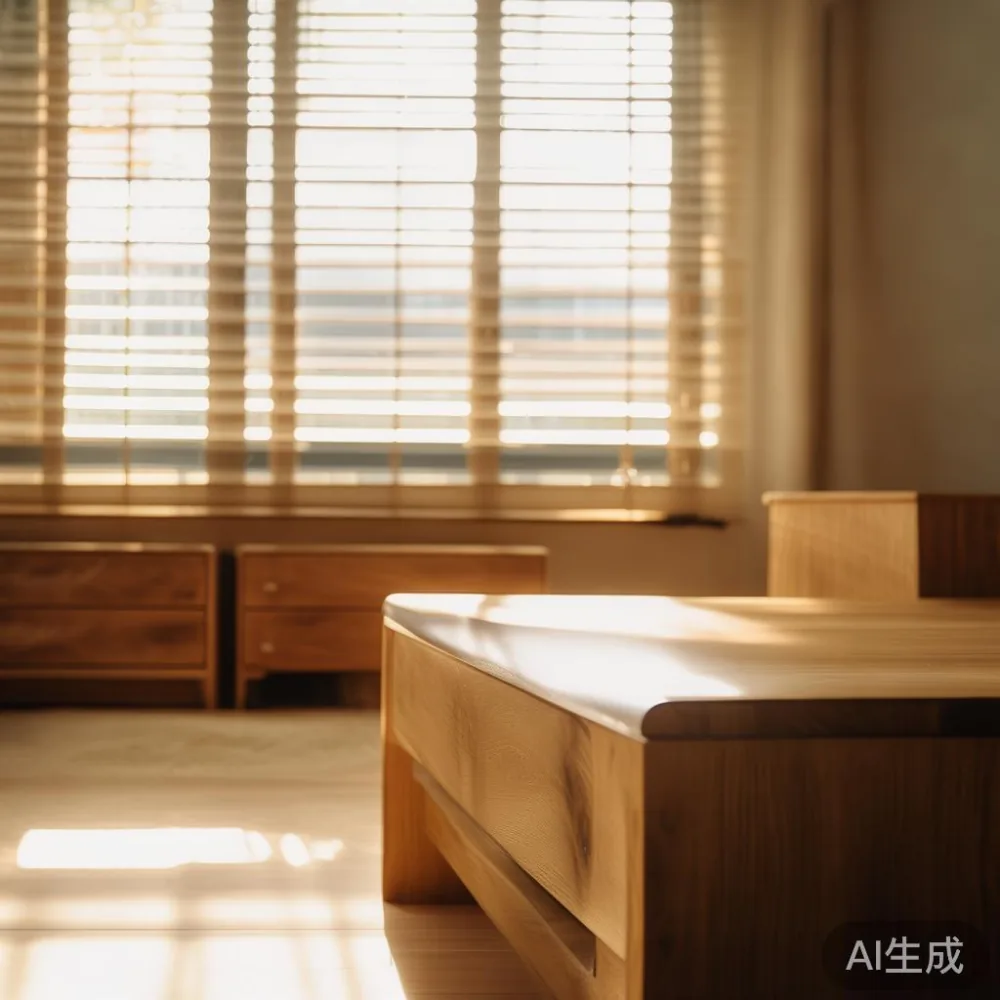
What does "warm minimal" actually mean in a Singapore kids room?
Warm minimal is a finished look, not a brand. It starts with a restrained palette — usually off-white walls, a single warm wood tone, one darker accent — and a layout where every piece of furniture has a clear job. In a 10 m² kids room, that usually means three pieces: a bed frame, a wardrobe and a nightstand or small desk. Anything more, and the room starts to feel cramped once school bags, plush toys and a laundry basket show up.
The warmth comes from the material, not from clutter. Solid wood in oak, ash or beech reads warmer than MDF with a wood-print laminate. A natural oil finish on a beech bed frame will reflect afternoon light gently; a high-gloss white wardrobe will throw it back. In a flat that only catches east-facing morning sun (very common in Punggol), the matte, tactile surface of solid wood is what carries the room for the rest of the day.
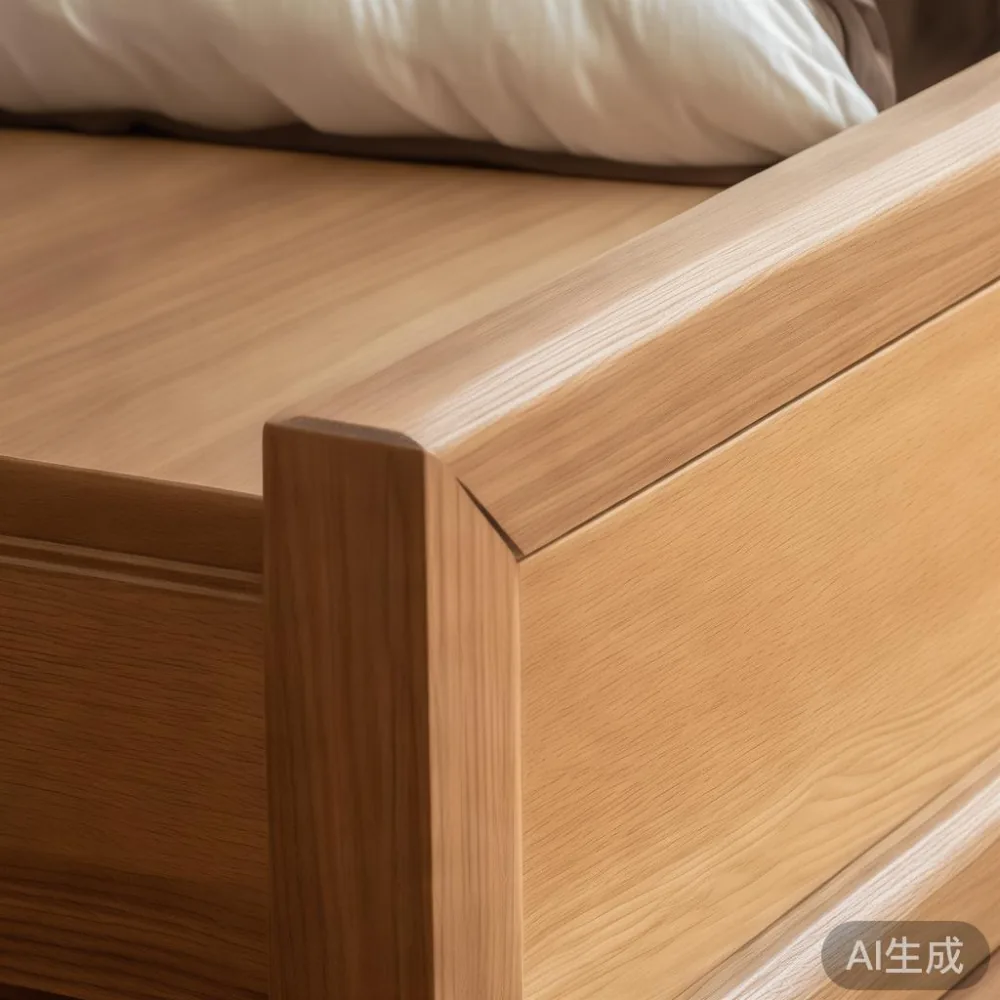
If you want a quick mental picture, imagine a Beige RAL 1013 wall, an oak solid wood bed frame 200 cm long, a three-door wardrobe in the same wood tone with no visible handles, and a single linen curtain. That is warm minimal. It is not French light luxury (which is more ornate, with brass details and curved legs) and it is not American country (which is more decorative and patterned). Warm minimal borrows the simplicity of Scandinavian design and warms it up with timber.
Which solid wood pieces work best in a small HDB kids room?
For a kids room sized 9 m² to 12 m², I would build the room around four pieces, in this order of priority:
1. Bed frame. A single bed frame at 90 cm × 200 cm or a small double at 120 cm × 200 cm is the right call for most children aged 3 to 12. Anything bigger eats the room. Look for a bed frame that sits low — under 40 cm from floor to mattress top — so a child can get in and out safely. Solid beech or ash holds up to jumping. A wooden bed frame from a maker that publishes its timber source and kiln-dry method (8% to 12% moisture content is the safe range for tropical climates) is worth the slight premium.
2. Wardrobe. In HDB flats, wardrobes often double as the only storage in the room. A two-door wardrobe around 100 cm wide × 55 cm deep × 180 cm tall fits against most short walls and can hold school uniforms, PE attire and a season's worth of clothes. For shared siblings, a three-door wardrobe 150 cm wide gives each child a clear "side" without taking the full wall. Push the wardrobe to the wall opposite the window to keep the airflow path open.
3. Nightstand or small chest. A nightstand at 45 cm × 40 cm × 55 cm tall gives space for a bedside lamp, a glass of water and a book. Skip anything taller — it will block the window and catch morning light awkwardly.
4. Study desk and chair. Often people leave this out of the kids room and put it in the living room, but if space allows, a 110 cm × 55 cm desk in oak or beech at 72 cm tall pairs visually with the bed frame and the wardrobe and keeps the kid anchored to the bedroom for homework. Adjustable chairs are easier to find than adjustable desks in the SGD 180–SGD 420 range.
Last month I visited a four-room flat in Bedok North where the family had bought a single bed frame, a two-door wardrobe and a small nightstand set in solid ash, and the room looked twice as big as the spare room with a queen bed and a four-door slider wardrobe. Same floor area. Different discipline.
How do I keep the warm tone without making the room feel yellow or dated?
The biggest risk in warm minimal is drift. You start with oak bed frame and beech nightstand, and within a year you have added a pine bookshelf, a wicker basket, a yellow rug and a maple-tone study desk, and the room now looks like a patchwork. Three rules keep the room coherent:
- One wood tone, two at most. Pick oak or beech. If you have two pieces in different tones, the eye reads it as a mistake. A solid wood wardrobe and a solid wood bed frame in the same timber keep the room calm.
- Walls and ceiling in neutral white. Off-white (Benjamin Moore OC-17, White Dove, or similar) on the walls, flat ceiling white. Warmth should come from the furniture and the linen, not from a coloured wall.
- Limit the accent colour to two. In the Bedok North flat I mentioned, the family used a single sage-green linen duvet cover and a small terracotta ceramic on the nightstand. That is enough. More than two accent colours and the room starts to feel like a kindergarten.
For flooring, if the HDB comes with the standard cream tile (200 mm × 200 mm or 300 mm × 600 mm), you do not need to change it. A natural-fibre rug in sisal or undyed wool, around 160 cm × 230 cm, will warm up the tile floor without adding visual noise. Budget roughly SGD 120 to SGD 280 for a decent sisal rug at Robinsons or Tottoria.
What is the difference between American country dressing table and modern furniture?
The cleanest short answer is this — an American country dressing table is built for display and storage of traditional bedroom furniture, both for clothing and for sentimental items, with turned legs, scalloped edges, distressed paint and visible joinery, while a modern dressing table or modern furniture in general is built for daily efficiency in compact urban rooms, with flat fronts, hidden handles, slim metal or solid wood legs and clear horizontal lines. The two come from different centuries and solve different problems, and confusing them in a warm-minimal kids room will pull the room off-brief within minutes.
In practical terms, an American country dressing table tends to be 120 cm to 160 cm wide, 45 cm to 50 cm deep, and 75 cm to 80 cm tall, often with a coordinating stool and a swing-out mirror. It reads as a piece of heirloom — something the family passes down. Modern furniture, including the solid wood pieces sold by MIDHILL, leans the other direction: 90 cm to 120 cm wide, 40 cm to 45 cm deep, legs of 15 cm to 25 cm so the piece feels raised, mirrors that are either full-height wall-mounted or skipped entirely in favour of a single round mirror hung as wall art.
In a Singapore HDB kids room, the modern reading wins almost every time. American country dressing tables need 1.4 m² to 1.6 m² of floor space just for the piece and stool, which is more than 10% of a 12 m² room. A modern dressing table or compact nightstand with a mirror does the same job in 0.5 m² to 0.7 m² and leaves the rest of the room for play. The colour discipline is also stricter in modern — usually one wood tone and one metal accent (brushed brass or matte black) — which is exactly the restraint warm minimal asks for.
How does delivery and access actually work for solid wood furniture in HDB flats?
Solid wood is heavier than laminate. A solid wood wardrobe in the 150 cm × 60 cm × 200 cm size range weighs 70 kg to 95 kg fully assembled, and a king-size solid wood bed frame can reach 80 kg to 110 kg. That matters in a HDB because the lift door is usually 80 cm to 90 cm wide and the lift car is around 1.1 m to 1.5 m deep, depending on the block. A fully assembled three-door wardrobe often will not fit through the lift door or down the corridor if the block has a tight turn.
Two practical responses. First, buy from makers that flat-pack the wardrobe and bed frame but ship solid wood, not engineered wood. A flat-packed solid wood wardrobe arrives in two or three cartons of 25 kg to 35 kg each, which one delivery man can carry through the lift and into the room. Second, schedule delivery for weekday mornings (10 a.m. to 1 p.m.) when the lift is empty and the corridor is clear. Most Singapore furniture delivery runs free for orders above a threshold — MIDHILL, for instance, ships free above US$350, which works out to roughly SGD 470 to SGD 480 with the current exchange rate, and quoted delivery within Singapore is around 14 to 21 working days for in-stock pieces and 30 to 45 days for custom sizes.
One more access point: many Punggol and Sembawang blocks have a service lift that opens directly into the refuse chute area, which is wider than the passenger lift. Ask your furniture supplier to confirm the delivery team uses the service lift for bulky items. It saves the awkward moment of a three-door wardrobe stuck at a 90-degree corridor corner at Level 8.
Can a warm-minimal kids room still feel like a child's room?
Yes, and it should. Warm minimal is a style for adults and children alike — the discipline is in the furniture, not in the accessories. A kids room should still show evidence of the child who lives in it. Two ideas that work without breaking the warm-minimal rule:
- One large piece of art or one world map above the bed frame. A 60 cm × 90 cm framed world map in oak frame, or a single A2 print of something the child cares about (a coral-reef scene, a local bird, the Singapore skyline at night) reads as warmth and personality without becoming clutter.
- A reading nook on a low solid wood bench or a single armchair. Around 80 cm × 60 cm, in the same wood tone as the bed frame, with two cushions in linen. A solid wood bench also doubles as toy storage if you choose one with a lift-up lid.
What to skip: alphabet walls, character bedding in primary colours, plastic toy bins that show their contents. These read as noise rather than personality, and they date faster than the bed frame.
How do I plan the budget for solid wood kids room furniture in SGD?
For a single child aged 3 to 12 in a typical HDB or condo kids room, a complete solid wood set — bed frame, nightstand and two-door wardrobe in matching timber — runs from SGD 1,800 to SGD 4,200 before GST. A small double bed frame in solid ash is roughly SGD 950 to SGD 1,600. A two-door wardrobe in matching ash, flat-packed, is roughly SGD 1,100 to SGD 1,900. A nightstand runs SGD 280 to SGD 520. Add a study desk and chair at SGD 380 to SGD 780, and the room totals around SGD 2,800 to SGD 4,800 before GST.
MIDHILL sits in the middle of that range for solid wood construction, and the 10-year structural warranty plus lifetime refinishing service means the bed frame and wardrobe can be sanded and re-oiled when the child moves out, instead of being replaced. A flat-pack wardrobe of the same size in MDF with a wood-print laminate might cost SGD 600 to SGD 1,100 but has a working life of roughly 5 to 8 years before the laminate peels in tropical humidity. The solid wood piece, looked after properly, will outlive the HDB lease.
For families furnishing two kids rooms at once, ask suppliers about volume pricing. A second bedroom in the same flat usually gets a 5% to 12% discount when ordered together, and delivery can be consolidated into one trip, which saves another SGD 80 to SGD 150 in second-trip delivery fees.
What small details separate a "done" kids room from a "designed" one?
Five finishing touches, each under SGD 60, that lift a warm-minimal kids room from basic to considered:
- Solid wood coat hooks at child height. Two or three oak peg hooks mounted 110 cm from the floor replace the usual plastic wall hooks and hold school bags without pulling out.
- A linen or cotton roman blind instead of a curtain. In a HDB, a roman blind in oat or sand sits cleaner than a gathered curtain and uses less wall space. SGD 90 to SGD 220 made-to-measure at local blindmakers.
- A small ceramic or marble table lamp on the nightstand. A 25 cm-tall lamp in ceramic or marble, with a linen shade, replaces the usual plastic bedside lamp and warms up the corner. Marble table lamps fall in the SGD 80 to SGD 280 range in Singapore.
- One solid wood floating shelf. A 60 cm × 25 cm oak shelf at 130 cm from the floor holds three books and a small plant without crowding the wall.
- A natural-fibre rug. Already mentioned, but worth repeating — the single biggest upgrade to a tile-floored HDB kids room for under SGD 200.
For dining and living areas in the same flat, the same warm-minimal logic extends to a solid wood dining table and a solid wood sofa frame. A solid wood sofa in oak with washable covers in oatmeal linen reads as part of the same family as the kids room wardrobe, even from across the corridor. That kind of cross-room discipline is what separates a flat that feels curated from one that feels assembled. A small marble side table between the sofa and the armchair, around 45 cm in diameter, is the one piece where you can break the wood-tone discipline without harming the look.
How do I keep the room tidy once the child actually lives in it?
Warm minimal only works if the room stays close to its original calm. Children, especially between ages 4 and 10, will undo a tidy room in roughly 11 minutes. Three habits help:
- Limit toy storage to one closed piece. A solid wood toy box at the foot of the bed frame, 90 cm × 45 cm × 45 cm, with a lift-up lid, hides the worst of the mess. Open shelving reads as a display, not as storage.
- One in, one out. When a new plush toy comes in, an old one goes to a charity bag. This is not a furniture decision; it is a parenting decision, but the room discipline makes it enforceable.
- Laundry stays in the wardrobe, not on the floor. A laundry hamper inside the wardrobe keeps the room from collecting the usual pile near the door.
And finally, remember that warm minimal is a starting point, not a finish line. The first six months will tell you whether the bed frame height works for the child, whether the wardrobe has enough hanging space for school uniforms, and whether the nightstand is at the right side of the bed. Most good furniture makers — MIDHILL included — will adjust or refinish a piece within a reasonable window. Use that. A kids room is the room that changes most in a flat, and the furniture should be able to change with it.
If you are at the early stage and still choosing between a single bed frame and a small double, between a two-door wardrobe and a three-door, or between an oak finish and a beech finish, my strongest suggestion is to order one piece first — usually the bed frame, since it is the most expensive — and live with it for two weeks before ordering the wardrobe and nightstand. That single piece will tell you whether the warm-minimal direction suits your flat, or whether you actually want something more like French light luxury, with brass handles and a marble-top nightstand that pulls the room toward a more decorative, post-modern light luxury reading. Either direction is defensible. The wrong direction is one where the furniture fights the room instead of supporting it.