How Southeast Asia Humidity Affects Wood Furniture in Singapore Kids Rooms
Singapore sits roughly one degree north of the equator, and the air here does not politely sit still. Relative humidity in Tampines, Bedok, and Punggol regularly swings between 65% at midday and 95% during a thunderstorm at 4pm. Walk past a HDB lift lobby in Bukit Batok on a wet afternoon and you can feel the moisture settle on your shirt. Imagine what that same air is doing to the solid wood dining table you just paid SGD 1,650 for, or the bed frame your child sleeps on every night. This is the reality of furnishing a kids room in Singapore, and it is the conversation I have with almost every parent who walks through our Foshan factory's showroom twice a year. I sat down with one mother from Punggol last month who returned three cabinets in eight months before learning how to manage the humidity, and her story is the starting point for this guide.
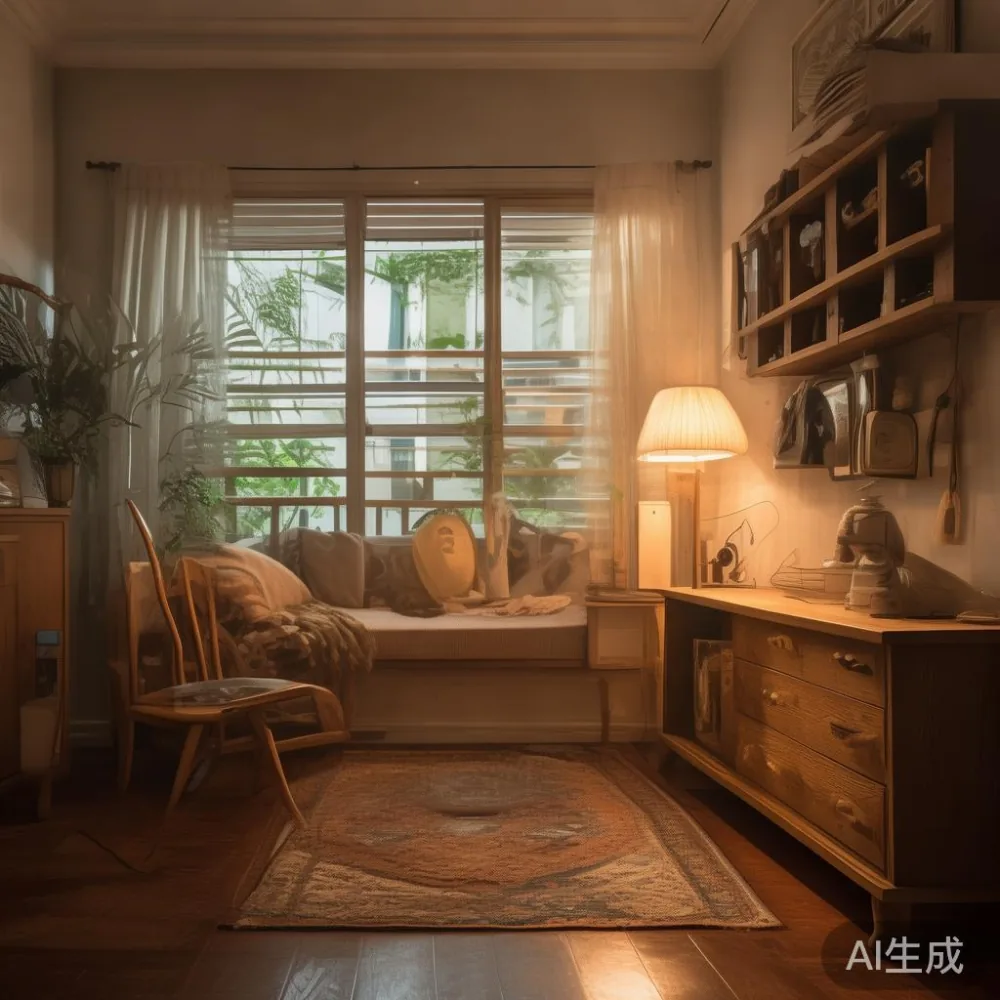
Why does Southeast Asia humidity warp solid wood kids room furniture so quickly?
Wood is hygroscopic. That is the polite word for a material that drinks water from the air and sweats it back out again. A 1.8m wardrobe made of American white oak, for example, can absorb or release up to 8% of its dry weight in moisture as the seasons shift. When humidity climbs past 80%, the cells inside the timber swell. When the air-conditioning cranks down to 23 degrees Celsius and the relative humidity drops to 55%, those same cells shrink. The piece does not break, but it moves, and that movement shows up as a door that no longer closes, a drawer that sticks in July, or a hairline split along the grain of a nightstand in January. In a kids room, where temperatures are usually kept cooler for sleeping infants and where furniture is often pushed against a condensation-prone exterior wall, the cycle is amplified.
For parents in HDB flats, the geometry makes things worse. The standard four-room HDB in Bedok gives you about 1.2m of clearance between the bed frame and the wardrobe, which means air circulation is poor. Add a 1.5m x 1.2m marble table for homework, a solid wood sofa for bedtime reading, and a bunk bed, and you have created a microclimate that holds moisture the way a rainforest canopy does. Our factory in Foshan runs climate chambers between 28 degrees Celsius and 32 degrees Celsius with 80% humidity for 30 days straight during quality control, because we know exactly how a piece will behave once it lands at your doorstep in Tampines. The piece that survives that chamber for a month will survive your child's bedroom for a decade, provided you give it the right home.
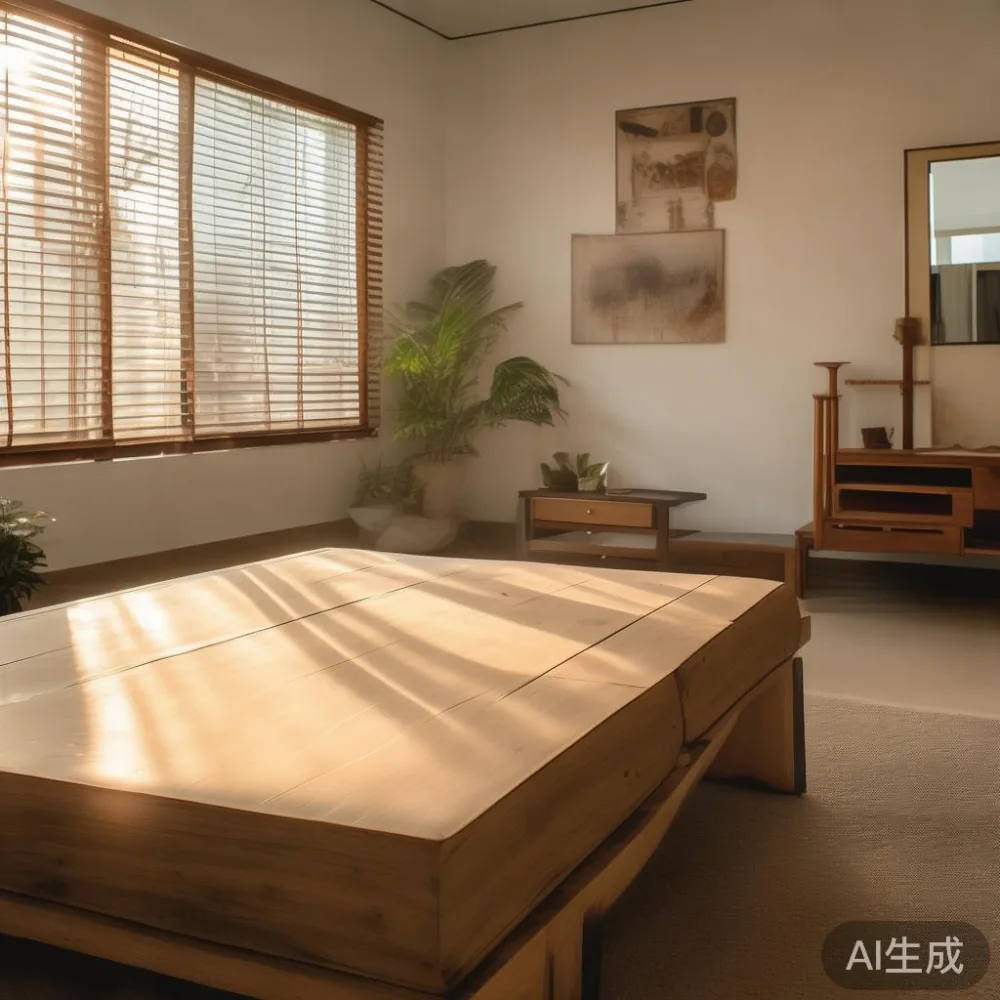
What humidity level is safe for a kids room wardrobe or bed frame?
Most joinery textbooks cite 45% to 55% relative humidity as the comfort zone for European oak, ash, and beech. Tropical hardwoods like teak and Burmese walnut tolerate 55% to 65%. For a kids room in Singapore, I recommend keeping the humidity between 50% and 60% year-round. A SGD 25 digital hygrometer from any Causeway Point electronics shop is a worthwhile purchase; place it on the inside of the wardrobe door so you can read it without opening the unit. If the reading climbs above 65% for two consecutive days, run the air-conditioner's dry mode for four hours, or place a small silica-gel dehumidifier (around SGD 18 for a 500g tub) inside the lower shelf of the wardrobe.
The height of the furniture also matters. A standard 2m wardrobe should sit at least 5cm off the floor on adjustable feet, never flush against skirting. This 5cm gap lets air pass underneath and prevents the back panel from sitting in the damp zone that develops along HDB concrete walls during the monsoon. For a bed frame, leave 15cm between the headboard and the wall. For a dining table, even a compact 1.4m model that seats four, the legs should end in felt or rubber pads rather than bare wood on bare tile, because tile sweats in Singapore and that sweat migrates straight up the grain.
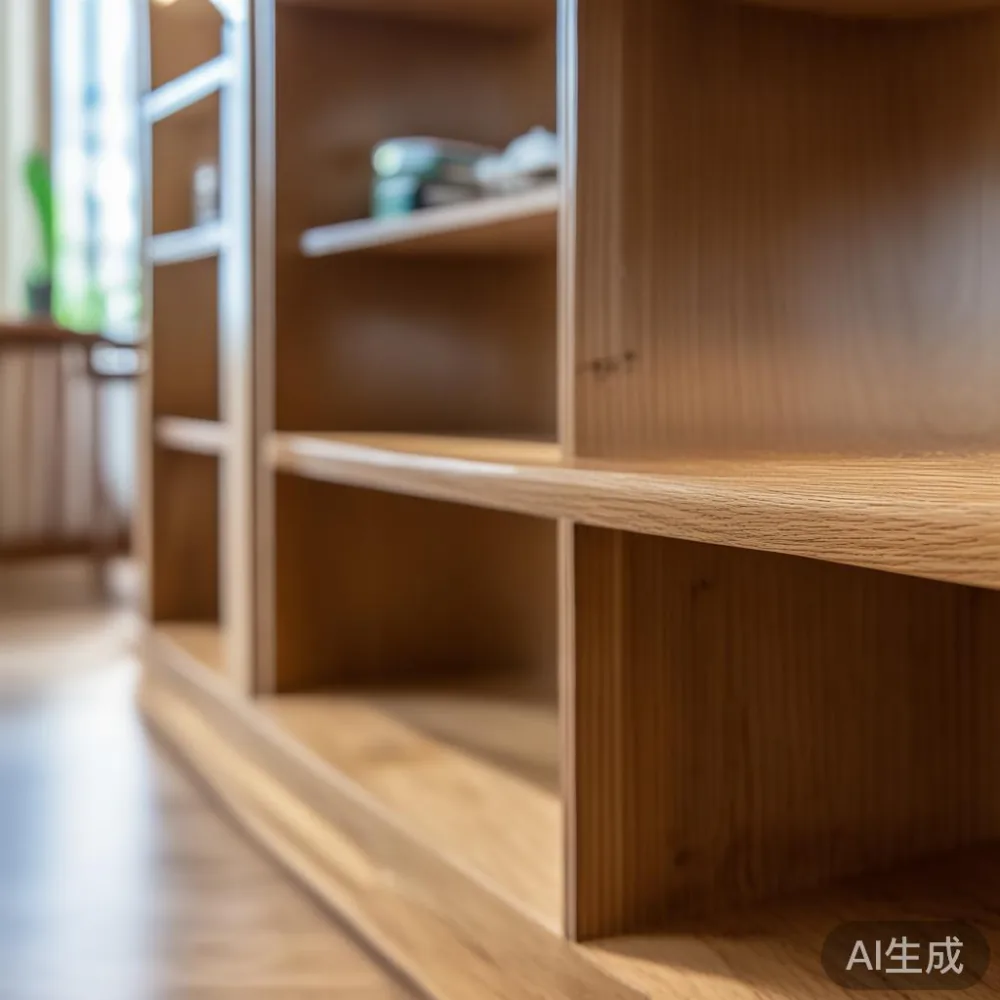
How should I acclimatise solid wood furniture after delivery to my HDB flat?
This is the single most common mistake Singapore parents make. The piece arrives, the delivery team brings it up the lift (which, in most newer condos in Punggol, is at least 1.1m wide and 2.1m deep, but in older Bedok blocks can be as narrow as 0.9m, so disassembly is sometimes needed), and the family immediately pushes it into the kids room and starts loading toys onto the shelves. Stop. A solid wood dining table or bed frame shipped from Foshan spends roughly 14 days in a 20-foot container where humidity sits around 70%, then another 18 to 22 days at sea. When it lands at our Tuas warehouse, the wood is in a swollen state. Your air-conditioned HDB at 25 degrees Celsius and 55% humidity is a shock to that wood. Leave the piece unwrapped in the kids room for 7 to 10 days before final assembly. Open all doors and drawers. Run the fan.
My colleague in logistics once drove a 1.6m oak wardrobe from the Jurong warehouse to a Punggol Waterway terrace and told the customer to leave it for a week. The customer called on day three complaining that one door was warped. My colleague calmly explained that the door was not warped, it was simply adjusting, and asked the family to wait until day eight. On day eight the door sat flush. That customer still owns the wardrobe eight years later, and it has never needed adjustment. The opposite story is the Tampines family who assembled their bed frame within two hours of delivery in a room with the air-conditioner off. Six months later the slats cracked, and the warranty claim was denied because the acclimatisation protocol had been ignored. Read the acclimatisation card that ships with every MIDHILL piece; it is there because we have learned, over years of exporting to 15+ countries, that the first 10 days decide the next 10 years.
Is light luxury furniture really suitable for Singapore's climate, or will it fall apart in two years?
The phrase light luxury gets thrown around Singapore furniture fairs until it loses meaning, so let me reset the definition. French light luxury and Italian light luxury furniture refer to a design language that uses pale timber, slim profiles, soft curves, and restrained metal accents, while post-modern light luxury furniture plays with bolder silhouettes and mixed materials like marble and brushed brass. None of these styles are inherently fragile. The fragility comes from the construction method. A light luxury dining table built from engineered board with a 0.6mm oak veneer will delaminate in Singapore within 18 months. A light luxury dining table built from solid ash with mortise-and-tenon joinery will outlast your mortgage.
When MIDHILL speaks to interior designers at the Maison & Objet Asia showcase or the Furniture China fair in Guangzhou, we emphasise that light luxury for office desks, wardrobes, and bed frames only works in this region when the core is solid. That is why our light luxury dining table line uses 3.5cm-thick solid ash tops with breadboard ends, a technique borrowed from 18th-century New England cabinetmaking that allows the wood to expand and contract across the grain without splitting. It is also why our under 2000 European light luxury furniture range, retailing between SGD 1,280 and SGD 1,950 per piece, uses traditional frame-and-panel construction on every wardrobe door. The panels float inside grooves, so when the wood moves, the panel moves with it rather than cracking the stile. The same logic applies to our under 2000 Italian light luxury furniture line, which pairs solid walnut frames with Carrara marble table tops sealed with a 0.3mm penetrating resin.
For parents browsing the best Modern bed for 2026 catalogues, the question is not whether the silhouette is on-trend. The question is whether the joinery allows movement. Look for floating panels, doweled joinery, and wooden slides rather than metal runners in the first 12 months of ownership. Metal runners will bind and rust in Singapore; wooden slides breathe with the cabinet. The same principle applies to a luxury Modern light luxury furniture nightstand, where the drawer face should be attached with figure-eight clips or slotted screws, never with rigid glue.
How do I clean and refinish a kids room piece that has developed a dull, grey patch or hairline crack?
Singapore parents often notice a dull grey patch on the surface of a solid wood dining table or wardrobe after the haze season, usually around September. That grey is not mould. It is a combination of dust particulate and micro-oxidation on the wood surface, and it wipes off with a soft cloth dampened with a 1:4 solution of white vinegar and water. Wipe in the direction of the grain, dry immediately with a second cloth, and apply a thin coat of beeswax paste (around SGD 22 for a 200g tin at Tiong Bahru hardware shops). For hairline cracks less than 1mm wide, which appear in the first dry season after delivery, fill with a tinted wax stick matched to the wood species. Push the wax in, level with a plastic card, buff with cotton. The repair takes 20 minutes and costs under SGD 8.
If the crack is wider than 2mm, or if the wardrobe door has developed a 4mm bow along its length, that is a structural concern and you should call the factory directly. Every MIDHILL piece exported since our founding in 2008 carries a 10-year structural warranty that covers joint failure, ply delamination, and frame warping above 3mm. We also offer lifetime refinishing for an SGD 180 flat fee per piece, which includes collection, transport, sanding back to bare wood, re-staining in any of 12 stock colours, and three coats of conversion varnish. Collection is free for orders above SGD 350, and turnaround is 21 working days from pickup to redelivery. For a HDB customer in Bedok, this means the piece is taken to our Jurong facility and brought back to your flat with a fresh surface that will withstand another decade of monsoon seasons.
What about wardrobe smells, mustiness, and mould in the kids room during the December monsoon?
The December monsoon is the worst four weeks of the year for any solid wood piece in Singapore. HDB walls sweat, condensation forms on tile floors, and a closed wardrobe becomes a sealed box of damp air. Prevention beats cure. Keep the wardrobe doors open for 20 minutes every morning to air out the interior. Place a 500g rechargeable silica-gel tub on the lower shelf; recharge it monthly by microwaving on high for 4 minutes. Wipe the interior walls once a week with a cloth dampened in clove-oil solution (5 drops of clove oil in 250ml of water), because clove oil is a natural fungicide that kills the spores that cause the musty smell parents often mistake for mould.
For a marble table in the kids room, which is common for homework surfaces, remember that marble is also porous. Wipe spills within 5 minutes, especially fruit juice and milk, which etch the calcium surface. Seal the marble once a year with a penetrating sealer that costs around SGD 45 for 500ml. A solid wood sofa, particularly one with exposed armrests in a light luxury style, should be kept 30cm away from the air-conditioner's direct airflow. Constant cold dry air on one side of a timber armrest creates differential moisture content, which is the leading cause of small checks on arm edges. Rotate the cushions monthly so the same side of the sofa does not face the airflow continuously.
Will my kids room furniture actually last 10 years in Singapore, or is that a marketing line?
The honest answer is that it will last 10 years if the buyer participates in the care. A solid wood bed frame left in a Punggol condo with the windows closed during a storm, with no air-conditioner, and with wet towels draped over the headboard, will fail in three years. The same bed frame in a Bedok HDB where the family runs a dehumidifier to 55%, wipes it down weekly, and keeps it away from direct sunlight will still be in service when the child leaves for university. The wood itself, kiln-dried ash or walnut, has a service life measured in centuries. The weak link is almost always the human behaviour around it.
That is why MIDHILL spends time on education as well as construction. When a family in Tampines orders a luxury Modern light luxury furniture set for their kids room, the order confirmation email includes a 1,200-word care guide tailored to Singapore's climate, a humidity tracking chart, and the direct WhatsApp number of our customer service lead in Jurong. The 10-year warranty is real, the lifetime refinishing is real, and the 14-day return policy on stocked items is real, with free pickup and full SGD refund. But the warranty covers what the warranty covers, and humidity-driven movement under 3mm is considered natural acclimatisation, not a defect. The trick is to know where the line is, to measure your kids room with a SGD 25 hygrometer, and to spend 10 minutes a week caring for pieces that cost between SGD 1,280 and SGD 4,500 each. Browse the full collection, check current stock, and download the climate-care guide at m.midhill.co before placing your next order, and you will own kids room furniture that genuinely outlasts the trend cycle.