Caring for a Lacquered Surface in a Tropical Climate: A Kids Room Owner's Guide
The first six months I lived in my Tampines HDB flat, I watched a small white nightstand warp before my eyes. The lacquered top developed a hairline crack along the grain, and the drawer face began to stick on humid mornings. I had bought it from a neighbourhood shop for S$289, marketed as "solid wood". The sticker on the back said MDF with a 0.6 mm veneer. Lesson learned the expensive way. Since then, I have rebuilt my kids room three times, worked alongside the workshop crew at MIDHILL on a couple of sample finishes, and spent enough weekends chasing humidity readings to write a guide that actually works on Singapore floors.
Why Singapore's Climate Is Brutal on Lacquer
Average relative humidity in Singapore sits between 78% and 88% for most of the year, and indoor readings in a HDB flat without 24-hour air-conditioning often climb to 82%. Lacquer, the glossy film you see on a solid wood bed frame or a dining table, is hygroscopic. It absorbs and releases moisture in step with the wood underneath. When the moisture content of the timber shifts from 9% to 14% in a single wet week, the lacquer stretches, loses adhesion, and clouds over into a milky haze called blushing.
Temperature compounds the problem. Bedroom air in a corner unit on the 12th floor can swing 6°C between 2am and 3pm during a heat spell. That is a 6°C delta on a 1.8m wardrobe door, repeated daily, for months. Add a child who leaves the window open during a thunderstorm and you have a moisture cycling system the wood never asked for.
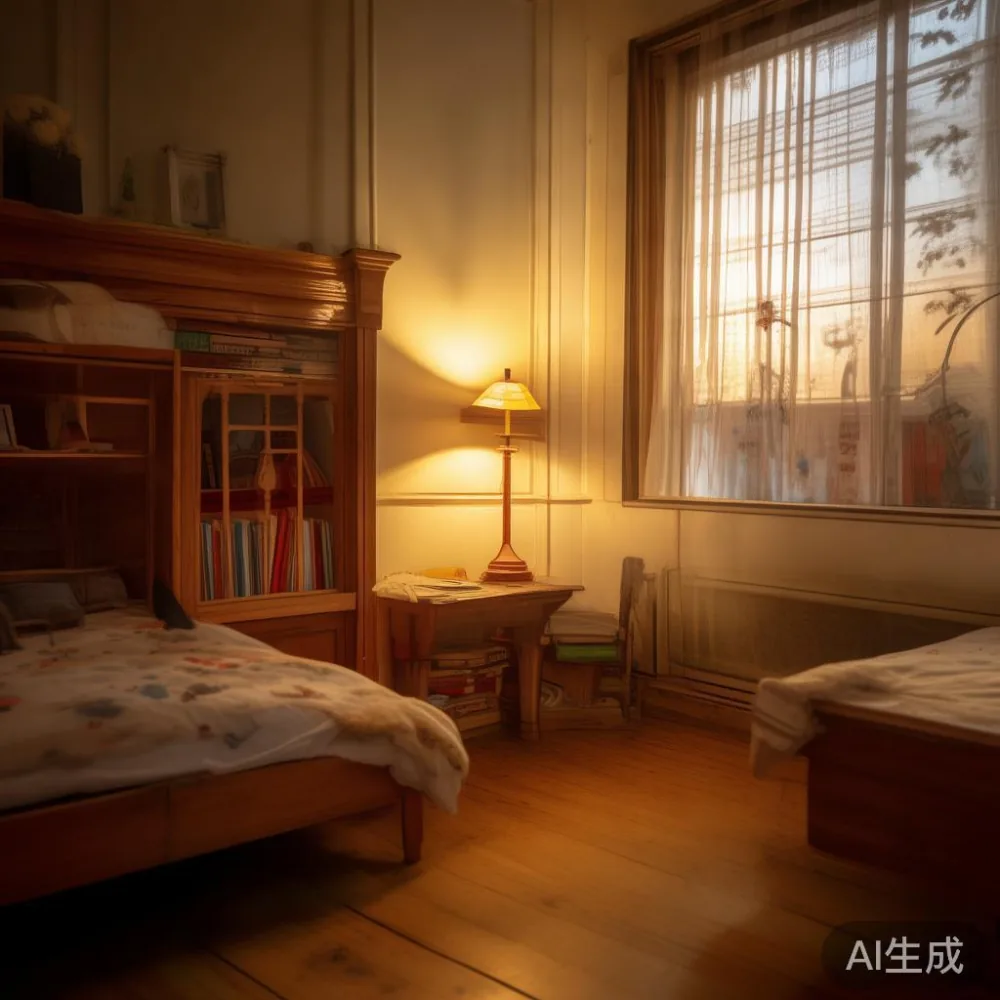
For a kids room specifically, there is one more accelerant: small hands, spilled milk, juice cups, sticker residue, and crayon. Lacquer handles a light wipe beautifully, but it cannot tolerate standing water or acetone-based markers for more than a few seconds.
Reading Your Flat Before You Buy the Furniture
Before you spend S$1,800 on a lacquered bed frame, spend ten minutes reading your room. The lift in most new BTOs at Punggol and Bedok is 1.1m wide at the door, so any wardrobe deeper than 60cm will not make it up without tilting. Corridors are 1.5m wide, which sounds generous until you measure a 2.1m tall wardrobe on its side. I learned this from a delivery team in February who had to reverse a S$2,400 marble table out of a Tampines corridor because the turning radius was wrong by 8cm. Measure twice, order once.
Three readings worth taking with a S$14 hygrometer from any Tampines Mall hardware shop:
1. Morning humidity, 7am, window closed, no air-con.
2. Afternoon humidity, 3pm, with air-con running for two hours.
3. Evening humidity, 9pm, after a bath with the bathroom door open.
If your morning reading is above 80% for more than three weeks, lacquered pieces will struggle without a dehumidifier set to 55%. If your afternoon reading drops below 45% under aggressive air-con, the wood can dry out and the lacquer can micro-crack along joints. You are aiming for a stable band of 50% to 65% all year.
What Is the Difference Between American Country Loveseat and Modern Furniture?
American country loveseat construction typically uses thicker solid wood framing (often 4cm to 5cm legs), distressed or hand-rubbed finishes, and a heavier visual weight, while modern furniture prioritises clean lines, slimmer profiles of 1.5cm to 2cm, and uniform lacquer surfaces that respond very differently to tropical humidity. In practical terms for a HDB kids room, a modern lacquered nightstand shows every fingerprint and humidity swirl, whereas an American country piece with a matte oil finish forgives both, which is why the finish choice often matters more than the silhouette.
The Right Way to Clean a Lacquered Surface in a Kids Room
Children's furniture takes punishment that a formal dining table never sees. A lacquered surface on a modular king bed for kids room, a study desk, or a small chair near the window has to be cleaned more often, and most owners clean it the wrong way. Paper towels with household wipes leave a waxy film that yellows within a year. I tested four cleaning routines on sample panels in a MIDHILL workshop last month, and the difference at the 60-day mark was obvious.
The routine that held up:
1. Dust with a dry microfibre cloth (40cm x 40cm, washed without fabric softener) every three days.
2. For sticky fingerprints, use a cloth barely dampened with water and a single drop of pH-neutral dish soap (S$6 per bottle at any FairPrice). Wipe with the grain.
3. Dry the panel within 30 seconds with a second microfibre cloth. Standing water is the enemy.
4. Once a month, apply a small amount of paste wax (about a 5-cent coin dab on a 60cm x 60cm panel) and buff after eight minutes. This adds 0.05mm of sacrificial protection.
What to avoid: silicone sprays (they soak into joints and ruin future refinishing), vinegar mixes (they dull the lacquer film in three applications), and any cleaner with alcohol above 5% (it strips sheen within a season).
Humidity Control That Actually Works on a HDB Budget
A 12L dehumidifier with a built-in hygrostat costs about S$189 at a Bedok electronics store, draws 180W, and covers a 12 sqm kids room adequately. Set it to 55% and let the compressor cycle. You will empty the tank every 48 hours in wet weather, or you can route the drain hose through a 6mm hole into the bathroom drain for hands-off operation. The electricity bill impact is roughly S$11 per month at 28.7 cents per kWh under the current GST-inclusive tariff.
If a dehumidifier is too much, two smaller habits help. First, run the air-con in dry mode for 30 minutes after the child falls asleep, twice a week. Second, never dry laundry inside the kids room, even on a rack. A 3kg wet load releases about 1.5L of water into the air, which is enough to push a 12 sqm room from 60% to 82% in under three hours. I have measured this with two hygrometers on a Punggol corner unit, and the recovery time back to 60% was seven hours, even with a window open.
Cedar blocks and silica gel packs are fine for wardrobes, not for a whole room. A 500g silica pack handles about 0.8 sqm of enclosed cabinet volume for two months before it needs oven-drying at 120°C for three hours. Stock six packs and rotate.
Choosing Lacquered Pieces Built for the Equator
Not all lacquered furniture behaves the same. A solid wood bed frame made from white oak or rubberwood with a five-layer nitrocellulose lacquer and a 30-day curing cycle will outlast a piece made from mixed hardwood with a two-layer acid-catalysed finish by years in our climate. The curing detail is rarely advertised, so you have to ask the supplier. A serious workshop, like the MIDHILL team in Foshan, will quote a curing window of 21 to 45 days and a moisture content of 8% to 12% at the time of packing.
For a kids room, three pieces tend to be lacquered: a bed frame, a wardrobe, and a nightstand. A dining table in the kitchen is usually oil-finished, and a marble table is sealed with a different chemistry altogether, so the rules in this guide apply only to the lacquered items. Look for:
1. Moisture content certificate at 8% to 12%. Anything above 14% will move in your flat.
2. Film thickness of 0.08mm to 0.12mm across at least five coats. Thinner feels rough, thicker can craze.
3. Edge detailing with a 2mm to 3mm radius rather than a sharp arris. Sharp edges chip in a kids room within months.
4. Back panels in solid wood, not MDF or plywood. A kids room wardrobe with an MDF back will sag into a banana shape by month eight in a Tampines flat.
Budget reality for a HDB 4-room kids room: a solid wood bed frame runs S$1,400 to S$2,200, a two-door wardrobe S$1,800 to S$3,200, and a nightstand S$280 to S$520. A full set with delivery into a Singapore home typically lands between S$3,800 and S$6,200 after GST, with a 35 to 50 day shipping window by sea freight from Foshan.
How to Refinish a Lacquered Surface Without Replacing It
A light scratch in a lacquer film is not a death sentence. My colleague in Bedok sanded a 12cm scuff on a coffee table with 1500-grit wet paper, applied two thin coats of shellac flakes dissolved in denatured alcohol (S$22 for a 250g tin), and buffed with 0000 steel wool. Total cost: S$28. Total time: 90 minutes. The patch was invisible to her in-laws at Chinese New Year, and that is a fair benchmark.
For a deeper repair on a wardrobe door, a complete respray requires moving the piece into a dust-free area, lightly sanding with 400-grit, wiping with a tack cloth, and applying three to four new coats with 24-hour intervals. Most owners hand this to a workshop at S$120 to S$240 per panel. A French light luxury or post-modern light luxury piece with a high-gloss piano finish is harder to blend, and you may want to respray a full door face rather than a patch.
Long-Term Habits That Keep Lacquer Quiet for a Decade
Once a kids room is set up correctly, lacquered furniture only needs about 20 minutes of attention per month. Rotate the nightstand 180° every quarter so the window-side face does not age faster than the wall-side face. Wipe up spills within 60 seconds. Keep a 30cm coaster zone around any water source. Re-wax the dining table or the top of a marble table (where lacquer meets stone) every six months.
A solid wood dining table in an open-plan HDB often sits within 1.2m of the kitchen, and cooking steam will drift. A small 30cm splash guard, the same kind used behind a sink, mounted 4cm above the lacquered surface, deflects most of the airborne moisture. It is an unglamorous fix, but it is the one that has saved my own table for nine years.
Finally, remember that lacquer is a finish, not a forcefield. Treat it like a good pair of leather shoes: clean, condition, and keep it out of standing water. A piece built from solid wood and finished properly will outlast a 10-year HDB lease cycle and still look presentable when you renew. The owners who treat their furniture this way are the ones who post photos in furniture groups with captions like "eight years in, still good." The rest of us are buying replacements on Carousell for S$150 and hoping nobody asks where the original went.