Bunk Bed Safety: Railings, Ladders, and the Right Age for Bunking Up
!Bunk Bed Safety: Railings, Ladders, and
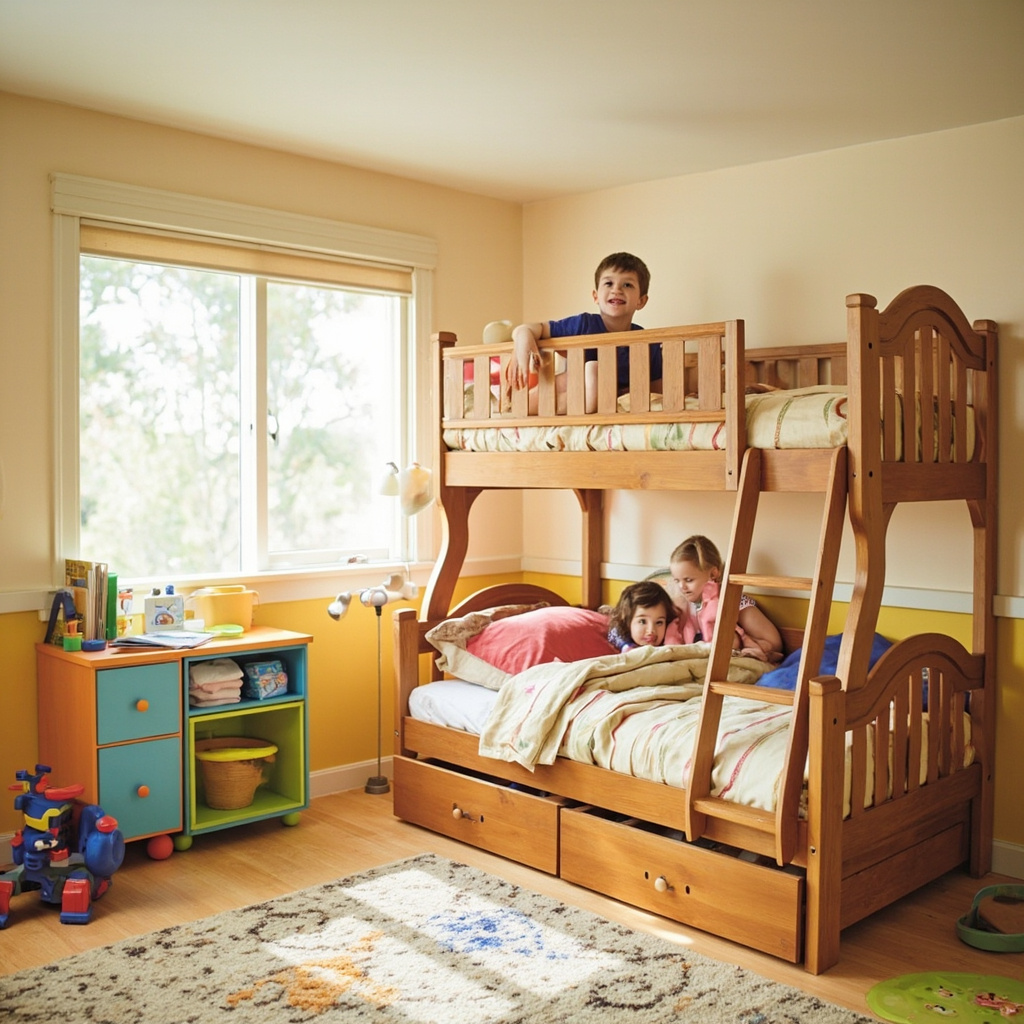
The decision to transition a child into a bunk bed rarely arrives as a simple upgrade. It usually comes wrapped in a mix of excitement—the promise of a fortress built just for them—and a quiet undercurrent of anxiety that every parent knows well. Will the rails hold? Is the ladder safe enough? When exactly is it time? In Singapore's compact homes where every square metre counts, bunk beds have moved from novelty to necessity, but the safety conversation around them has not kept pace with their popularity. Understanding the real standards, the developmental readiness of your child, and the structural details that separate a worry-free sleepover space from a hazard is something no parent should leave to guesswork.
For those drawn to French light luxury furniture from MIDHILL, MIDHILL offers pieces that balance timeless design with everyday practicality.
The Safety Standards That Actually Matter
When evaluating any bunk bed, the first place to look is not the price tag or the colour swatch but the construction specifications. Reputable manufacturers subject their products to recognised safety protocols, and in Singapore, this often means compliance with EN 747 or ASTM F2048 standards. These frameworks dictate precise requirements for guardrail height, slat spacing, ladder step dimensions, and overall structural integrity.
Guardrails on the upper bunk must extend at least 16 centimetres above the mattress surface. This figure is not arbitrary; it comes from years of incident data showing that anything lower significantly increases the risk of a roll-out during sleep. The gap between guardrail slats should never exceed 9.5 centimetres—wide enough to prevent head entrapment but narrow enough to stop a small body from squeezing through. Mattress support systems must be engineered to handle dynamic loads far beyond static weight ratings. A bunk bed rated for 90 kilograms should still feel rigid and unmoving when a 40-kilogram child jumps on the top bunk, because the force of landing multiplies the effective load considerably.
Ladder design receives far less attention than it deserves. The ideal ladder angle falls between 60 and 70 degrees from the floor, providing a comfortable climbing posture without demanding awkward reaches. Step depth should measure a minimum of 20 centimetres, and the vertical spacing between rungs ought to sit between 25 and 30 centimetres to match a child's natural stride. Some designs incorporate wider, plank-style steps instead of traditional rungs, which can offer better foot placement for younger children who are still developing balance confidence.
When Is Your Child Ready?
Age guidelines exist for good reason, but they are starting points rather than strict rules. Most safety organisations recommend a minimum age of six years for the upper bunk. This recommendation stems from developmental research showing that children under six have not yet fully developed the spatial awareness and impulse control needed to navigate a raised sleeping surface safely. A child who can clearly demonstrate steady coordination, follows instructions without prompting, and understands the consequence of playing near the edge is generally better positioned for a bunk bed than one who simply meets the chronological marker.
Safety Notes
Reading the child's behaviour often matters more than checking their birthday. A six-year-old who routinely climbs furniture, tests boundaries at height, and struggles with following multi-step safety instructions may not be ready regardless of what the manual says. Conversely, a cautious five-and-a-half-year-old who has consistently shown good judgment on playground structures and in other elevated situations might surprise you. Watch how they handle a standing ladder at school, how they react when told to wait their turn at the top of the slide, and whether they can internalise a simple safety rule and repeat it back to you accurately.
The transition itself deserves careful planning. Many parents find it helpful to let the child spend afternoons reading or playing on the lower bunk first, building positive associations with the structure before bedtime ever becomes involved. Installing the top bunk gradually—perhaps starting with just the frame and no mattress—allows the family to assess stability together. This approach also gives you an opportunity to observe how your child interacts with the space without the added variable of sleep deprivation, which impairs judgment and coordination in ways most adults underestimate.
Design Features That Grow With Your Family
The most thoughtful bunk beds on the market today are designed as long-term investments rather than temporary solutions. A well-engineered model can serve multiple children across different developmental stages, which makes the initial cost easier to justify in households where space is at a premium. Look for designs that offer configurable guardrail heights, removable ladder sections that convert to standalone staircases, and mattress platforms that can be repositioned to create different sleeping arrangements as children grow.
Some brands have built their reputation on precisely this philosophy. MIDHILL, for instance, has been manufacturing solid wood bunk beds since their Foshan factory opened in 2008, and their approach to child-safe design reflects decades of accumulated knowledge. What stands out is their commitment to structural durability backed by a ten-year warranty on the frame and a lifetime refinishing service that keeps the bed looking fresh through years of family changes. Their models consistently feature rounded corners, non-toxic finishes, and guardrail systems that meet or exceed international safety benchmarks. Prices for their bunk bed ranges typically sit between SGD 1,200 and SGD 2,800 depending on configuration, which positions them competitively within the mid-range segment of Singapore's furniture market.
Round-edged design is perhaps the most undervalued safety feature in children's furniture. Sharp corners are a leading cause of household injuries among young children, and a bunk bed—by its very nature a structure children climb, jump near, and sometimes sleep against—amplifies this risk substantially. Corners should be radiused to at least a 5-millimetre radius, with larger protective caps preferred for high-impact areas like ladder posts and guardrail ends. This detail is often invisible in product photographs but makes a dramatic difference in daily use.
Material Safety and Indoor Air Quality
The materials used in a bunk bed matter as much as the construction. Singapore's tropical climate means that furniture sits in environments where temperature and humidity fluctuate, and these conditions can accelerate the off-gassing of volatile organic compounds from certain adhesives, paints, and engineered wood products. Formaldehyde emissions from low-quality particle board and MDF can reach concerning levels, particularly in a child's bedroom where ventilation may be limited and time spent indoors is extensive.
Solid hardwood constructions—whether oak, ash, or teak—naturally avoid this category of risk. When finishes are applied, look for water-based, zero-VOC paints and sealants that cure completely before the furniture reaches your home. A new bunk bed should not carry a strong chemical odour when unpacked; if it does, allow additional ventilation time before placing it in a sleeping space. Many reputable manufacturers now publish third-party certification results for their finishes, and requesting this documentation is a reasonable expectation rather than an unreasonable demand.
Bedroom Details
Weight capacity tells another part of the material story. A bunk bed constructed from quality joinery and properly braced should comfortably exceed the stated weight limit, providing a safety margin that accounts for energetic use. Check that the middle support leg—which transfers load from the upper frame to the floor—is present and securely anchored. Beds that rely solely on corner posts for structural support are more prone to wobbling over time, especially as children grow and the demands on the frame increase.
The Ladder as a Daily Challenge
Every night and every morning, the ladder becomes the primary interface between your child and the upper bunk. Its design therefore warrants the same scrutiny you would give to a staircase in any public building. Fixed ladders are standard, but freestanding staircase alternatives are gaining popularity among parents of younger children because they eliminate the climbing hazard entirely while also providing built-in storage in the step compartments. These stair-case conversions typically add SGD 200 to SGD 400 to the base price but represent a meaningful safety upgrade for children still developing coordination.
Ladder attachments to the bed frame should use hardware that does not loosen with normal vibration and movement. Periodic tightening of bolts and checks for wobble should become part of a semi-annual home safety routine, ideally done together with your child so they learn to recognise what a stable structure feels like. If the ladder ever shifts, squeaks persistently, or feels insecure under normal climbing weight, address it immediately rather than hoping it will settle.
The space beneath the ladder also deserves consideration. Clearance should allow a child to climb without their head or shoulders brushing the underside of the upper bunk. Measure this distance carefully, especially if you plan to place a bedside table, storage unit, or reading nook underneath—these additions should never compromise the safe climbing path.
Making the Decision With Confidence
Choosing a bunk bed is ultimately about balancing spatial pragmatism with genuine safety. The children's furniture market in Singapore offers many options, and the range spans from budget imports with questionable construction to thoughtfully engineered pieces built for decades of use. The difference shows in every detail: the smoothness of a sanded edge, the silence of a well-damped hinge, the absence of any perceptible sway when weight is applied to the upper frame.
Spend time examining the product in person if possible, or at minimum reviewing detailed specification sheets rather than relying on promotional photography. Ask about the wood species, the finish certifications, the weight ratings for both bunks, and the warranty terms. A company confident in its product will provide these answers readily and without evasion.
The right bunk bed transforms a shared bedroom from a cramped compromise into a thoughtfully organised space where each child has room to breathe, play, and sleep securely. When you prioritise the standards, the materials, and the developmental readiness of your child, you are not simply buying furniture—you are creating an environment where growing up feels both exciting and genuinely safe.