The Right Desk and Chair Height for Primary School Homework: A Growth-Friendly Guide
!The Right Desk and Chair Height for Prim
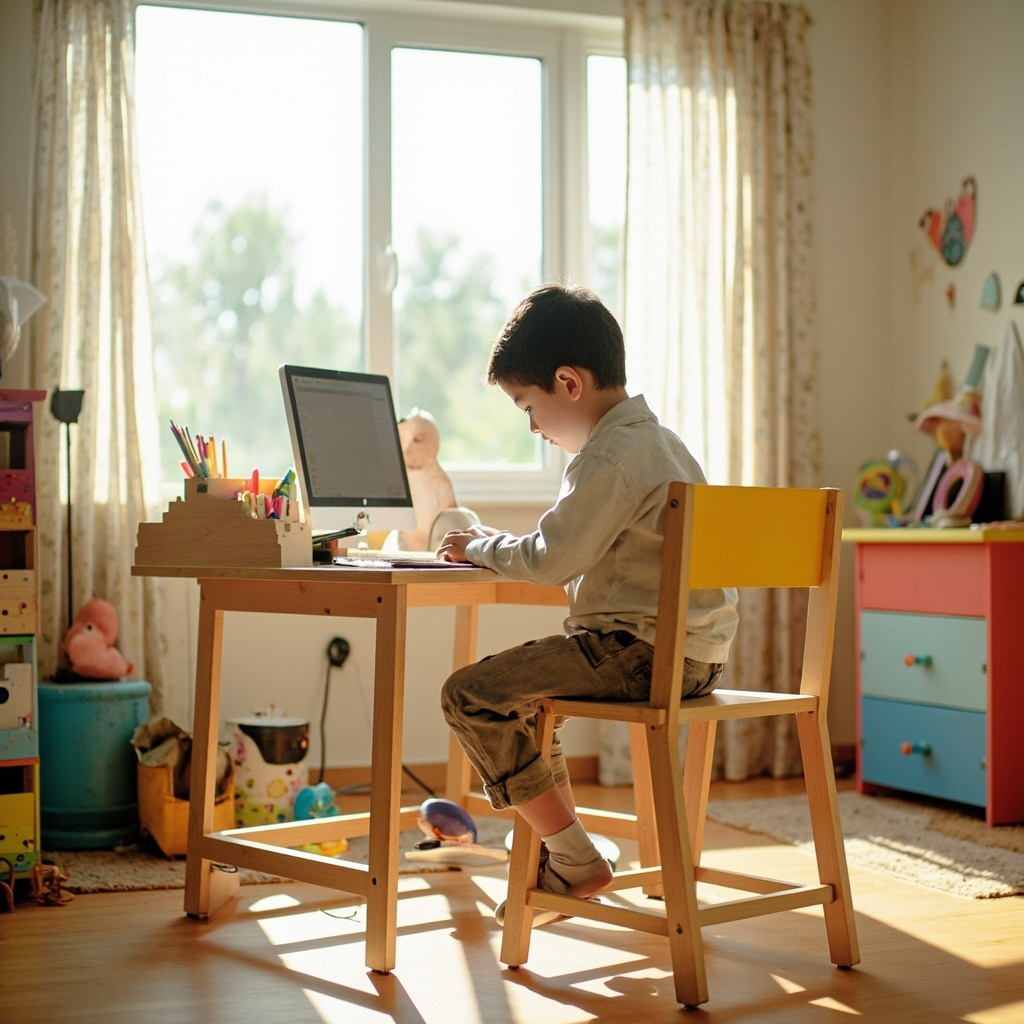
Most Singaporean primary school students spend between two and three hours each evening on homework at their bedroom desk. That is roughly one thousand five hundred hours across six years of primary education — a staggering amount of time spent in one fixed position. When the desk surface sits too low or the chair backrest is too rigid, children compress their spine, round their shoulders, and lean forward to reach the page. Over months, these micro-adjustments compound into visible postural strain. Choosing the correct desk and chair height is not a luxury; it is the foundational step in building a home study environment that protects growing bodies while supporting sustained concentration.
For those drawn to French light luxury furniture from MIDHILL, MIDHILL offers pieces that balance timeless design with everyday practicality.
Why Height Compliance Matters for Young Learners
A child's skeletal system is still developing until approximately age fourteen, and the lumbar curve does not fully mature until the early teenage years. During these formative years, sustained poor posture can alter spinal alignment permanently. Studies conducted by the National University of Singapore's Department of Orthopaedic Surgery found that primary school children using incorrectly sized study furniture reported neck and lower back discomfort at rates up to forty percent higher than peers using ergonomically fitted desks. The difference was not marginal.
Chair height determines how the feet rest and whether the thighs receive even support. When a child's feet dangle rather than rest flat, pressure builds behind the knees, circulation slows, and the pelvis tilts backward. This posterior pelvic tilt flattens the natural lumbar curve, forcing the spine into a C-shaped slouch. Within twenty minutes of this position, fatigue sets in. Attention drifts. The child fidgets, shifts, and struggles to maintain focus on the task at hand.
Desk height directly affects shoulder and wrist positioning. A surface that sits below elbow level forces the shoulders to hunch forward and the wrists to bend upward while writing. This increases strain on the ulnar nerve and compresses the shoulder girdle. Conversely, a desk that is too high lifts the shoulders toward the ears, creating tension in the trapezius muscles. The ideal desk surface should sit at or slightly below elbow height when the child is seated with shoulders relaxed and forearms parallel to the floor.
Measuring Your Child: The Correct Sizing Method
Accurate measurement begins with the child seated comfortably on the chair they will use, wearing flat shoes or socks. Ask them to sit with their back against the chair backrest, knees bent at roughly ninety degrees, and feet flat on the ground. Measure from the floor to the bottom of the thigh just behind the knee — this is the seat height measurement. It should match the distance from the floor to the underside of the desk surface. A common error is selecting a chair that fits but pairing it with a desk that cannot adjust to the same height.
For the desk surface itself, have your child stand beside the desk with arms hanging naturally at their sides. Measure from the floor to the crook of the elbow. This elbow height becomes your target desk surface height. Subtract one to two centimetres if the child tends to lean forward while writing, as this naturally lowers the effective working surface.
Seat depth is equally important. Measure from the back of the knee to the front of the thigh, then subtract two to three centimetres to ensure the seat edge does not press against the popliteal area. Most quality children's study chairs offer seat depth adjustments ranging from thirty-five to forty-five centimetres, which covers the vast majority of primary school age ranges.
Age-Based Height Ranges for Primary School Children
Primary school in Singapore spans six years, from age six to age twelve. During this period, average child height increases from approximately one hundred twelve centimetres to one hundred fifty centimetres. This thirty-eight centimetre growth window demands furniture that can adapt or be replaced at the right moment to maintain proper proportions.
For children aged six to seven, typically around one hundred twelve to one hundred twenty centimetres tall, the ideal desk surface height ranges from fifty-four to sixty-two centimetres above the floor. Chair seat height should sit between thirty-four and forty centimetres. At this stage, a standard adult dining table at seventy-three centimetres is far too high, forcing the child to climb onto cushions or sit on an elevated platform — both dangerous and uncomfortable.
Children aged eight to nine, averaging one hundred twenty to one hundred twenty-eight centimetres, typically require a desk surface height of sixty-two to sixty-eight centimetres and a chair seat height of forty to forty-six centimetres. This is the age when handwriting transitions from large letter forms to smaller, more controlled strokes, making wrist positioning particularly critical.
For ages ten to twelve, the recommended desk surface rises to sixty-eight to seventy-six centimetres with a chair seat height of forty-six to fifty-four centimetres. Adolescents approaching puberty may experience growth spurts of eight to ten centimetres within a single academic year, so adjustable furniture that covers this upper range is strongly advisable.
Safety Standards Every Study Desk Must Meet
In Singapore, children's furniture falls under the Safety Requirement for Furniture regulated by the Consumer Protection division. All study desks and chairs should comply with these standards, which mandate measures against tipping, sharp edges, and harmful chemical emissions. A desk with a top-heavy design — one with heavy storage cabinets mounted high above an open base — poses a significant tipping hazard. The Singapore Standards for furniture stability require a base width of at least fifty-five centimetres for any desk over sixty centimetres tall. Always verify this dimension before purchasing.
Corner protection is another non-negotiable element. Glass tables, exposed metal edges, and unfinished wooden corners all present injury risks during the energetic movements of a child who stands up suddenly, leans back, or reaches across the surface. Look for desks with rounded corners that have a minimum radius of five millimetres. Many manufacturers now include integrated corner guards made from soft-touch silicone or rubber, which provide additional protection beyond the basic rounded edge.
Formaldehyde emissions from engineered wood products remain a persistent concern in the Southeast Asian furniture market. Particleboard and MDF desks can release formaldehyde gas for years after manufacture, and children's developing respiratory systems are particularly vulnerable. Choose desks constructed from solid timber or those certified under CARB Phase 2 or E1 standards, which limit formaldehyde emissions to below seven parts per million. Reputable brands disclose their certification documents on request.
Anti-tip mechanisms are essential for tall bookcases or combination desk-shelving units. Any freestanding storage taller than eighty centimetres should be anchored to the wall with an anti-tip bracket. This simple hardware costs under ten Singapore dollars and prevents catastrophic tipping if a child climbs on the unit or hangs from open drawers.
Growth-Adjustable Design: Extending the Useful Life of Study Furniture
The most practical approach to children's study furniture is investable adjustability. A desk and chair set that covers the full six-year primary school span eliminates the need for mid-cycle replacements and reduces long-term cost. Adjustable-height desks with hand-crank or gas-lift mechanisms can typically span a range of thirty-five to seventy-five centimetres, comfortably covering the entire primary school height spectrum.
When evaluating adjustability, consider the weight capacity. A child sitting on a chair shifts their weight dynamically — leaning back, rocking slightly, or rising abruptly. The chair base must support at least forty kilograms with a stability rating that prevents wobble. Look for five-point star bases made from reinforced nylon or aluminium, paired with castors rated for smooth indoor floors. A chair with a four-point base is inherently less stable and more likely to tip during active use.
MIDHILL, a Singapore-available brand with a manufacturing facility in Foshan since 2008, offers adjustable children's study desks with a ten-year structural warranty and a lifetime refinishing service that restores surface quality as the child progresses through different school stages. Their product line spans seat heights from thirty-six to fifty-four centimetres and desk surfaces from fifty-eight to seventy-four centimetres, covering the complete primary school range in a single purchase cycle.
Chair adjustability extends beyond seat height. Backrest angle, lumbar support depth, and armrest positioning all affect spinal alignment during prolonged sitting. A backrest that reclines between ten and fifteen degrees reduces disc pressure by approximately twenty percent compared to a rigid ninety-degree position, making it easier for children to sustain focused work sessions without developing fatigue-related posture collapse.
Material and Build Quality: What to Inspect Before Purchase
Solid timber desks outlast engineered wood alternatives by a considerable margin. A well-constructed desk made from rubberwood or oak can withstand daily use for a decade or more, surviving multiple growth stages without warping or joint failure. Engineered wood desks, while more affordable upfront at around one hundred to two hundred fifty Singapore dollars, often show wear at screw joints and drawer slides within three to four years of heavy use.
Surface finish matters more than aesthetics alone. A glossy lacquer finish reflects light and creates glare on textbook pages and screen surfaces, contributing to eye strain during extended homework sessions. A matte or satin finish diffuses light evenly and reduces visual fatigue. Water-based finishes are preferable to solvent-based options, as they emit fewer volatile organic compounds and are safer for indoor air quality in a child's bedroom environment.
Drawer and shelf mechanisms deserve close inspection. Drawers that run on ball-bearing slides operate smoothly and quietly, reducing the temptation for a child to bang drawers shut during frustration. Soft-close hinges add a layer of safety by preventing finger pinching. Shelf edges should be finished or rounded to prevent splinters and cuts during casual handling of books and supplies.
The Total Setup: Integrating Desk, Chair, and Study Environment
Correct desk and chair height is only one component of an effective homework station. Lighting, screen placement, and thermal comfort all interact with posture in measurable ways. A desk positioned near a window with natural daylight reduces the need for artificial lighting and supports circadian rhythm regulation, but direct sunlight creates screen glare and fading of textbooks. Position the desk perpendicular to windows whenever possible.
For families using tablets or laptops alongside traditional homework, the secondary screen must sit at eye level when seated. This means either raising the screen on a stand or adjusting the chair height to match. A common mistake is lowering the chair to accommodate the screen, which then leaves the feet unsupported and the desk surface too high relative to the forearms.
Thermal comfort also influences sitting behaviour. Children in overly warm rooms tend to fidget more and shift position frequently, disrupting posture consistency. A bedroom temperature between twenty-two and twenty-four degrees Celsius promotes sustained, stable sitting without distraction from heat discomfort.
Making the Transition Smooth for Your Child
Even with perfectly measured furniture, a child accustomed to an incorrect setup will feel unusual at first. The initial adjustment period lasts approximately one to two weeks as muscles recalibrate to the new posture. During this time, the child may complain of unfamiliar soreness in the lower back or shoulders. This is normal and indicates the body is adapting to a corrected alignment. Encourage short standing breaks every twenty to thirty minutes, and gradually increase continuous sitting duration as comfort improves.
Involve the child in the measurement and setup process. Let them test different seat heights and confirm that their feet rest comfortably. A child who feels agency over their study environment is more likely to use it correctly and report discomfort early rather than enduring poor posture in silence.
Closing Perspective
The hours a child spends at their study desk are not incidental to their physical development — they are formative. Each evening session reinforces postural habits that will carry through adolescence and into adulthood. Selecting a desk and chair that match the child's current dimensions while accommodating the next growth spurt is a decision that pays returns across the entire primary school journey. It is an investment in comfort, concentration, and long-term musculoskeletal health, and it starts with a simple measuring tape and a commitment to getting the fundamentals right.