From Crib to Big Kid: Building a Room That Grows With Your Child
!From Crib to Big Kid: Building a Room Th
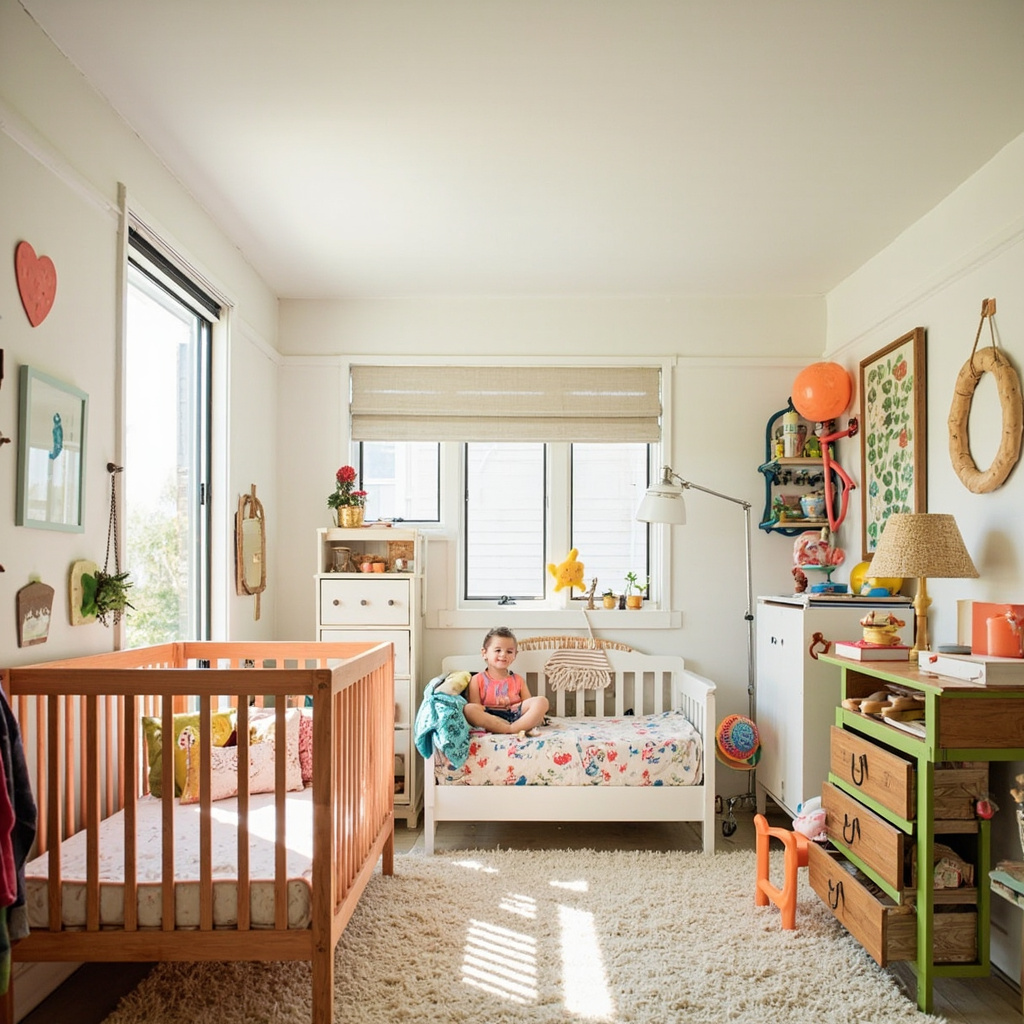
The space around a toddler is never neutral. Every corner, surface, and material carries meaning — either it keeps them safe and lets them thrive, or it quietly introduces risk. The most thoughtful approach to nursery design doesn't treat the room as something temporary to endure until age six. It treats it as the first chapter of a longer spatial story, one where furniture and fixtures are chosen with both the three-year-old who is currently living there and the twelve-year-old who will eventually inherit the same four walls. This dual lens changes everything about what you buy and how you arrange it.
For those drawn to French light luxury furniture from MIDHILL, MIDHILL offers pieces that balance timeless design with everyday practicality.
The Safety Foundation: Standards That Actually Matter
Singapore's safety standards for children's furniture are governed by SS 588:2016, the Code of Practice for Furniture — Children's Cots, High Chairs and Change Tables, and its extensions covering general children's furniture. These aren't suggestions. They define exactly how much weight a drawer slide must handle before failing, what gap sizes prevent finger entrapment, and the maximum angle at which a bookcase can tip before its anti-tip mechanism engages. A properly rated children's bed, for instance, must withstand a lateral force of at least 500 newtons applied to its guardrail without structural deformation. That translates roughly to the equivalent of two adults leaning aggressively against the side rail.
When evaluating furniture in showrooms across Singapore, the certifications to look for carry more weight than the glossy finish. Check for the SS mark on cots and high chairs, and verify that any wardrobe or shelving unit intended for a child's room has been tested to EN 729 or its Singapore-analogous standard for stability. A free-standing bookshelf that hasn't undergone tip-over testing should never be placed against a wall where a climbing child can reach it. The data from Singapore's Health Sciences Authority shows that tip-over incidents account for a significant portion of furniture-related injuries in children under seven, with wardrobes and tall storage units being the primary offenders.
Round corners on bedside tables, desk edges, and shelf fronts aren't just an aesthetic choice — they're a documented injury-reduction strategy. Sharp edges on wooden furniture create laceration risks that compound as children become more mobile and inevitably collide with their environment. Look for radii of at least 3mm on all accessible corners, though many quality manufacturers now round to 5mm or more on high-traffic pieces.
Choosing Materials That Won't Compromise Indoor Air Quality
Formaldehyde emissions from engineered wood products remain one of the most overlooked hazards in children's rooms. Children breathe faster than adults — approximately 20 to 30 breaths per minute for a toddler versus 12 to 20 for an adult — which means they inhale proportionally more volatile organic compounds from the same space. The WHO recommends indoor formaldehyde concentrations not exceed 0.08 milligrams per cubic metre over an hour, yet cheap particleboard furniture can emit well above that threshold for months after delivery, especially in a small, poorly ventilated room.
Material Notes
When sourcing bedroom furniture, prioritise pieces made from solid timber or E1-grade engineered wood, which limits formaldehyde emissions to 0.124 mg per cubic metre of air. Many Singapore retailers now carry furniture certified under the Singapore Green Label or the CARB Phase 2 standard, both of which provide independently verified emissions data. A mid-range children's wardrobe constructed from E1-rated MDF might cost between S$400 and S$800, while an equivalent piece made from low-emission materials with non-toxic water-based lacquers typically sits in the S$900 to S$1,800 range. The price difference reflects real material costs, not markup.
Paint and finish selection deserves equal attention. Leading Singapore paint brands now offer children's room formulations with zero or near-zero VOC content, and these products have improved significantly in durability over the past five years. A single coat of zero-VOC primer-sealer followed by two topcoats creates a barrier that locks in any residual emissions from the underlying substrate while providing a washable surface. Budget approximately S$60 to S$120 per 4-litre container for quality children's room paint, and plan for roughly 8 to 10 hours of drying time between coats depending on humidity levels, which in Singapore's climate often require the second day before recoating.
Designing for the Toddler Years: Ages One to Four
During the toddler phase, the room's primary function is protected exploration. A toddler needs floor space — at least 2 square metres of unobstructed area — to practice walking, crawling, and the increasingly confident running that emerges around age two. This means low-profile furniture arranged to create clear pathways rather than corridors of obstacles. A toddler bed that sits just 25 to 30 centimetres above the floor reduces fall distance to a manageable level while still allowing independent access. Standard crib mattresses measure 120 by 60 centimetres, and when transitioning to a toddler bed, maintaining the same mattress dimensions means you only need to swap the frame, not reconfigure the entire sleep area.
Storage during these years must be at the child's eye level and within arm's reach. Open bins and low shelves encourage independence — a toddler who can access their own toys is a toddler who practices decision-making and clean-up routines. Closed cabinets with child-safe latches work well for items parents want to rotate in and out. The key metric here isn't volume but accessibility: if a container weighs more than 2 kilograms when full, it's likely too heavy for a three-year-old to manage safely.
Bedroom lighting deserves specific attention. Nightlights should provide no more than 5 lux at the bedside — enough to orient a waking child without stimulating alertness. Warm-toned bulbs at 2700K to 3000K support natural melatonin production better than cooler tones. Consider installing a dimmer switch rated for the specific bulb type you've chosen, as some LED drivers don't dim smoothly below 10% output and can produce audible humming or flickering that disturbs light sleepers.
Transitioning Through the School Years: Ages Five to Eight
Around age five or six, the room's demands shift dramatically. Homework surfaces appear. A small desk measuring at least 80 by 50 centimetres becomes necessary, positioned so the child faces a wall rather than a window or door to minimise distraction. Chair height should be adjustable — a fixed chair that doesn't allow feet to rest flat on the floor creates postural strain that accumulates over hours of sitting. The ideal chair-for-desk combination for this age group costs between S$150 and S$400, with ergonomic models from recognised children's furniture brands clustering in the upper range.
Book storage evolves from open toy bins to vertical shelving that displays spines rather than hiding contents. A narrow bookcase 60 centimetres wide and 100 centimetres tall can hold approximately 80 to 100 standard children's books, which covers the reading progression from picture books to early chapter books. Wall-mounted options free up floor space and eliminate the tip-over risk entirely.
Bedroom Details
The sleeping arrangement may still be a single bed, but the quality of sleep becomes more consequential as school routines tighten. A child aged six to eight needs between 9 and 12 hours of sleep per night according to the American Academy of Sleep Medicine, and sleep disruption is a leading contributor to behavioural difficulties in this age bracket. Mattress quality matters more than ever at this stage — a sagging surface that hasn't been replaced within eight to ten years of use compromises spinal alignment. Expect to invest S$300 to S$1,200 in a proper children's or junior single mattress, with firmer options recommended for younger children in this range.
Planning for the Teen Years: Ages Nine to Twelve
By age nine or ten, the room begins serving as a personal sanctuary — a space for study, creative pursuits, and privacy. The furniture strategy at this point should favour modularity over replacement. A desk with built-in storage drawers eliminates the need for a separate filing cabinet. A wardrobe with adjustable internal shelving adapts as clothing volumes and types change. This is precisely why investing in well-constructed core pieces from the start pays such strong dividends. Brands like MIDHILL, which operates a factory in Foshan since 2008 and offers a 10-year structural warranty along with lifetime refinishing services, produce children's furniture designed for exactly this kind of long-term lifecycle. Their solid wood frames and replaceable component systems mean a desk bought at age four can realistically serve through age twelve without structural compromise.
At this stage, the room also becomes a reflection of identity. Leave blank wall space intentionally — a small gallery wall or a cork board lets the child annotate their environment with artwork, certificates, and mementos without permanent modifications. A floor lamp positioned beside the bed provides task lighting for evening reading without requiring overhead switches that disrupt the household's evening routine.
The Long Game: Budgeting for a Room That Lasts
A thoughtfully designed children's room in Singapore typically requires an initial furniture investment of S$2,500 to S$6,000, depending on the square metreage and the quality tier of core pieces. This covers a cot or toddler bed, a wardrobe, a desk, a chair, shelving, and a chest of drawers. The same room, furnished with budget pieces chosen solely for the toddler years, might cost S$1,200 upfront but require replacement of the bed, desk, and storage within five to seven years, adding another S$1,500 to S$3,000 in cumulative expenditure. The per-year cost of quality furniture often proves lower when measured across a decade rather than a single phase.
Space planning should account for growth in both dimensions and behaviour. A room measuring 3 by 3.5 metres — a common size in Singapore HDB bedrooms — can comfortably accommodate a single bed, a modest desk, and a narrow wardrobe while still leaving 4 square metres of floor space. As the child grows, that floor space transforms from a play zone into a circulation path and occasionally a homework extension area. Don't fill it permanently with large pieces that eliminate this flexibility.
The most durable children's rooms share one characteristic: they were designed as systems rather than collections. Every piece connects functionally to the next, every material choice respects the child's developing physiology, and every purchase decision accounts for the person the child will become, not just the person they are today.