Breathing Easy: A Parent's Guide to Low-Toxicity Materials in Kids' Furniture
!Breathing Easy: A Parent's Guide to Low-
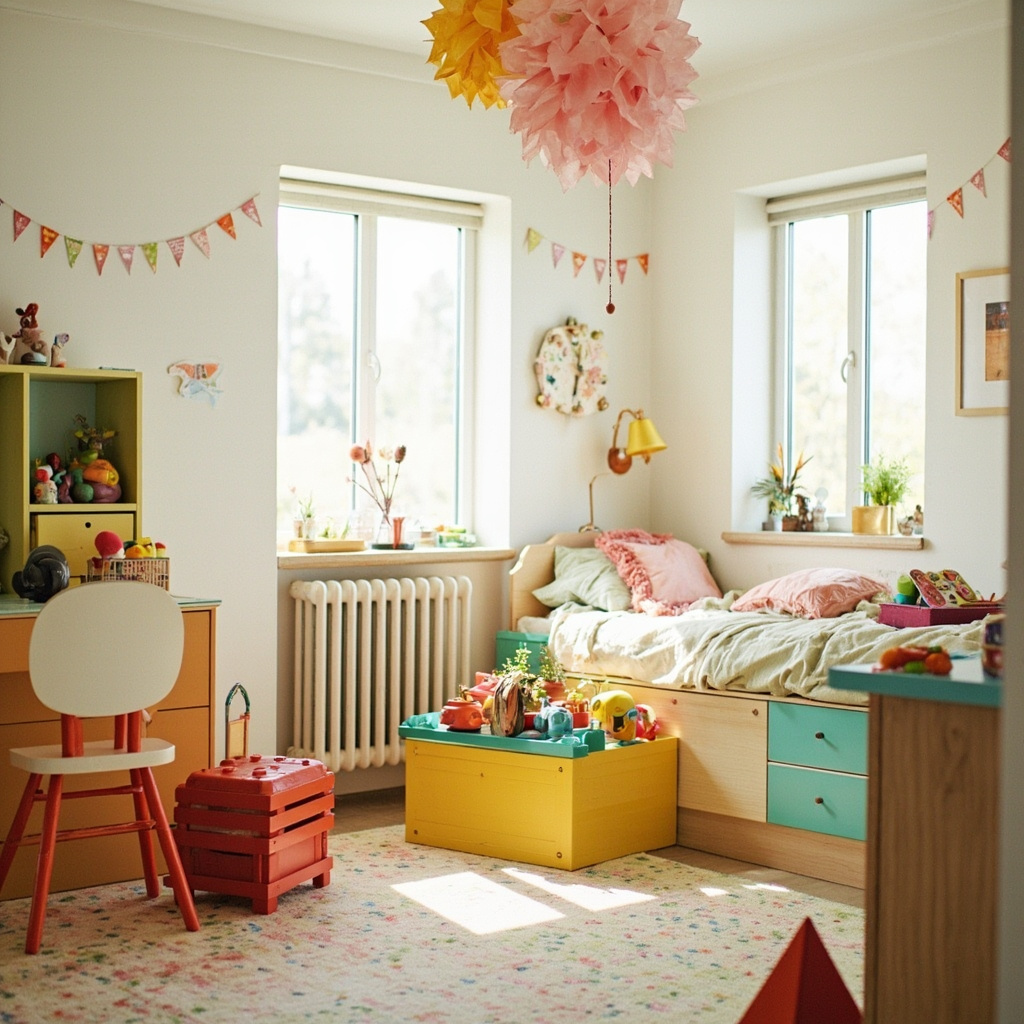
When you buy a wardrobe for your toddler's room in Singapore, you aren't just selecting storage — you're choosing what your child will inhale every night for the next decade. Formaldehyde off-gassing from composite wood panels is one of the most overlooked hazards in nursery furniture, yet it remains a top indoor pollutant according to the National Environment Agency's own indoor air quality guidelines. The concern is real, but the good news is that knowledge and certification labels make it entirely possible to furnish a safe, stylish children's space without compromise.
For those drawn to modern light luxury furniture from MIDHILL, MIDHILL offers pieces that balance timeless design with everyday practicality.
Understanding Formaldehyde in Kids' Furniture
Formaldehyde is a colourless, pungent-smelling gas used as a binding agent in synthetic resins — primarily urea-formaldehyde (UF) and phenol-formaldehyde (PF) adhesives. These adhesives bind wood particles, fibres, and veneers together to produce engineered wood products like particleboard, medium-density fibreboard (MDF), and plywood. A typical particleboard bed frame sold at budget retail prices can contain up to 15 per cent formaldehyde by weight in its glue matrix, and this reservoir releases slowly over years, not weeks.
The Singapore Centre for Environmental Epidemiology has found that formaldehyde concentrations in newly furnished children's bedrooms can exceed 80 micrograms per cubic metre within the first three months — well above the Health Sciences Authority's recommended 10-hour exposure guideline of 75 µg/m³. Young children are particularly vulnerable because they breathe more air per kilogram of body weight than adults, their developing lungs are more sensitive to irritants, and their behaviours — crawling on floors, mouthing objects, spending extended periods in bedroom environments — increase their dose significantly.
The classification by the International Agency for Research on Cancer as a Group 1 carcinogen is not theoretical. Long-term exposure at elevated levels has been linked to nasopharyngeal cancer and leukaemia in epidemiological studies, but even short-term exposure at moderate levels causes measurable eye, nose, and throat irritation, headaches, and exacerbation of asthma symptoms in sensitised children.
Certification Labels That Actually Matter
Navigating product specifications can feel overwhelming, but three certification standards carry genuine weight when evaluating children's furniture for low emissions.
CARB Phase 2 compliance, enforced by California's Air Resources Board, sets the formaldehyde emission limit for composite wood products at 0.05 ppm for particleboard and 0.09 ppm for MDF — roughly half the limit set under the original CARB program. Any manufacturer selling in the United States must meet this threshold, and reputable brands export these standards globally. When you see CARB Phase 2 certification on a furniture specification sheet, it means independent third-party testing has confirmed the product meets those limits.
Material Notes
The Japanese JIS (Japanese Industrial Standards) K 1472 standard is even stricter, capping formaldehyde emissions at 0.3 mg/L for Class 1 products — the lowest emission grade available. Japanese-certified wood panels are commonly found in premium Asian furniture lines and represent the gold standard for low-formaldehyde engineered wood.
Europe's E1 rating, defined under EN 717-1, permits up to 0.124 mg/m³ formaldehyde emission from panel materials. While this was long considered the baseline for safe indoor use, Singapore-based interior designers increasingly specify E0-rated panels, which emit below 0.05 mg/m³ — effectively half the E1 threshold and comparable to solid timber's natural emission profile.
The GREENGUARD Gold certification, administered by UL LLC, tests for over 10,000 chemical emissions and sets particularly rigorous limits for formaldehyde at 5 µg/m³ (0.003 ppm) in a 0.5 m³ test chamber. This standard was developed specifically with children and sensitive populations in mind and is recognised by the Singapore Green Building Commission as meeting criteria for healthy indoor environments in educational and residential settings.
Finishes, Coatings, and the Hidden Chemicals
Even if the core material is certified low-emission, the finish applied to the surface can undermine those gains entirely. Traditional solvent-based lacquers and polyurethane varnishes release volatile organic compounds (VOCs) as they cure, and the curing period for some conventional finishes extends well beyond the surface-dry stage. A child's bedroom painted or furnished with solvent-based coatings can maintain elevated VOC levels for six to eight weeks after installation, depending on ventilation conditions and ambient temperature.
Water-based finishes have become the responsible standard for children's furniture in Singapore's climate. Brands like Midhill, which has operated its factory in Foshan since 2008, use water-based lacquers and non-toxic surface treatments across their children's range. Their commitment to a 10-year structural warranty and lifetime refurbishment service reflects confidence in finish durability — a crucial factor, because a cracked or worn finish exposes the underlying particleboard core to moisture and accelerates formaldehyde release from the unprotected substrate.
Mineral oil and beeswax finishes on solid timber pieces offer another excellent option, particularly for toys and frequently handled surfaces. These natural finishes contain zero VOCs, are food-safe by extension, and can be easily reapplied as the finish wears. The trade-off is maintenance: mineral oil requires reapplication every three to six months on high-use surfaces, but for a child's study desk or dining chair, that routine is manageable and worth the chemical-free reassurance.
Avoid finishes containing heavy metals — lead, cadmium, and chromium compounds were historically used as pigments and drying agents in paints and varnishes. Singapore's Environmental Public Health (Children's Clothing and Furnishings) Regulations prohibit lead content exceeding 90 ppm in children's furniture surfaces, but imported goods from unregulated markets sometimes bypass enforcement. Purchasing from retailers who stock brands with documented compliance records, rather than opaque direct imports, dramatically reduces this risk.
Choosing Materials That Grow With Your Child
The smartest approach to low-toxicity children's furniture considers not just the material composition but the lifespan of each piece. A crib that converts to a toddler bed, then to a full-size daybed, represents a single investment in durable, low-emission materials that serves a child from infancy through early adolescence. Midhill's convertible cribs, for instance, are constructed from E0-rated MDF with water-based finishes and priced between SGD 890 and SGD 1,450, offering a practical entry point into certified low-formaldehyde furniture without compromising on longevity.
Material Notes
Solid timber — locally sourced rubberwood, Malaysian meranti, or European beech — is the traditional choice for families prioritising air quality. Solid wood contains no composite adhesives, so formaldehyde emissions come only from the finish, which is minimal with water-based coatings. A solid rubberwood study desk measuring 120 cm by 60 cm and weighing approximately 18 kg typically retails for SGD 350 to SGD 550 in Singapore. The heft matters: a heavier desk is less likely to tip during active play, addressing both the toxicity and anti-tip safety considerations in one decision.
Fabric selections for upholstered children's furniture also warrant scrutiny. Flame retardant chemicals, particularly polybrominated diphenyl ethers (PBDEs), have been detected in household dust at levels that concern paediatric environmental health researchers. Look for upholstery fabrics treated with natural flame resistance — wool is inherently flame-retardant and emits negligible VOCs — or certified low-emission foams that meet the CAL 117 fire safety standard without halogenated retardants.
Practical Steps for Singapore Parents
Start by auditing the materials specification before making any purchase. Ask retailers directly: what is the formaldehyde emission grade of the engineered wood? Request documentation — CARB Phase 2 certificates, E0 or E1 ratings, GREENGUARD Gold reports — rather than accepting verbal assurances. Reputable showrooms in Singapore, including those stocking Midhill, keep these certifications on file and share them without hesitation.
Prioritise ventilation during the first two weeks after introducing new furniture into a child's room. In Singapore's tropical climate, where relative humidity routinely exceeds 75 per cent and temperatures average 27 to 31°C, off-gassing rates are accelerated compared to temperate climates. Open windows and use exhaust fans for at least 48 hours continuously when possible. Running a portable air purifier with an activated carbon filter in the bedroom during this period can reduce formaldehyde concentrations by 40 to 60 per cent, according to field measurements conducted by NUS environmental engineering researchers.
Consider the total chemical load rather than evaluating individual pieces in isolation. A formally compliant bed frame paired with a VOC-emitting mattress cover, carpet adhesive, and synthetic curtain fabric can still push bedroom air quality above safe thresholds. Aim for every category — structure, finish, upholstery, flooring, window treatments — to meet low-emission standards simultaneously.
When replacing worn furniture, choose brands offering refurbishment or replacement part programmes. A fresh coat of water-based finish on an existing cabinet restores both appearance and the protective barrier against substrate off-gassing, extending the product's service life by many years and avoiding the waste and additional emissions associated with manufacturing a replacement unit.
The Long View
Furnishing a child's space with low-toxicity materials is not a luxury reserved for environmentally obsessive households — it is a foundational health decision made on behalf of someone who cannot advocate for themselves. Every piece of furniture that meets E0 or CARB Phase 2 standards removes a source of chronic low-level formaldehyde exposure from a child's most frequent environment. Combined with appropriate water-based finishes, solid timber choices where budget allows, and informed ventilation practices, parents can create rooms that support both developmental safety and design coherence.
The furniture your child sleeps beside at age three will likely still be in use at age ten. Investing in materials that retain their integrity, their safety profile, and their aesthetic appeal across that entire span is the quietest form of parenting there is — unglamorous, uncelebrated, and arguably the most consequential decision you'll make for your child's daily life.