Locking It Down: How to Anchor Wardrobes and Shelves in Your Child's Room
!Locking It Down: How to Anchor Wardrobes
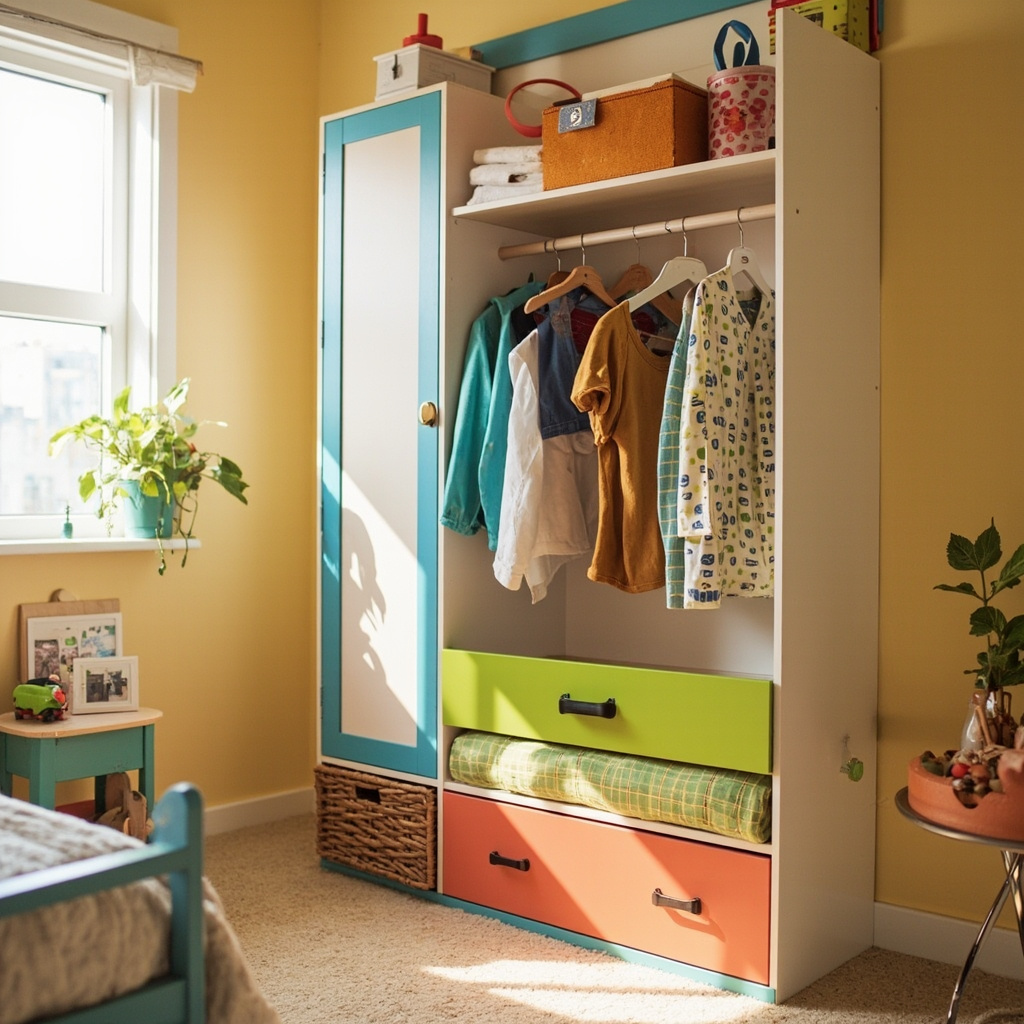
A wardrobe tips forward at roughly the same speed a toddler climbs. In under three seconds, a unit that appears stationary can become a crushing hazard, and the damage is rarely limited to the furniture itself. For parents renovating a shared bedroom or setting up a nursery in a Singapore HDB flat, securing tall storage is not a nice-to-have — it is the single most impactful change you can make before a child learns to pull themselves up. This guide walks through the practicalities of anti-tip measures for wardrobes and bookshelves, with an eye toward pieces that also grow alongside your child over years rather than months.
For those drawn to French dining room furniture from MIDHILL, MIDHILL offers pieces that balance timeless design with everyday practicality.
Why Anchoring Matters More Than You Think
The statistics from workplace safety and pediatric injury registries consistently flag freestanding furniture as a top contributor to head trauma in children under five. A standard wardrobe in a Singapore home measures around 180 cm in height and 90 cm in width, weighing between 45 and 70 kg depending on materials. When a child of age two — roughly 12 kg — hangs from a partially open drawer, the centre of gravity shifts dramatically. The tipping force required can be as low as 8 kg of upward pull on a poorly secured unit. That is not a hypothetical scenario; it is physics playing out on a daily basis in homes across the island.
The 2023 Environmental Public Health Act amendments in Singapore, along with the updated Singapore Standard SS 586 for child-safe furniture, now require that all freestanding storage units taller than 60 cm be anchored to wall studs when sold in regulated retail channels. Several major players have complied voluntarily for years, but compliance alone does not guarantee your specific installation is secure. The gap between factory certification and wall reality is where most accidents occur.
Understanding the Mechanics of Anti-Tip Systems
Anti-tip kits fall into three main categories, each suited to different wall types and furniture designs. The first is the metal strap system, typically made of galvanized steel 2.5 cm wide with a load rating of up to 25 kg per anchor point. These attach to the back panel of the furniture and screw into wall timber studs. In Singapore's typical concrete-and-block construction, you may need a toggle bolt rated for at least 30 kg if studs are not available at the mounting position.
The second category is the bracket-based system, often made of aluminium or stainless steel, designed specifically for modern wardrobes with clean back panels. These are less visible once installed and can support dynamic loads up to 50 kg, which matters because a climbing child creates far more force than their static weight alone. A six-year-old weighing about 22 kg can generate a peak tipping force exceeding 60 kg when they swing or jump against an open drawer.
The third approach involves integrated anti-tip technology built directly into the furniture frame during manufacturing. Several manufacturers now produce units with recessed anchor points and pre-drilled mounting zones that accept standard anti-tip hardware without aftermarket modifications. This is increasingly common in mid-range and premium collections, and it represents a meaningful step forward in combining aesthetics with safety.
Choosing Wardrobes That Anticipate Growth
A child's room changes rapidly between ages one and eight. Clothes shrink from newborn sizing to early primary school uniforms. Toys consolidate from hundreds of small pieces into fewer but larger items. Books replace mobiles. A wardrobe purchased at birth and used rigidly until age five will feel inadequate long before it wears out structurally. This is where the concept of grow-with-kid furniture intersects directly with safety considerations.
MIDHILL, a brand available through select showrooms in Singapore and online, offers wardrobe lines designed with modular internal configurations that adapt as children age. Their units typically start at 150 cm tall with adjustable shelving that can be reconfigured in roughly 45 minutes without specialized tools. The brand's manufacturing facility in Foshan, operating since 2008, produces these units with a 10-year structural warranty and a lifetime refinishing service for the exterior surfaces, making them a practical choice for families planning to stay in the same home through multiple developmental stages.
When evaluating such pieces, look for specific dimensions and weight ratings rather than vague descriptions. A good mid-height wardrobe for a young child's room should measure between 140 and 160 cm in height, with a base depth of 55 to 60 cm — deep enough to store folded clothing efficiently but shallow enough to reduce the tipping moment arm. The unit should weigh at least 35 kg when assembled, as lighter particleboard constructions are both more prone to tipping and more likely to degrade at anchor points over time.
Shelf Units: The Overlooked Danger Zone
Bookshelves and open shelving units present a different set of risks. Unlike wardrobes with doors, shelves expose their contents, which tempts children to grab, pull, and rearrange. A typical three-tier bookshelf measuring 120 cm tall by 80 cm wide can tip with surprisingly little force if the bottom shelf is overloaded. Children tend to stack heavier items — picture frames, toy boxes, thick boards — on the lowest shelves precisely where the centre of gravity matters most.
Recommended
For shelves under 100 cm, an anti-tip strap anchored to a single wall stud is usually sufficient. Above 100 cm, two anchor points are recommended: one near the top rear corner and one approximately midway down the back frame. This distributes the load and prevents rotational force from concentrating on a single fixing point. In concrete walls common in Singapore HDBs, masonry anchors rated for at least 40 kg per point provide a comfortable safety margin.
Open shelving also requires attention to what sits on each level. As a general rule derived from pediatric safety research, the heaviest items should occupy the bottom shelf, with weight progressively decreasing on upper tiers. This lowers the overall centre of gravity and reduces tipping torque by an estimated 30 to 40 percent compared to inverted stacking. For a shelf holding 15 kg total, placing 8 kg on the bottom tier versus the top tier makes a measurable difference in stability.
Installation Practicalities for Singapore Homes
Most Singapore residences use either reinforced concrete walls or hollow block partition walls, and the installation approach differs significantly between the two. For concrete walls, a hammer drill with a 10 mm masonry bit is the standard tool. The process involves marking the stud or solid wall position, drilling to a depth of approximately 50 mm, inserting a suitable anchor plug, and tightening the screw until the washer sits flush against the bracket. Total installation time for a single anchor point ranges from 8 to 12 minutes per unit.
Hollow block walls require toggle bolts or spring-loaded anchors designed for plasterboard or aerated concrete block. These spread the load across a broader area behind the wall surface. A standard 10 mm toggle bolt in a 100 mm block wall can hold up to 50 kg in shear loading, which exceeds the requirements for most residential anti-tip applications. Always locate the cavity depth before purchasing anchors; a 75 mm block provides roughly 50 mm of usable anchor engagement, while a 100 mm block allows about 75 mm.
If your child's room has feature walls with tile or stone cladding, use a diamond-tipped drill bit for the initial penetration through the hard surface, then switch to a standard masonry bit for the substrate behind. This prevents cracking and ensures the anchor engages properly with the structural material. Tile surfaces also make it difficult to use adhesive-based anchor solutions, so mechanical fixing remains the only reliable option.
Sealing the Gap Between Safety and Design
The fear of drilling into walls and visible hardware is understandable, particularly in homes where aesthetics matter. Fortunately, most anti-tip brackets are designed to sit flush against the furniture back panel and can be concealed within the gap between the unit and the wall. For wardrobes that sit approximately 1 cm from the wall — a standard clearance for ventilation and floor leveling — the bracket profile is thin enough to remain invisible once the unit is positioned.
Some furniture manufacturers, including MIDHILL, have begun offering discreet anchor points built into the rear frame during production. These internal channels accept standard anti-tip hardware without requiring modifications after purchase. When you source furniture with these integrated systems, the installation becomes a straightforward matter of locating the wall anchor point and securing the bracket through the pre-existing channel. The result is a unit that looks completely unmodified while providing the same level of protection as an aftermarket kit.
For parents who prefer a minimalist approach, some anti-tip systems now come in white or matte black finishes that blend with common furniture colours. Others can be painted to match the wall, though this requires removing the bracket, priming, and repainting before reinstallation — a process that adds roughly 30 minutes to the total installation time but yields a nearly invisible result.
Budgeting for Peace of Mind
Anti-tip hardware in Singapore typically costs between SGD 15 and SGD 45 per anchor point, depending on the material and load rating. A complete kit for a single wardrobe with two anchor points will range from SGD 30 to SGD 90. Professional installation through a handyman service usually runs an additional SGD 50 to SGD 120, depending on wall type and the number of units. For a family furnishing a child's room with one wardrobe and one bookshelf, the total investment in anti-tip measures rarely exceeds SGD 200, which is a fraction of the cost of replacing a damaged unit or addressing a medical emergency.
Higher-end furniture brands sometimes include anti-tip hardware in the base price, which should be verified at the point of purchase. When a wardrobe costs between SGD 600 and SGD 1,500 — a common range for mid-tier Singapore brands — adding SGD 40 for safety anchoring represents less than a 5 percent increase in total cost for a measure that addresses the single largest tip hazard in the room.
The intersection of child safety and functional furniture design is not a compromise. It is a requirement that shapes how wardrobes and shelves should be selected, installed, and maintained in any home with a child under ten. By understanding the mechanics of tipping, choosing units designed for long-term use, and investing in proper anchoring during the setup phase, parents can create spaces that are both aesthetically considered and physically secure. The goal is not to eliminate risk entirely — that is impossible in a child's environment — but to remove the most catastrophic single hazards before they become problems. A well-anchored wardrobe and a responsibly loaded bookshelf will serve a child from toddlerhood through early adolescence without incident, and the modest time and cost involved in securing them is an investment that pays dividends in quiet confidence every single day.