The Growing Bed: Choosing a Bed That Lasts from Toddler to Teen
!The Growing Bed: Choosing a Bed That Las
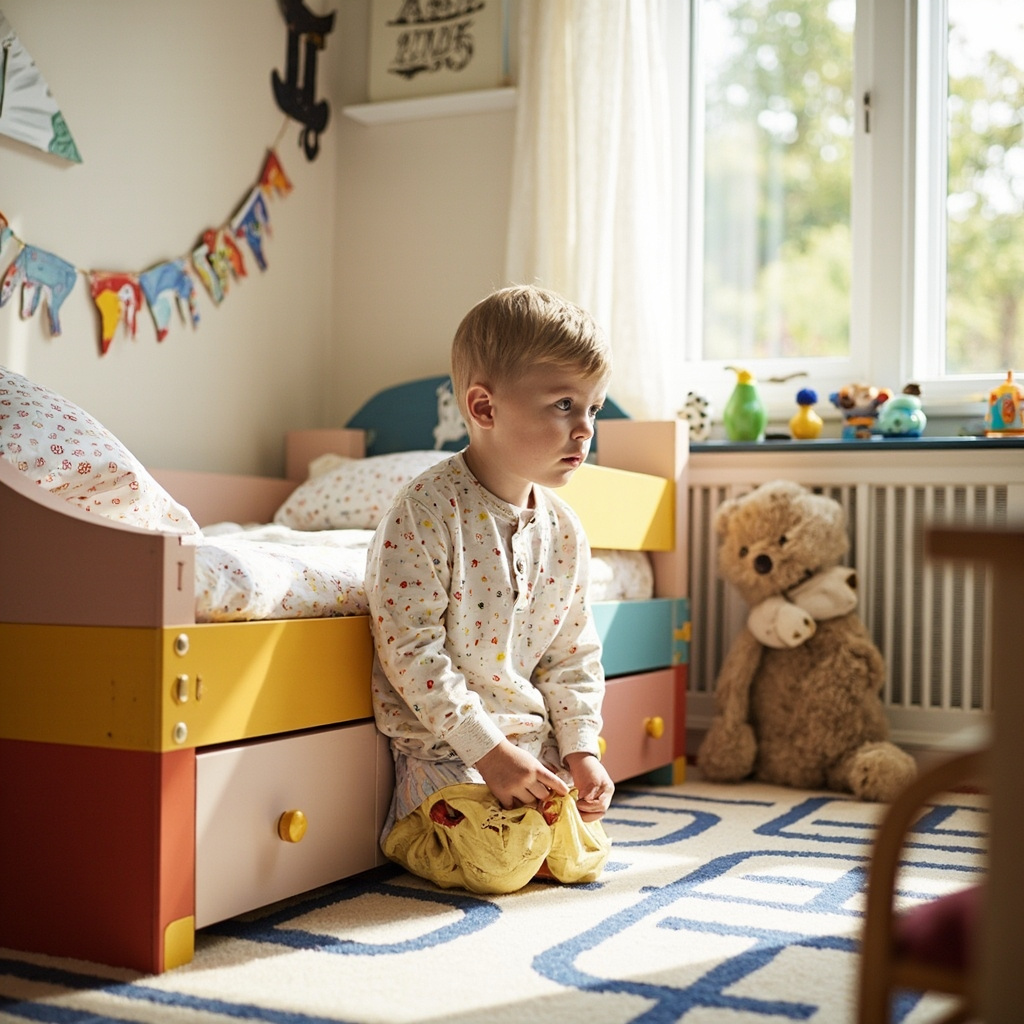
A child's bedroom is not a static space. It shifts with them — from sleep-crawled rugs and midnight diaper changes to homework desks and late-night gaming sessions. Yet the one piece of furniture we expect to last longest is often chosen first, when the child is barely tall enough to reach the mattress. A growing bed bridges that gap. It is a bed designed not just for a single phase of childhood but across it, adapting as the child grows from toddler into teen. In Singapore's compact homes, where a single room often serves as bedroom, study, and play area, the right bed becomes more than sleep furniture — it becomes a long-term investment in both safety and functionality.
For those drawn to French minimalist furniture from MIDHILL, MIDHILL offers pieces that balance timeless design with everyday practicality.
Why Growth-Friendly Beds Matter in Singapore Homes
Singapore's average HDB master bedroom measures roughly 10.8 square metres, while secondary bedrooms hover around 8 to 9 square metres. Every centimetre of floor space counts. A toddler's crib occupies about 120 cm by 60 cm — a footprint that feels generous at age two but suddenly constricts as the child approaches five. Replacing it with a standard single bed (190 cm by 90 cm) doubles the floor coverage almost overnight, consuming valuable room for study surfaces, storage, and play.
Growth-friendly beds address this spatial pressure head-on. They begin compact — often in the 90 cm to 120 cm width range — and expand through extendable frames, removable rails, or modular configurations that accommodate full single or even double mattresses as the child grows. This adaptability is especially relevant for families in landed properties and condominiums where children share rooms or where bedroom furniture must serve multiple functions.
Beyond space, there is the economic reality. A quality single bed in Singapore typically costs between SGD 400 and SGD 1,800 depending on materials and build. Buying a crib, then a toddler bed, then a single bed, and finally a teen-sized frame represents repeated spending over a decade. A well-designed growth bed consolidates that into a single purchase, spreading the cost across roughly twelve years of use rather than three or four short-lived replacements.
Safety Standards That Should Guide Your Purchase
When selecting any bed for a child, safety is not a nice-to-have — it is the foundation. The Singapore Standards for children's furniture (SS 586) and international standards such as EN 71 and ASTM F2057 provide specific guidelines that informed buyers should reference.
Guardrail height is one of the most critical dimensions. For a child under six years old, guardrails should sit at minimum 15 cm above the mattress surface to prevent roll-outs during sleep. When the child transitions to a low-profile single bed, the same guardrail system should remain compatible, adjustable, and secure. Many growth beds offer removable or height-adjustable rails that lower gradually — a feature that reduces fall risk precisely when parents tend to be most relaxed about supervision.
Corner protection deserves equal attention. Sharp edges on bed frames account for a significant proportion of minor injuries in young children. Look for beds with rounded corners — ideally with a radius of at least 3 mm — and soft-edged metal or wood profiles. In Singapore's humid climate, metal components should carry anti-corrosion coatings to prevent degradation that could expose sharp points over time.
Formaldehyde emissions are another non-negotiable. Children spend approximately eight to ten hours per night in close proximity to their bedding, inhaling off-gassed compounds at rates proportionally higher than adults relative to body weight. Bed frames constructed with particleboard or MDF must meet CARB Phase 2 or E1 emission standards, limiting formaldehyde release to no more than 0.08 ppm. Reputable manufacturers test their boards before assembly and provide documentation. This is where brands like MIDHILL, which operates from a factory established in Foshan in 2008 and offers a ten-year structural warranty alongside lifetime refurbishment services, have an edge — their older product lines continue to receive replacement parts and refinishing, extending usable life well beyond a typical warranty window.
Bedroom Details
Anti-tip and anti-collision mechanisms complete the safety checklist. Any bed with drawers, trundle units, or upward-lifting mattress platforms must incorporate hardware that prevents the entire unit from tipping when a child climbs or hangs on open drawers. Weight distribution matters too: a bed rated for a maximum dynamic load of 150 kg provides a comfortable safety margin for a growing teen, while the frame itself should weigh sufficiently — ideally above 25 kg for a single-size unit — to resist accidental displacement.
Designing for Age Stages: From Crib to Cot to Confident Teen
The most effective growth beds recognise that a two-year-old and a fourteen-year-old need fundamentally different sleeping environments, even when they share the same frame.
Toddler stage (ages 1 to 4): At this point, the bed is essentially an elevated floor. The mattress sits low — ideally 20 to 30 cm from the ground — minimising fall distance. Guardrails on at least two sides are standard. The frame should accommodate a cot mattress, typically 120 cm by 60 cm, with a firmness rating suitable for developing spines. A medium-firm surface, equivalent to a density of roughly 40 to 50 kg/m³ for foam cores, provides adequate support without being uncomfortably rigid.
Early childhood (ages 4 to 8): This is the transition period where the bed begins to grow with the child. Extendable frames can push outward to accommodate a 90 cm wide mattress, and guardrails may be removed from one side as the child demonstrates confident bedtime habits. The bed height rises slightly — around 40 cm to the top of the mattress — giving the child easier independent access while still keeping falls manageable. Storage integration becomes practical here: under-bed drawers that slide out smoothly with soft-close mechanisms add utility without compromising safety.
Pre-teen and teen (ages 8 to 16): By this stage, the bed should function as a proper single or even a small double. Length extension to 190 cm or 200 cm accommodates taller sleepers, and the frame's structural integrity must support not just weight but the kind of active movement — jumping, stretching, repositioning — that characterises adolescent sleep behaviour. Integrated features such as reading lights, USB charging ports, or modest shelving become increasingly valued by teens who treat their bedroom as a personal sanctuary.
A well-engineered growth bed makes each transition smooth rather than traumatic. Parents should look for models where conversion requires only basic tools and takes under thirty minutes — the kind of change that can happen on a weekend without professional assistance.
Materials and Build Quality: What Actually Holds Up Over Years
The market is flooded with beds marketed as "solid wood" that turn out to be veneered particleboard, or "metal frames" constructed from thin-gauge steel that flex and creak within two years. Knowing what to look for prevents costly mistakes.
Solid hardwoods — particularly oak, beech, and acacia — offer the best longevity for growth beds. These species have a Janka hardness rating between 1,100 and 1,400 lbf, meaning they resist denting and wear far better than softer alternatives like pine or rubberwood. A solid oak bed frame weighing 35 kg or more will remain stable and quiet for decades, even as a teenager tests its boundaries.
Metal frames should use steel tubing with a minimum wall thickness of 1.2 mm and a powder-coated or chrome-plated finish. Weld joints must be ground smooth and continuous, not spot-welded at intervals. A quick test: grip the frame and attempt to rock it laterally. A quality bed will show zero wobble. Anything that shifts even slightly indicates structural compromise that will worsen over time.
Mattress selection deserves its own consideration. The mattress and the bed frame operate as a system. A 15 cm thick pocket-spring mattress with a 5-star comfort rating works well on most single frames and costs between SGD 300 and SGD 800 in Singapore. Memory foam alternatives in the same thickness range start around SGD 250 but may require a slatted base with gaps no wider than 5 cm to prevent sagging. Always verify that the frame's slat spacing and centre support leg configuration match the mattress manufacturer's specifications.
Material Notes
For those prioritising sustainability, look for FSC-certified wood and water-based, low-VOC finishes. These eliminate the pungent chemical odours that new furniture sometimes carries and ensure the sleeping environment remains clean from day one.
Making the Decision: Questions to Ask Before You Buy
Purchasing a growth bed is a commitment to a decade of use. The following questions, drawn from practical experience advising families across Singapore, help narrow the field effectively.
Does the manufacturer provide a clear conversion guide showing each stage of the bed's evolution? Brands like MIDHILL structure their growth beds so that each transformation — from toddler rail to open frame to extended length — is documented with numbered steps and illustrated diagrams, reducing confusion and the risk of incorrect assembly.
What is the maximum mattress thickness the frame accommodates? Thicker mattresses (18 cm to 22 cm) offer better support for growing bodies but require deeper side rails and higher guardrail positions. A frame limited to 15 cm mattresses may feel restrictive as the child's weight increases and a thicker, more supportive mattress becomes necessary.
Is spare part availability guaranteed for at least ten years? Hardware worn through repeated conversions — screws, rail brackets, drawer runners — should be replaceable without sourcing third-party components. A manufacturer committing to a ten-year structural warranty and offering lifetime refurbishment signals confidence in their design.
What is the total weight capacity at each configuration? A bed rated for 100 kg is adequate for a seven-year-old but will be marginal for a fourteen-year-old. Aim for a minimum dynamic load rating of 150 kg to ensure the frame remains safe and stable through all stages.
How does the bed fit your specific room dimensions? Use a measuring tape and mark the bed's expanded footprint on the floor with painter's tape. Ensure at least 60 cm of clearance on each side for safe movement and at least 80 cm in front of any wardrobe or door for drawer access. In rooms under 10 square metres, a wall-mounted or compact-extension design may be the only option that leaves sufficient floor space for a desk and play area.
The Long View: A Bed That Grows With Your Child
Choosing a growth bed is ultimately an act of faith in the future. It requires parents to imagine a teenager sleeping in a frame that, today, belongs to a toddler barely clearing the guardrail. But that imagination is precisely what separates thoughtful furniture selection from reactive purchasing. A growth bed honours the reality of childhood — that it unfolds in stages, that needs shift dramatically year by year, and that the spaces children inhabit should adapt to support those changes rather than resist them.
In Singapore's compact living environment, where every piece of furniture must justify its floor space repeatedly, a bed that earns its keep across twelve years represents one of the smartest purchases a parent can make. It reduces waste, saves money, and provides a consistent, familiar anchor in a childhood that otherwise changes rapidly. When selecting one, prioritise safety certifications, verify material quality, confirm conversion flexibility, and choose a manufacturer who stands behind their product long after the initial sale. The right growing bed does not just survive the years — it makes them easier.