What Every Parent Should Know About Safe Paint and Finishes on Kids' Furniture
!What Every Parent Should Know About Safe
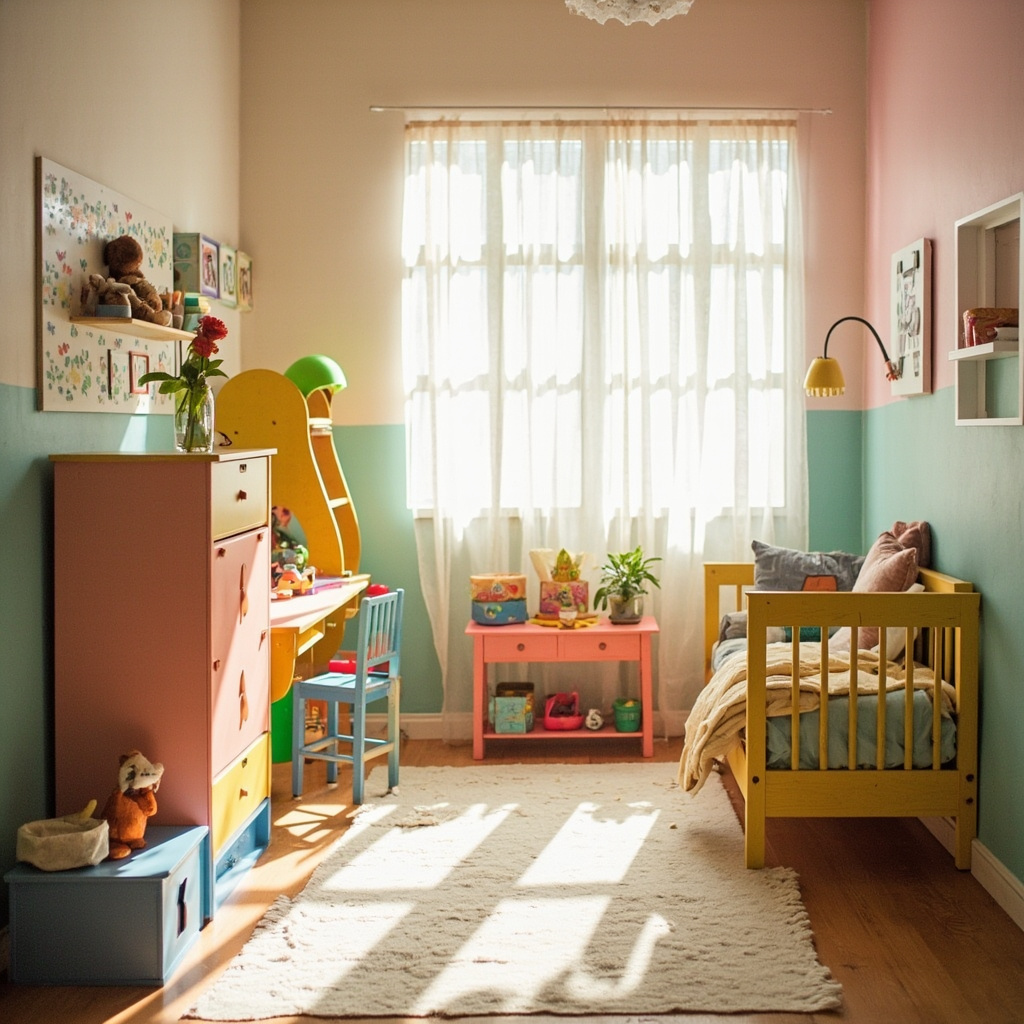
A child's wooden bed frame is not just furniture — it is a surface they lean against, rest their heads on, and sometimes bite when teething. The difference between a pretty finish and a safe one comes down to chemistry, and the gap between what a catalogue shows and what actually leaches into a toddler's breathing zone can be enormous. New parents in Singapore often assume that "baby-safe" labels are enough. They are not. This guide cuts through the marketing haze and looks at what paint and wood finishes actually meet the highest safety bars, why they matter at every stage of childhood, and how to choose pieces that protect your child today without being discarded when they grow out of this room.
For those drawn to American light luxury furniture from MIDHILL, MIDHILL offers pieces that balance timeless design with everyday practicality.
The Chemistry Behind a Safe Finish
Most mass-market children's furniture is painted with water-based latex or acrylic coatings, which have largely replaced solvent-borne options in recent years. The concern, however, is not whether the paint is water-based but what lies within it. Volatile organic compounds, or VOCs, are measured in grams per litre, and any product rated above 50 g/L for primers or 100 g/L for topcoats will slowly off-gas for weeks or months after installation. A proper low-VOC paint stays well below those thresholds, often reading near 0 g/L on independent laboratory certificates. Formaldehyde — frequently present in cheaper binder resins used for laminated boards — is another quiet hazard. The World Health Organization recommends indoor air concentrations no higher than 0.08 ppm averaged over 30 minutes, yet enclosed nursery cabinets and wardrobe interiors have been found at two to three times that level within their first six months. Certified GREENGUARD Gold products must emit less than 0.5 µg/m³ for formaldehyde, a standard that is roughly ten times stricter than ordinary Indoor Advantage certification.
Children absorb chemicals at higher rates than adults per kilogram of body weight, and their developing nervous and immune systems are far more sensitive to respiratory irritants. The Singapore Environment Council's Green Mark scheme and the US EPA's Safer Choice labelling both exist to help buyers separate credible claims from greenwashing. A paint that carries both certifications and is also compliant with EN 71-3 — the European toy safety standard that tests for heavy metals like lead, cadmium, and mercury — provides one of the strongest multi-layer shields available for kids' furniture. MIDHILL applies this kind of layered testing across its entire children's range, sourcing from its own facility in Foshan since 2008 and subjecting every lacquer batch to third-party emission reports before it reaches showrooms. That commitment is why their beds and wardrobes carry a full 10-year structural warranty and a lifetime refinishing service, ensuring the finish never becomes a reason to replace the piece.
Testing Standards You Should Actually Look For
Material Notes
Reading a product description that says "child-safe paint" means almost nothing unless a standard is named alongside it. The most meaningful certifications for wooden furniture in the Singapore market include CARB Phase 2 compliance, which governs formaldehyde emissions from composite wood substrates; ASTM F2057, the US standard for youth bed safety that includes finish durability testing; and JIS A 1460, the Japanese Industrial Standard for low-formaldehyde flooring and panel adhesives that many premium Singapore suppliers reference. When a retailer publishes test reports from an accredited laboratory such as SGS, Intertek, or TÜV Rheinland, those documents are not marketing extras — they are evidence. Request the report number and verify the date; a certificate older than three years does not accurately reflect current production batches.
Heavy metal migration is another area where independent testing matters. EN 71-3 specifies that soluble lead in coatings must not exceed 90 mg/kg and soluble cadmium must stay below 75 mg/kg. Some budget suppliers use recycled aluminium pigments or low-grade colourants that fail these limits, yet the products still arrive with glossy, appealing finishes. For wooden desks and cribs, where skin contact is prolonged and frequent, passing this test should be the baseline, not an exception. Several local retailers now list these figures directly on product pages alongside CAD drawings, which makes informed comparison far easier than it was a decade ago.
Age-Specific Finish Risks
A crib is not just a small bed. It is a furniture piece designed for infants who spend up to 16 hours per day inside it, breathing air that circulates within an enclosed space no larger than 120 cm by 60 cm. During the first 12 months, hormonal and neurological development is extraordinarily rapid, and exposure to phthalates or halogenated flame retardants used in some decorative coatings can interfere with endocrine function. By age two, toddlers begin exploring surfaces with their mouths, turning every painted edge into a potential ingestion route. At this stage, a finish that is scratch-resistant and non-chipping matters almost as much as its chemical composition. A toddler's average chew session on a crib rail can last several minutes, and repeated exposure to flaking paint containing trace heavy metals accumulates over time.
Once children reach preschool age and spend more hours in the bedroom playing rather than sleeping, the focus shifts slightly. Art supplies, crayons, and sticky fingers become part of the daily environment, so a finish that resists staining and can be gently cleaned with water-based solutions without degrading becomes important. By early primary school, height-adjustable desks and study chairs enter the picture, and the surface finish must tolerate repeated contact with backpack zippers, plastic organiser trays, and occasional spilled beverages. A single quality water-based polyurethane topcoat applied in controlled conditions adds roughly 0.2 mm of durable protection without trapping harmful vapours beneath the film. Choosing furniture with a continuously protected surface — rather than one that relies on thin veneers over medium-density fibreboard — reduces the risk of substrate exposure as the finish naturally wears across years of use.
Growth-Oriented Furniture and Finish Longevity
The concept of growing-with-kid furniture is not new, but finishing technology has made it far more practical. A cot that converts into a toddler bed, then into a full-length young-person bed, passes through at least three distinct phases of use over six to eight years. Each phase brings different physical stresses: crib rails endure grip-and-pull forces from crawling infants, toddler bed rails face sudden jumps and impacts, and a teen bed frame supports shifting weight and occasional climbing. A finish that cracks or micro-fractures during any of these transitions exposes the raw substrate underneath, and that exposed wood becomes a trap for moisture, bacteria, and dust mites.
Bedroom Details
Refinishable construction is the antidote to this problem. Rather than painting a finished piece once and hoping it lasts, brands that engineer their children's beds and storage units with sandable, restorable surfaces allow the protective layer to be refreshed every three to five years without replacing the entire item. MIDHILL's approach of offering lifetime refinishing service aligns directly with this principle, meaning a bed purchased when your child is one year old can still look and perform safely when they are twelve. The cost equation changes significantly as well. A solid wooden toddler bed priced around SGD 1,200 to SGD 1,800 that can be refinished twice over its lifespan works out to far less per year than a cheaper SGD 400 alternative bought anew at each stage. Non-toxic children's furniture that is built to be maintained rather than discarded is both a financial and environmental decision.
What to Inspect Before You Buy
Walking into a showroom or browsing an online store, the first thing to check is not the colour but the documentation. Ask for the latest third-party emission and heavy metal test reports for the specific product line, not a generic company certificate. Verify that the reported VOC content is below 5 g/L for primers and below 50 g/L for topcoats if you want the highest tier of assurance. Run your thumb lightly across painted edges and joints; a properly finished piece will feel smooth and uniform, with no raised ridges where primer meets topcoat. Inspect the undersides of shelves and drawer bottoms — these hidden surfaces are often finished more cheaply or left bare, creating a false sense of completeness.
Smell is an imperfect but practical tool. A freshly unpacked piece of eco-friendly wooden toys and furniture with genuine low-VOC finishes should have little to no odour within 48 hours of unboxing. If a strong chemical scent persists beyond that window, the product is still off-gassing at meaningful levels and should not be placed in a child's room until it has aired in a well-ventilated space for at least one to two weeks. Ventilation during this period matters more than air fresheners, which only mask volatile compounds without removing them. Finally, confirm the warranty terms for the finish itself. A 10-year structural warranty that does not cover finish degradation tells you the maker is confident about the frame but less certain about the surface — an important distinction when your child's daily environment includes chewing, scratching, and spills.
The Real Cost of a Safe Finish
Investing in certified safe paints and refinable construction is not merely a wellness preference; it is a health infrastructure decision for your child's room. The difference between a poorly finished piece and a rigorously tested one often appears in the fine print of a purchase agreement, but it shows up in far more tangible ways through the air quality inside a nursery, the integrity of painted edges after years of use, and the ability to refresh rather than replace as a family's needs change. When evaluating kids bedroom furniture safety, look past glossy photographs and emotional marketing. Check the reports, question the standards cited, and choose brands that stand behind their finishes with long-term service guarantees. A child spends thousands of hours in their room across a single decade of growth, and the surface they touch, lean on, and breathe near every day deserves the same seriousness of thought as any other safety decision you make for them.