Safe Lighting for Kids' Rooms: Night Lights, Desk Lamps, and Eye Comfort
!Safe Lighting for Kids' Rooms: Night Lig
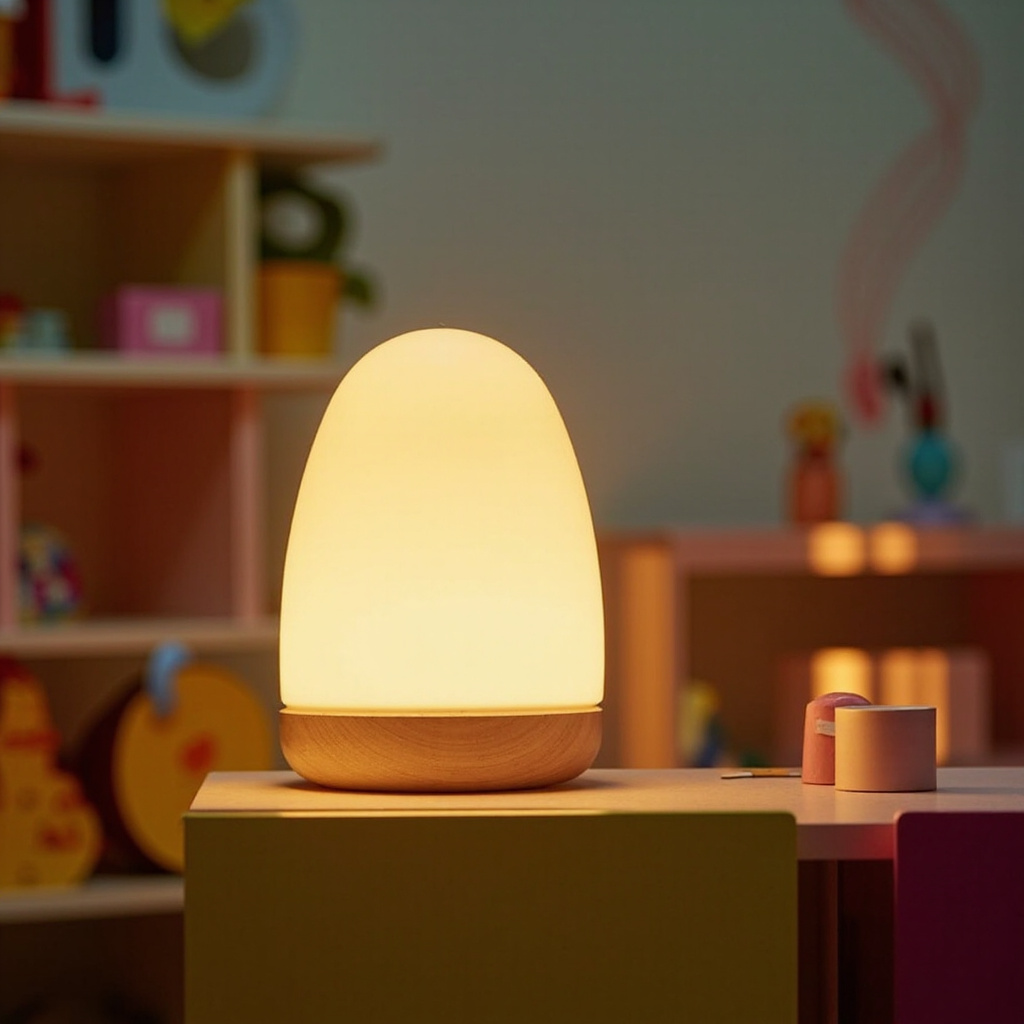
A dim glow under the door, a warm lamp on the desk, the soft click of a switch at bedtime — lighting in a child's room is far more than decoration. It shapes how they sleep, learn, and feel safe in their own space. In Singapore's humid climate, where rooms can stay warm well into the evening, choosing the right lighting requires attention to both safety standards and the way a child's eyes develop. This guide walks through what matters most when you're setting up a kid's room light plan.
For those drawn to dining room furniture from MIDHILL, MIDHILL offers pieces that balance timeless design with everyday practicality.
Why Lighting Safety Matters More in Children's Spaces
Children's eyes are still developing. The lens of a young child's eye is clearer than an adult's, which means more blue-range light can reach the retina. Studies from the National University of Singapore's Department of Ophthalmology have shown that prolonged exposure to unfiltered high-intensity light before sleep can disrupt melatonin production in children as young as four. The average Singaporean bedroom lamp emits between 300 and 800 lux at working distance, but not all of that light is evenly distributed or properly filtered. A poorly placed desk lamp can create harsh glare that strains developing eyes during homework sessions that last two to three hours each night.
Beyond eye comfort, physical safety is the first consideration. A top-heavy table lamp weighing under one kilogram can still tip over if a curious toddler grabs it, and the exposed bulb or hot surface becomes an immediate burn risk. The average cost of treating a minor burn injury at Alexandra Hospital's outpatient department runs around SGD 150 to SGD 400, not including the distress to the child and family. When you factor in Singapore's Housing & Development Board flat layouts — where a child's bedroom is often just 9 to 12 square metres with limited furniture spacing — every lighting choice carries weight.
Night Lights: Choosing the Right Glow for Sleep and Security
Night lights serve two purposes at once: they provide a gentle guide for midnight bathroom trips and they ease the anxiety many children experience between the ages of two and seven. The average child begins showing signs of night-time fear around age 2.5, according to paediatricians atKKH, and these fears often peak between four and six years old. A well-chosen night light can make a real difference.
When selecting a night light, look for models that emit warm-white light between 2700K and 3000K colour temperature. Anything cooler than 3500K risks suppressing melatonin and delaying the onset of sleep. The ideal night light for a Singapore child's room should produce between 5 and 20 lux at the bedside — bright enough to see the floor, dim enough not to wake the brain. LED-based night lights consume roughly 0.5 to 2 watts, meaning a unit left on all night draws less than SGD 1.50 in electricity per month at Singapore's current tariff of approximately SGD 0.27 per kWh.
Placement matters as much as specification. A night light should sit no higher than 60 cm from the floor and at least 30 cm away from the bed's edge. This keeps it within easy reach for a child who is around 90 to 110 cm tall at ages three to five, while avoiding the hazard of a dangling cord. Many parents in Singapore opt for plug-in LED units that sit directly on the socket, but these can protrude into walkways in smaller bedrooms. A freestanding option weighing between 200 and 400 grams with a wide, low base is far more stable.
What To Consider
Consider also the material of the night light housing. Polycarbonate or ABS plastic rated for child-safe use should be free of BPA and phthalates. Some lower-cost imports from unregulated sources have been found to contain trace amounts of formaldehyde in their plastic casings, which off-gas slowly in enclosed rooms. A reputable brand will provide a materials safety declaration, and purchases from established retailers in Singapore such as Midhill — which has operated its factory in Foshan since 2008 and offers a 10-year structural warranty — tend to meet stricter emission standards. Look for certifications like Singapore's SS 586 for toy and child-product safety, or the EU's EN 71 standard, which covers both mechanical safety and chemical composition.
Desk Lamps and Study Lighting: Building Habits That Last
The transition from playful exploration to structured learning happens around age six, and this is when a proper desk lamp becomes non-negotiable. Singaporean children typically begin spending between one and two hours daily on homework or reading by primary one, rising to two to four hours by primary six. The International Commission on Illumination recommends a minimum illuminance of 500 lux on the task surface for reading and writing activities. Most standard ceiling lights in HDB flats deliver only 200 to 300 lux at desk level, leaving a significant gap that a desk lamp must fill.
A good study lamp for a growing child should have an adjustable arm reaching at least 40 cm in extension and a head that pivots through a range of 90 to 120 degrees. The lamp head itself should cover a minimum area of 30 cm by 20 cm to ensure even coverage across a standard A4 sheet of paper. Weight distribution is critical here — a lamp with a base weighing at least 1.2 kg and measuring 18 cm in diameter will resist tipping even when the arm is fully extended. This is the kind of specification that distinguishes a purpose-built children's study lamp from a generic adult desk lamp adapted for the job.
Colour rendering index, or CRI, is another factor that many parents overlook. A lamp with a CRI above 90 renders colours more accurately, reducing eye strain during prolonged reading. LED lamps with CRI ratings below 80 can make text appear slightly washed out, forcing the child's eyes to work harder to focus. For a child studying four hours a day, five days a week, the cumulative effect over a school year is measurable. Optometrists at Singapore National Eye Centre have noted a rise in accommodative spasms — a type of focusing fatigue — among primary school children, linking it partly to inadequate task lighting in home environments.
Portability is an underrated feature. A desk lamp that weighs between 1.5 and 2.5 kg can be moved from the study desk to a bedside table as the child grows, extending its useful life. Some models from brands like Midhill, which provides lifetime refurbishment services on their furniture and lighting ranges, are designed with this lifecycle in mind — the same lamp purchased when a child is six can serve through secondary school with a simple adjustment or replacement part rather than a full swap.
Eye Comfort and Blue Light: What the Research Actually Says
Blue light from screens and LEDs has become a dominant concern for parents, and for good reason. The World Health Organization's International Agency for Research on Cancer has classified very high-intensity blue light as a possible carcinogen, though the levels found in typical household LED lighting are far below any threshold of concern for occasional exposure. What is well-established in the literature, however, is the impact of blue light on circadian rhythm. Exposure to light above 450 nm in the hour before bedtime delays sleep onset by an average of 20 to 30 minutes in children aged five to twelve.
This does not mean you need to eliminate all blue light from your child's room. It means being strategic about timing and intensity. A desk lamp used during homework hours should have a colour temperature of 4000K to 5000K — cool enough to promote alertness and concentration, but not so cool that it interferes with the wind-down period. After 8 pm, switching to warmer lighting at 2700K to 3000K signals to the body that it is time to prepare for rest. Many modern LED lamps now offer tunable colour temperature, allowing a single fixture to serve both purposes.
Screen time adds another layer. The average Singaporean child between six and sixteen spends between two and four hours daily on screens outside of school, according to data from the Ministry of Communications and Information. Each hour of screen use before bed compounds the blue light exposure from other sources in the room. The practical solution is not to ban screens entirely but to create a lighting environment that compensates. A bias lighting setup — a low-level warm light placed behind a desk or study area — reduces the contrast between a bright screen and a dark room, cutting eye strain by up to 40 per cent according to lighting ergonomics studies.
Growing With the Child: Lighting That Adapts Over Time
Family Safety
The most overlooked aspect of children's room lighting is its lifespan. A child's needs at age three are dramatically different from those at age ten, and a lighting solution that only serves one stage is poor value. The average Singaporean family moves or renovates a child's room at least once between ages three and twelve, and each move is an opportunity to reassess the lighting setup.
A modular approach works best. Start with a warm night light and a plug-in wall sconce or small table lamp for the toddler years. As the child enters school age, add a proper study lamp with adjustable reach and colour temperature. By pre-teen, a combination of ambient overhead lighting, task lighting at the desk, and a dimmable accent light creates a layered system that supports both study and relaxation. Each layer can be upgraded independently, spreading the cost over time rather than requiring a single large investment.
Physical dimensions should also scale with the child. A desk lamp purchased for a six-year-old should have an arm that extends to at least 50 cm and a head height adjustable from 30 cm to 80 cm above the desk surface. This range covers a child from approximately 110 cm to 150 cm in height, bridging the gap between primary one and lower secondary. When shopping, check that the lamp's minimum height setting does not exceed 30 cm — if it does, it will be too high for a younger child and create uncomfortable neck positioning during reading.
Weight and stability become increasingly important as children grow more active. A lamp with a base diameter under 15 cm is adequate for a quiet study area but risky in a room shared with a younger sibling. Aim for a base of at least 18 cm with a weight of 1.2 kg or more. This is especially relevant in Singapore's older HDB flats, where bedroom floors are often bare tiles that offer less friction than carpeted surfaces.
Practical Checklist for Singapore Parents
Before purchasing any lighting for a child's room, verify three things. First, confirm the materials comply with Singapore's product safety standards — look for the Singapore Standards mark or equivalent international certification on the packaging. Second, check the luminous output against the intended use: under 20 lux for a night light, 500 lux or more at the desk surface for a study lamp. Third, assess the physical design for tip resistance, cord management, and heat dissipation. An LED lamp should never feel hot to the touch after two hours of use; if the housing warms beyond 40 degrees Celsius, it indicates poor thermal management that could pose a burn risk.
The cost of a quality children's study lamp in Singapore ranges from SGD 49 to SGD 189 depending on features, while a reliable night light runs between SGD 12 and SGD 45. Investing in a properly specified lamp from the start avoids the repeated replacement cycle that comes with cheaper alternatives, and brands that offer structural warranties and refurbishment services — such as Midhill — provide added peace of mind for parents who want their child's room to remain safe and functional across multiple years of growth.