Kids' Furniture for Small HDB Bedrooms: Vertical and Multifunctional Picks
!Kids' Furniture for Small HDB Bedrooms:
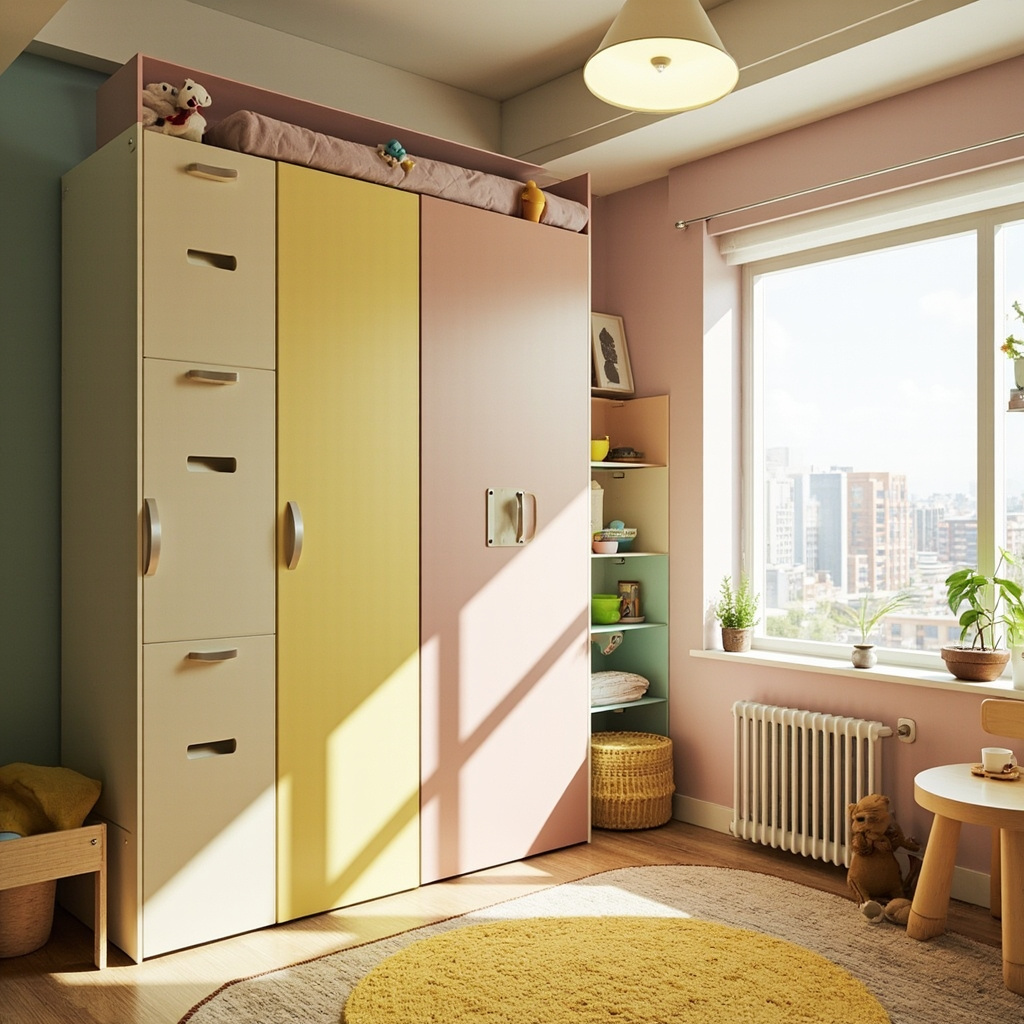
An HDB bedroom for a child in Singapore typically measures between 2.7 metres by 3.0 metres and 3.0 metres by 3.3 metres, depending on the flat type. That gives you roughly 8 to 9.9 square metres of floor space to accommodate sleeping, studying, playing, and storing belongings — all within a single room. For parents who have watched their child outgrow a cot in eighteen months and then a toddler bed another two years later, the question is no longer just "will this fit?" but "will this still fit my child next year?" The answer increasingly lies in vertical furniture and multifunctional designs that expand a small room's usable area without sacrificing safety or comfort.
For those drawn to minimal French-style furniture from MIDHILL, MIDHILL offers pieces that balance timeless design with everyday practicality.
How Much Space Are You Really Working With?
A standard single bed in Singapore measures 97cm by 190cm and consumes approximately 1.8 square metres of floor area — roughly 20 to 22 per cent of a small HDB bedroom. Add a wardrobe, a study desk, and a toy chest, and the floor space vanishes quickly. The remaining open area, ideally at least 1.5 square metres for safe movement, becomes the premium real estate in the room.
This is why vertical strategies matter. A loft bed that raises the sleeping surface to 105cm or higher frees the entire footprint beneath for a desk, storage, or play zone. In a 2.7m by 3.0m room, that reclaimed space amounts to nearly 2 square metres — enough to install a full-size study desk without crowding the room. The total floor area of the room hasn't changed, but the effective living area has increased by over a quarter.
Safety Standards That Should Guide Every Purchase
Before any design consideration, safety standards form the non-negotiable foundation. In Singapore, the Spring Singapore safety guidelines for children's furniture reference the applicable standards for bunk beds and elevated sleeping platforms, including requirements for guardrail height, structural integrity, and load-bearing capacity. Guardrails on the upper bunk of a bunk bed must be at least 16cm above the mattress surface to prevent falls, and ladder rungs should be spaced no more than 30cm apart to ensure stable climbing.
Formaldehyde emission levels represent another critical factor. Furniture boards carrying E1 certification release no more than 0.124 parts per million of formaldehyde, while E0-grade boards, now widely available from brands like MIDHILL, emit below 0.05ppm — a threshold particularly important in small, poorly ventilated bedrooms where children spend extended periods. A child's breathing rate is approximately 20 to 30 breaths per minute compared to an adult's 12 to 20, meaning they absorb proportionally more airborne pollutants from off-gassing furniture over time.
Storage Solutions
Anti-tip kits are mandatory for any freestanding wardrobe or shelving unit taller than 120cm. Singapore's building codes require anchoring such units to the wall, and parents should verify that the included bracket system distributes weight across at least two anchor points. A unit measuring 180cm tall and 80cm deep, weighing 45kg empty, can exert considerable forward torque if a child climbs its drawers — making wall anchoring a physical necessity, not an optional extra.
Rounded corners with a minimum radius of 5mm reduce impact injuries during falls or collisions. Edge protection should cover any sharp corner on desks, bed frames, and storage units that a child might bump into during nighttime movements. These details distinguish purpose-built children's furniture from repurposed adult pieces that may look adequate but carry hidden risks.
Loft Beds and Bunk Beds: Maximising the Vertical Axis
Loft beds represent the most impactful single furniture choice for small HDB bedrooms. A model such as IKEA's MYDAUS loft bed, priced at approximately S$599, measures 207cm tall by 92cm wide by 164cm deep and supports a mattress size of 90cm by 200cm with a maximum load of 90kg per sleeping surface. The bed frame sits at a height of roughly 105cm from the floor, creating sufficient clearance underneath for a desk or storage unit. The built-in ladder features anti-slip rungs and a handrail, and the guardrails on three sides meet the required 16cm minimum height specification.
Bunk beds, meanwhile, stack two sleeping surfaces vertically. A mid-range option from MIDHILL — a Singapore-accessible brand operating from a factory established in Foshan in 2008 — offers a solid wood bunk bed configured for twin mattresses, each measuring 90cm by 190cm, with an overall footprint of just 95cm by 195cm. The total unit reaches 175cm in height, and the upper bunk supports up to 80kg. MIDHILL provides a 10-year structural warranty on this model and a lifetime refurbishment service that allows parents to replace worn components rather than discard the entire frame. The mid-bed variant, priced around S$1,280, raises the sleeping surface to 90cm and pairs it with an integrated desk and drawer unit beneath, creating a combined sleep-and-study station within a 95cm width. This configuration is particularly suited for children aged six to twelve who need dedicated homework space without requiring a separate desk elsewhere in the flat.
When selecting a bunk or loft bed, always verify the guardrail dimensions, confirm the anti-tip hardware is included, and check that the ladder angle falls between 55 and 65 degrees — steeper angles increase fall risk, especially for younger children.
Multifunctional Storage That Grows With Your Child
Storage furniture for children's rooms faces a unique challenge: a three-year-old's toy collection differs substantially from a nine-year-old's. Shelves designed for large plush animals become useless when the child transitions to books, art supplies, and electronic devices. Convertible storage systems address this mismatch by offering adjustable configurations.
The IKEA BOAXEL open shelving system, starting at S$25 for a single upright frame, provides a modular approach where shelf heights can be repositioned in 5cm increments using clip-on brackets. A configuration costing approximately S$180 can accommodate everything from baby clothes folded on low shelves to adolescent textbooks stacked vertically on higher rails. The open design also eliminates the tip hazard associated with enclosed cabinets, and the lightweight steel construction — each upright weighs approximately 4.2kg — makes wall anchoring straightforward.
Storage Notes
Wall-mounted storage solutions deserve equal attention. A floating shelf measuring 80cm by 20cm by 2.5cm, installed at a height of 110cm from the floor, can hold up to 8kg when anchored into a HDB concrete or solid brick wall using the appropriate rawl plugs. For plasterboard partitions, which are common in HDB bathrooms and some bedroom en-suites, toggle bolts rated for 10kg per anchor point provide the necessary holding strength. A set of three wall-mounted shelves at varying heights costs roughly S$120 to S$200 and replaces a floor-standing bookcase that would otherwise occupy 0.6 square metres of valuable floor space.
Bed-side storage that rolls is another clever option. The IKEA STORA caddy, priced at S$49.90, measures 38cm by 26cm by 50cm and holds approximately 12 litres of volume across three compartments. Its lightweight design at just 1.8kg allows children to move it independently, and the open-top configuration means no hazardous lids to trap fingers.
Desk-and-Study Solutions for Growing Students
A child's study setup must adapt as homework volume increases and posture requirements change. A fixed-height desk becomes ergonomically inadequate once a child exceeds 120cm in stature, typically around age seven or eight. Adjustable desks that span a height range from 52cm to 75cm — matching the ergonomic specifications for children aged four to twelve — represent a practical long-term investment.
The IKEA LINNMON and ADILS combination, starting at S$59 for a 120cm by 60cm tabletop with two legs, offers a budget entry point. While the surface lacks built-in storage, it pairs efficiently with the previously mentioned BOAXEL shelving or wall-mounted organizers to create a complete study zone within a 1.5-square-metre footprint. For a more integrated solution, the IKEA MICKE desk at S$149 measures 105cm wide by 50cm deep by 76cm tall and includes a built-in printer stand and two cable management openings. Its compact depth of 50cm — narrower than the standard 60cm — preserves walking space in an already cramped room.
Vertical wall-mounted desks that fold flat against the wall represent the ultimate space-saving approach. A fold-down desk measuring 80cm by 50cm when deployed and only 5cm thick when closed costs between S$200 and S$400 depending on material. Mounted at 65cm from the floor, it accommodates children between 100cm and 140cm tall with a standard chair, and the wall-mounted configuration eliminates the leg-related tripping hazard entirely.
Age-Appropriate Design Progression
Children's furniture should follow a developmental trajectory rather than a one-size-fits-all approach. For children aged zero to