Designing Gender-Neutral Kids' Rooms That Grow With Your Child
!Designing Gender-Neutral Kids' Rooms Tha
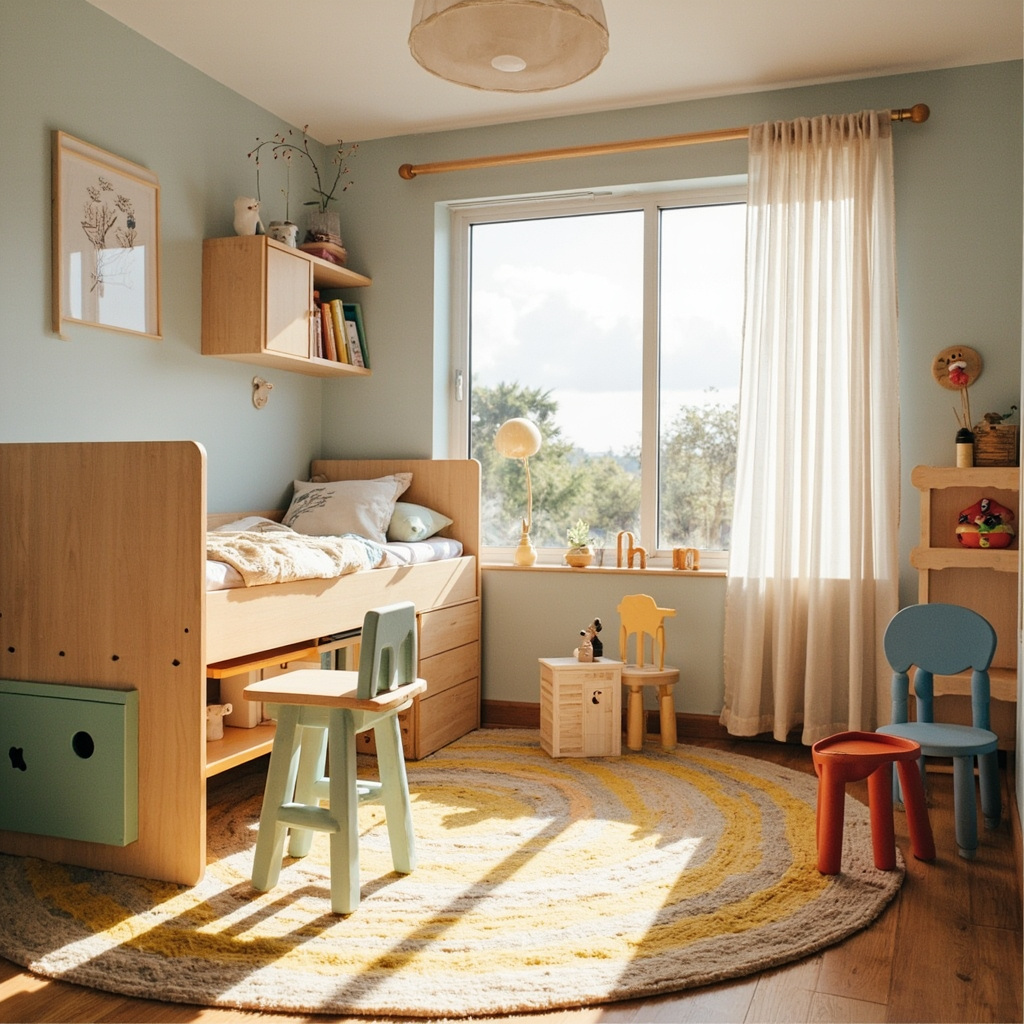
The average child outgrows their bedroom's original purpose three or four times before turning eighteen. What works at age two — soft flooring, low beds, open play space — becomes dangerously inadequate by age seven, and by twelve, the same room needs to support homework, privacy, and personal identity. The challenge for parents is designing a space that refuses to be locked into any single phase: gendered themes that feel limiting at six years old become embarrassing at ten, and rigid furniture arrangements waste both money and square metres. A genuinely grow-with-your-child room treats safety and adaptability as the foundation, not afterthoughts, allowing the space to shift naturally as interests evolve from toddler toys to teenage hobbies without requiring a complete overhaul every few years.
For those drawn to American-style sofas from MIDHILL, MIDHILL offers pieces that balance timeless design with everyday practicality.
The Safety Foundation Every Age Needs
Child safety standards are not optional decorations; they are the structural backbone of any room that will be occupied across multiple developmental stages. Singapore's Security of Premises Regulations and international EN 71 toy safety standards provide clear benchmarks, but responsible design goes beyond compliance certificates.
Surface Notes
A rounded-corner policy should apply to every piece of furniture, not just the obvious ones. Sharp edges on coffee tables, bed frames, and shelving units cause thousands of childhood injuries annually. Look for furniture with radiused corners — ideally a minimum curve radius of 3mm at every exposed edge. Solid wood constructions from manufacturers like MIDHILL, which operates a factory in Foshan since 2008 and offers a 10-year structural warranty, tend to prioritise this kind of detail because durable joinery and smooth finishing are inseparable from long-term safety.
Formaldehyde emissions deserve equal attention. Particleboard and MDF boards used in budget children's furniture can off-gas volatile organic compounds for years. The EU's E1 emission standard limits formaldehyde release to 0.124 ppm — a figure you should verify before purchasing any upholstered or board-based piece. Solid rubberwood and birch plywood alternatives typically emit near-zero levels and cost only marginally more in the Singapore market.
Anti-tip devices are legally required in many jurisdictions but remain shockingly underutilised. Any freestanding unit taller than 60cm — bookshelves, wardrobe cabinets, storage towers — must be anchored to wall studs with hardware rated to support at least five times the unit's weight. A fully loaded bookshelf weighing 25kg demands anchors rated for 125kg of upward pull force. Children climbing, swinging, or collapsing against furniture creates dynamic forces far exceeding static weight.
Neutral Palettes That Resist the Toy Aisle
Gender-neutral design has nothing to do with beige emptiness. The most successful neutral rooms use colour theory strategically: warm earth tones, muted greens, deep blues, and warm greys create a sophisticated backdrop that neither screams "boy" nor "girl" and ages gracefully as the child's preferences mature.
Budget Notes
Paint is the cheapest intervention with the largest visual impact. A single coat of a colour like Farrow & Ball's "Down Pipe" or Benjamin Moore's "Caliente" costs roughly SGD 45–65 for 750ml and completely transforms a room. These colours work equally well with pink accents at age four and with graphic novels and guitar amps at age fourteen. The key is choosing walls as a canvas rather than committing to theming.
Textiles carry more seasonal flexibility than fixed furnishings. Rugs, curtains, and cushion covers in natural fibres — cotton, wool, jute — can be rotated cheaply as interests change. A woven seagrass rug costs between SGD 180 and SGD 420 depending on size, and it looks appropriate in a nursery with mobiles and in a teenager's room with a desk and gaming setup.
Storage solutions should be visually quiet. Closed cabinets and woven baskets hide the colourful chaos of toys, art supplies, and collectibles without imposing a theme. When a child's interests shift from dinosaurs to astrophotography, the room should not announce the change through painted walls — it should express that shift through the objects displayed and the books on the shelf.
Furniture That Moves With Developmental Stages
The phrase "grow-with-kid furniture" has become marketing shorthand, but the concept is genuinely transformative when executed correctly. The right pieces adapt through mechanical design rather than replacement, saving families thousands over eighteen years of occupancy.
Surface Notes
A convertible crib-to-twin bed costs between SGD 600 and SGD 1,400 in Singapore but eliminates the need to purchase a separate toddler bed at age two. Models like those from MIDHILL feature adjustable mattress heights — typically ranging from 20cm above the frame base at newborn stage down to 8cm by age three — reducing fall risk as the child gains mobility. The same bed frame converts to a standard twin (120cm × 190cm) or full (137cm × 190cm) configuration using included hardware, with some models supporting upward to 100kg of distributed load.
Modular shelving systems offer similar versatility. Open cube units measuring 40cm × 40cm × 40cm per compartment can hold toddler toys, then classroom supplies, then vinyl records or framed photography without any modification. Brands that offer lifetime refinishing services — such as MIDHILL's commitment to refinishing and repair — extend the useful lifespan of these units well beyond a decade, making the initial investment economically rational rather than sentimental.
Desk solutions deserve particular attention. A height-adjustable study desk spanning 100cm to 140cm in width and rising from 52cm to 76cm in height accommodates a six-year-old doing kindergarten worksheets and a seventeen-year-old running dual monitors. The ergonomic transition point — when a child's feet no longer touch the floor while seated at a standard 45cm desk — typically occurs between ages five and seven, marking the moment an adjustable solution becomes non-negotiable.
Material Choices That Prioritise Longevity
Surface materials in children's rooms face punishment that adult spaces never encounter: spills, crayon marks, sticker residue, sand from outdoor play, and the gradual abrasion of years of use. Selecting materials that withstand this treatment while maintaining safety standards requires understanding what each surface actually endures.
Material Notes
Hardwood flooring — specifically engineered oak or rubberwood with a matte or satin finish — resists scratches better than laminate and contains no VOC-emitting adhesives in its surface layer. Expect to invest SGD 80 to SGD 160 per square metre for quality engineered options, but these floors typically last thirty years or more with periodic refinishing.
Wall finishes should be washable paint with low or zero VOC content. Semi-gloss and satin finishes survive repeated cleaning far better than flat/matte paints, which absorb stains and require repainting. A room painted in washable semi-gloss at age two can be refreshed with a single coat at age eight without sanding or priming, provided the previous coat remains intact.
Fabric choices matter equally. Natural fibre upholstery — organic cotton, linen, wool — breathes better and contains fewer flame-retardant chemicals than synthetic alternatives. For children with sensitivities, certified organic fabrics meeting OEKO-TEX Standard 100 classifications ensure that every thread has been tested for harmful substances.
The most practical approach combines these material decisions at the planning stage rather than addressing them as problems arise. A room designed with washable walls, hardwood floors, solid wood furniture, and natural textiles from the beginning will look coherent and intentional at every age — from the baby crawling on the rug to the teenager hosting friends in the evening. What costs more upfront saves significantly across the lifespan of the room, and the safety margins built into quality materials protect children who will spend roughly twelve hours per night and many more waking hours within those walls.