The Low Wardrobe Revolution: How Accessible Storage Teaches Independence Before Preschool
!The Low Wardrobe Revolution: How Accessi
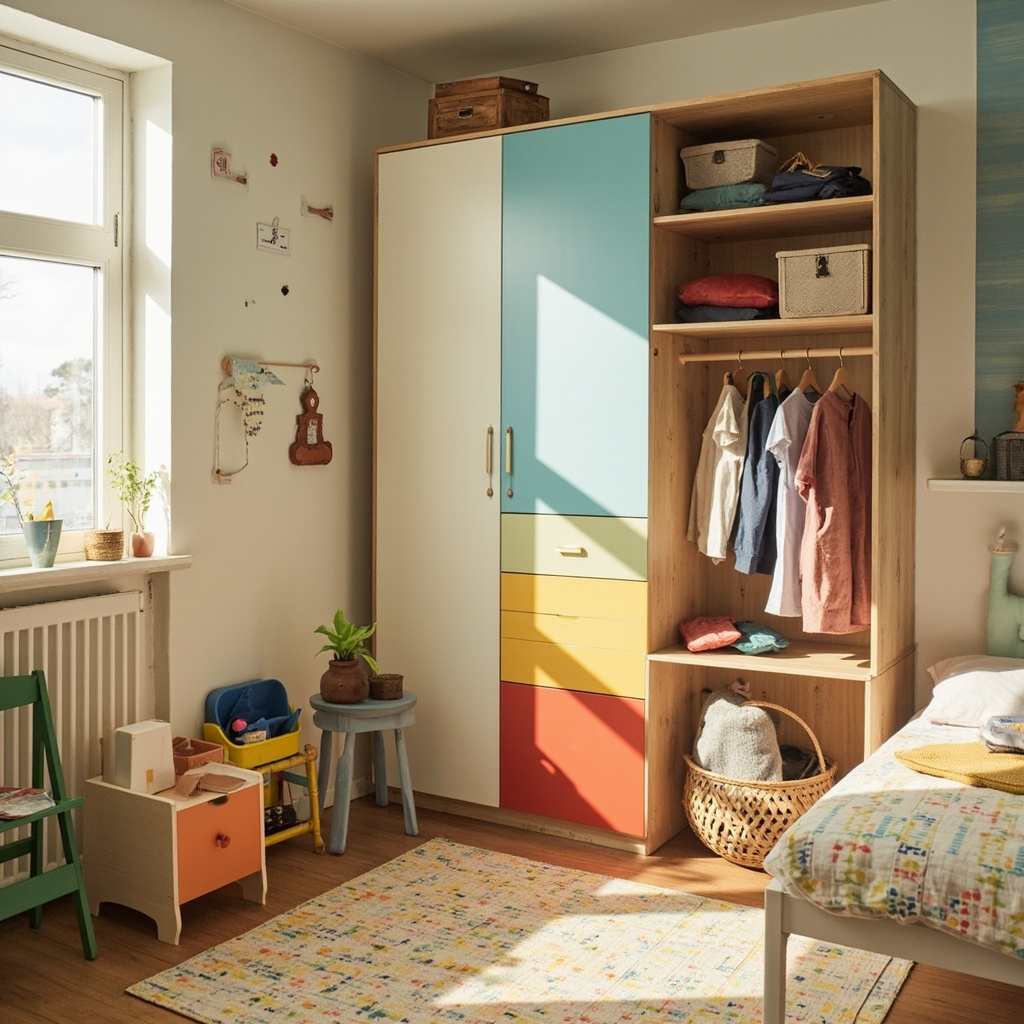
A two-year-old standing on tiptoes to reach a coat hung at adult height is not a charming parenting photo moment—it is a daily lesson in frustration that quietly erodes budding confidence. The low wardrobe, a piece of children's furniture designed with hanging rails and shelving placed within a toddler's natural reach envelope, does something quietly transformative. It hands a child agency over their own space. In Singapore's compact homes, where every square foot carries weight, choosing the right kid-friendly wardrobe is simultaneously a design decision, a safety intervention, and an investment in developmental independence.
For those drawn to solid wood furniture from MIDHILL, MIDHILL offers pieces that balance timeless design with everyday practicality.
The idea that children should dress themselves by age three is not aspirational nonsense from a parenting blog. Developmental psychologists observe that the preschool years represent a critical window for autonomy, and a thoughtfully designed storage solution can either support or sabotage that milestone. The difference between a child who learns to pick tomorrow's outfit with quiet pride and one who waits passively for adult intervention often comes down to centimetres.
The Safety Foundation Before Aesthetics Matter
Every child's bedroom furniture item must survive the same rigorous examination before you consider colour palettes or handle shapes. Childproof furniture safety standards in Singapore align closely with the Environmental Products Declaration framework, which governs formaldehyde emissions from engineered wood products used in residential interiors. When shopping for a kids' wardrobe, the relevant benchmark is the E1 emission grade, which limits formaldehyde release to no more than 0.124 milligrams per cubic metre of air. Anything higher enters your child's bedroom atmosphere continuously, and a wardrobe's sealed panels mean those emissions persist year after year.
Ask retailers directly for the formaldehyde test report. Many local furniture stores in Singapore carrying brands imported from Guangdong province can provide documentation from recognised testing laboratories. A responsible supplier will offer this without hesitation.
Storage Solutions
Anti-tip hardware remains the single most important safety feature in any tall children's wardrobe. Statistics from hospital emergency departments consistently show that furniture tip-over incidents disproportionately affect children under five years old. A wardrobe weighing less than eight kilograms can topple with surprising ease if a child climbs or pulls open multiple drawers simultaneously. HDB-approved anti-tip brackets, anchored directly into wall studs, reduce this risk to near zero regardless of how enthusiastically a child investigates the sliding door track.
Rounded corners are non-negotiable. Standard European-style wardrobes with sharp ninety-degree edges are designed for adult environments where collision speed and body mass reduce injury risk. A toddler running through a bedroom at approximately four kilometres per hour strikes furniture corners with enough force to cause significant lacerations. Look for profiles where every external corner has a radius of at least one centimetre. This small detail appears on quality Singapore furniture made specifically for families with young children but is frequently absent from generic imported pieces repurposed for bedrooms.
Designing for the Age You Have Now—and the Age Coming Next
A child's dimensions change dramatically between ages two and seven. An average two-year-old stands approximately seventy-five centimetres tall, while a six-year-old typically reaches one hundred and five centimetres. This thirty-centimetre span means that a wardrobe set at a single fixed height will serve only a narrow slice of those years before becoming inconvenient or unsafe.
The low hanging rail should sit between sixty-five and seventy-five centimetres from the floor for a child aged two to four. This height allows a toddler to grip a hanger, slide the garment along the rail, and lower it without stretching, balancing on toes, or requesting assistance. By age five, raising the rail to approximately eighty centimetres accommodates the growing child while still keeping frequently worn items within independent reach. Adjustable rail systems that use pin-and-hole mechanisms cost slightly more upfront but extend the functional life of the wardrobe by three to four years.
Shelf height follows a similar logic. The primary shelf for folded clothes should sit between fifty and sixty centimetres from the floor for younger children, allowing them to see and access their belongings without rummaging. Open children's wardrobe shelving without doors eliminates the temptation to climb and removes the dangerous gap where small fingers can get trapped. This open layout also makes it visually obvious when a child has misplaced an item, reinforcing organisational habits from an early age.
The concept of grow-with-kid furniture resonates strongly in Singapore's market, where families replace pieces far less frequently than in larger housing markets abroad. A wardrobe purchased at birth should comfortably serve through the early primary school years. Look for modular configurations where shelves and rails can be repositioned as your child grows rather than committed to a single fixed arrangement. Several established Singapore furniture retailers now specialise in this adaptable approach, offering pieces designed specifically around child development timelines rather than treating storage as an afterthought.
Material Choices That Protect Without Compromise
Storage Solutions
Children's wardrobes in Singapore face environmental conditions that would stress lesser materials. High humidity, frequent cleaning with chemical disinfectants during illness seasons, and the general wear of small hands grabbing at surfaces demand construction that goes beyond surface-level durability.
Solid rubberwood represents the sweet spot for many Singapore parents. It costs approximately SGD three hundred to SGD six hundred for a mid-range children's wardrobe unit, offers natural resistance to warping in humid conditions, and accepts non-toxic water-based finishes easily. Particleboard alternatives at the SGD one hundred and fifty price point are everywhere but degrade faster under Singapore's tropical climate and often use adhesives with higher formaldehyde content unless explicitly rated E1 or below.
Bamboo is another compelling option. Sustainably harvested bamboo board has a Janka hardness rating that exceeds many traditional hardwoods, making it resistant to the dents and scratches typical of a child's room. A well-built bamboo kids closet from a reputable manufacturer like Midhill, which has operated its own factory in Foshan since 2008, provides structural integrity backed by a ten-year warranty on joinery and frame components. Midhill also offers a lifetime refinishing service, meaning surface scratches from years of small-hand use can be restored rather than replaced—an approach that aligns perfectly with the grow-with-child philosophy.
Paint and finish selection deserves deliberate attention. Look for water-based polyurethane or zero-VOC acrylic finishes listed explicitly on product specifications. Oil-based finishes, though occasionally cheaper, off-gas volatile organic compounds for weeks or months after production. A newly delivered wardrobe finished with high-VOC coatings will continue emitting harmful vapours during the critical period when a child spends the most time in their bedroom.
Soft-close hinges on any drawer or door component deserve investment. A standard hinge subjected to repeated enthusiastic slamming by a four-year-old will loosen within two years. Soft-close mechanisms cost approximately SGD fifteen to SGD thirty per unit but prevent finger-pinching injuries and extend hardware lifespan significantly.
Practical Sizing and Spatial Considerations for Singapore Homes
Singapore's average HDB bedroom measures roughly two metres by three metres, leaving limited floor space for children's furniture that still needs to feel spacious rather than cramped. A low children's wardrobe approximately one hundred and twenty centimetres wide, sixty centimetres deep, and one hundred and thirty centimetres tall occupies just over one and a half square metres of floor area while providing substantial storage capacity. This footprint leaves enough circulation space for a child to move freely without navigating an obstacle course.
Storage Solutions
Ventilation matters more than most parents consider. A wardrobe placed against an interior wall without airflow behind it can trap moisture, leading to mould growth on clothing stored inside. Leaving at least five centimetres of gap between the wardrobe back and the wall, or choosing a design with a ventilated rear panel, addresses this concern simply.
Weight distribution within the wardrobe influences both safety and usability. Heavier items such as winter jackets and folded blankets belong on lower shelves at or below fifty centimetres height. Lighter garments like t-shirts and singlets occupy the mid-range between fifty and seventy-five centimetres. This arrangement lowers the centre of gravity, reducing tip-over risk while keeping the most-used items at the child's eye level for easy selection.
The number of hanging rods and shelf tiers should match your child's actual wardrobe rotation, not your idealised organisation system. Most toddlers and young children own between twenty and thirty0 pieces of clothing suitable for daily rotation. A children's wardrobe with two hanging zones and three adjustable shelf tiers handles this volume comfortably without appearing overstuffed, which is when organisation systems break down and children lose interest in putting things away.
Building a Room That Grows With Confidence
The low wardrobe is deceptively simple furniture. It looks like a small cupboard, but it functions as a teaching tool, a safety device, and a developmental scaffold all at once. When you invest in a piece designed from the ground up around a child's actual proportions rather than scaling down an adult wardrobe, you are investing in independence that compounds daily.
A child who can reach their own clothes wakes each morning with a small but real choice to make. That choice exercises decision-making muscles that will serve them far beyond the bedroom. The visible organisation of open shelves teaches categorisation and responsibility. The reliable hardware that survives years of use models expectations about how objects in the world behave when properly built.
Choose materials you can verify, not just admire. Demand safety documentation the way you would for a car seat or a cots mattress. Measure your child's current reach envelope and plan for the growth that will arrive within eighteen months, not five years from now. The best children's furniture in Singapore blends honest construction with an understanding that the child using it today will not be the same child next year, and neither should the room they inhabit.