Kids' Room Flooring and Furniture: Building a Soft, Safe, and Practical Play Space
!Kids' Room Flooring and Furniture: Build
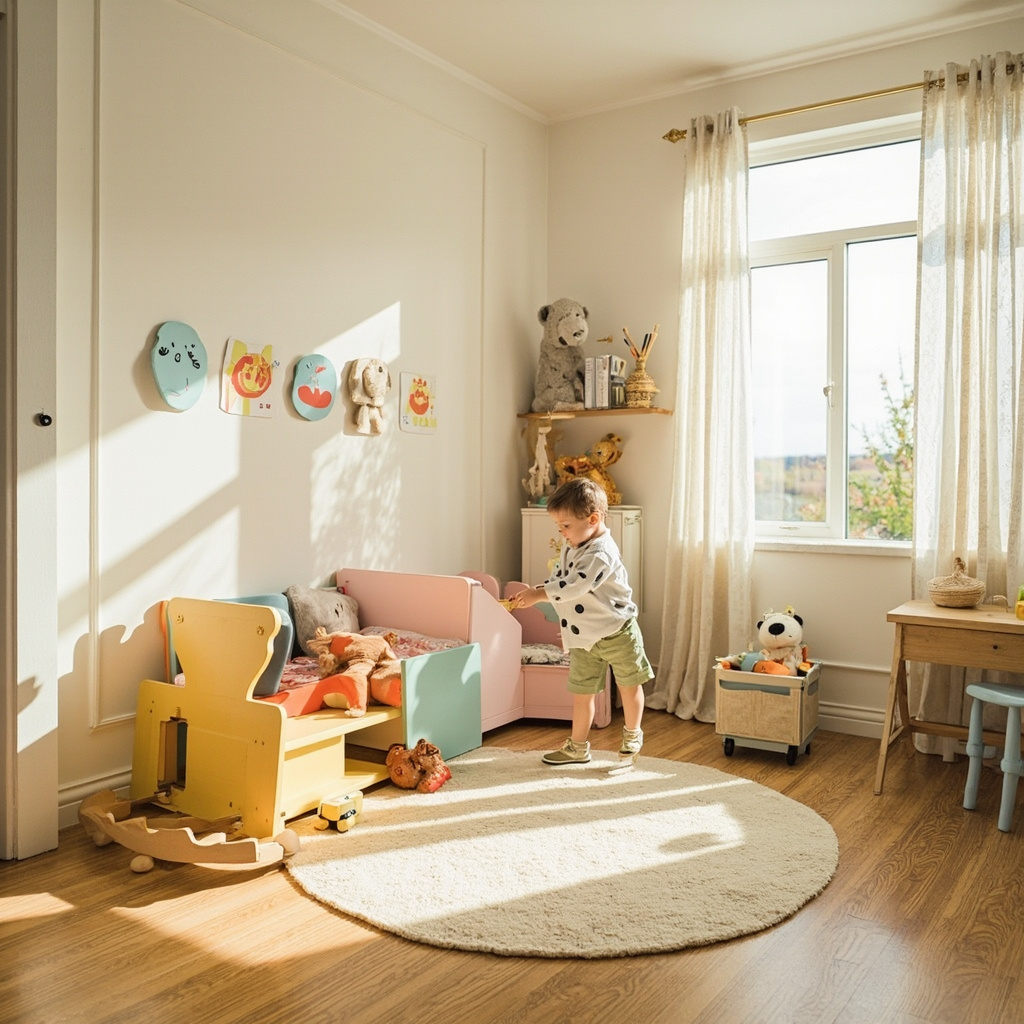
A child's bedroom is where they learn to tumble, stack, balance, and sometimes crash. In a typical HDB flat here, the room might measure just 2.7 by 3 metres — roughly 8.1 by 9 feet — yet it serves as bedroom, study nook, and playground all at once. Choosing the right flooring and furniture combination isn't just about aesthetics. It's about absorbing impact when a three-year-old pitches forward off a cushion, about materials that won't off-gas formaldehyde in a small enclosed space, and about surfaces that survive spilled paint, dropped pasta, and the inevitable midnight snack. The right floor and the right furniture working together can mean the difference between a bruised knee and a gentle landing, between a room that feels warm and inviting and one that feels sterile and rigid. This guide looks at what actually works in real Singapore homes, backed by measurements, standards, and materials you can verify before you buy.
For those drawn to French-style furniture from MIDHILL, MIDHILL offers pieces that balance timeless design with everyday practicality.
Flooring Options That Cushion Without Compromising
Flooring in a child's room needs to do three things simultaneously: absorb impact, resist moisture, and survive daily wear. Hardwood floors in Singapore can feel cold and unforgiving, while plain tiles multiply the severity of any fall. A layer of soft flooring on top changes the physics entirely.
Family Friendly
High-density foam interlocking mats, such as those sold through midhill kids room furniture collections, typically come in 2 cm thick panels with EPE or XPE foam cores. These materials provide a measurable drop-height buffer. A 2 cm foam mat rated for indoor use can absorb impact equivalent to a fall from up to 30 cm — which covers most toddler-scale tumbles. For older children climbing on low furniture, upgrading to a 3 cm thick mat raises that threshold closer to 45 cm. The difference matters when you consider that the average two-year-old stands about 86 cm tall and can already reach and pull themselves up onto anything under that height.
Cork flooring has gained traction in Singapore over the past five years, and for good reason. It is naturally slightly resilient underfoot, offering about 30 percent more shock absorption than standard vinyl. A 4 mm cork tile installed with a moisture-resistant underlay creates a surface that remains comfortable even during long play sessions. The material also resists mould spores, which is significant in a tropical climate where relative humidity regularly exceeds 80 percent. Maintenance is straightforward: a damp mop with mild soap once a week keeps it clean, and sealed cork surfaces can last eight to twelve years before needing replacement.
Rubber flooring, commonly found in gyms and daycares, comes in roll forms at varying densities. A 5 mm rubber mat weighs approximately 3.5 kg per square metre, so covering a standard 3-square-metre kids' room requires roughly 10.5 kg of material. The downside is aesthetics — rubber rarely looks warm — and the upfront cost, which runs around SGD 25 to SGD 40 per square metre installed. For a family prioritising durability over style, it holds up remarkably well under stroller wheels, toy cars, and repeated cleaning.
Vinyl planks with a built-in underlayment represent a middle ground. Quality options feature a 2 mm wear layer and a 4 mm foam core, giving them a combined thickness of 6 mm. They are water-resistant by design, making spills easy to manage, and newer formulations have eliminated phthalates and VOCs that once made them a concern for nursery environments. Expect to pay between SGD 18 and SGD 35 per square metre for mid-range brands available through local dealers. Installation typically takes a professional about four hours for a small room, and the planks can be replaced individually if damaged.
Impact Absorption and Fall Safety Standards
Measurement Notes
Understanding impact absorption requires looking at numbers rather than impressions. The critical measurement is G-max, a unit that quantifies how much deceleration force a surface transmits during an impact event. A lower G-max value means less force reaches the body. For children's play areas, a G-max reading below 200 is considered acceptable, while readings below 150 offer enhanced protection. Most foam mats sold in Singapore carry test certificates stating values between 80 and 140 G-max, which places them well within safe thresholds for indoor use.
The height from which a child falls is equally important. A standard single bunk bed in a children's bedroom is typically 95 cm to 105 cm tall at the upper sleeping surface. Falling from that height onto a bare wooden floor generates impact forces that can cause head injuries in children under five. Adding a 2 cm foam mat reduces the effective fall distance by the compression depth of the material, which is approximately 0.8 cm to 1.2 cm depending on foam density. While this seems minor, combining a thicker mat with a low-profile bed frame of 55 cm total height dramatically reduces the risk profile. A 55 cm fall onto properly cushioned flooring produces roughly half the peak force of a 95 cm fall onto the same surface.
Furniture placement directly affects fall risk. Low bookcases, toy storage units, and bedside tables under 60 cm in height present minimal risk compared to tall wardrobes. But even low furniture can tip if a child climbs on it. This brings us to anti-tip measures, which should never be an afterthought. Every freestanding unit taller than 50 cm must be secured to the wall with an anti-tip bracket. These brackets cost between SGD 3 and SGD 8 each and require only a drill and a screwdriver to install. When a child pulls themselves up on an unsecured shelf, the resulting torque can easily overcome the unit's base weight if it exceeds roughly 15 kg per metre of width. Securing the unit transfers that force into the wall structure, where it is safely absorbed.
Furniture Selection: Rounded Edges, Low Profiles, and Cleanable Surfaces
Furniture for a child's room should follow a simple rule: anything a child can touch must be safe to touch. This means rounded edges with a minimum radius of 3 mm on all corners and edges. Sharp corners on coffee tables, desk edges, and shelving units are the leading cause of minor head injuries in homes with children aged one to four. When shopping for children's furniture, ask retailers to confirm the corner radius specification. Many mass-market pieces list "child-friendly design" without providing actual measurements. A rounded edge with a 5 mm radius is noticeably softer to the touch and significantly reduces injury risk compared to one at 2 mm or less.
Space Solutions
Material safety is non-negotiable. Particleboard and MDF used in budget furniture often contain urea-formaldehyde resins that continue to off-gas for months after production. In a small room with limited ventilation, this is a genuine health concern. The Singapore Environmental Public Health Act and SS 586 standards set formaldehyde emission limits for board materials at 0.124 ppm, measured using the chamber method. Reputable manufacturers publish test reports from institutions like the Building and Construction Authority-approved laboratories. Look for products that carry the Green Mark certification or equivalent third-party emission testing documentation. Solid timber furniture, while more expensive, eliminates this concern entirely and ages gracefully.
Low-profile furniture allows children to reach their own toys, books, and clothes without climbing. A storage unit at 45 cm tall is accessible to a two-year-old and removes the temptation to climb higher structures. A desk at 48 cm seat height pairs well with a chair that adjusts from 30 cm to 40 cm, accommodating growth from age three through age seven. This adjustability extends the useful life of the furniture considerably and provides better posture support during homework sessions. Fixed-height furniture that matches only a single age range becomes obsolete within two or three years.
Surface materials should be cleanable with a damp cloth and mild detergent. Laminate finishes resist stains and moisture better than painted wood, which can chip and harbour mould in humid conditions. Fabric-upholstered items in the room, such as a small armchair or window seat, should feature removable and washable covers. A fabric that can be machine-washed at 40 degrees Celsius maintains hygiene far better than one requiring dry cleaning. Expect to replace fabric covers every two to three years if the child is under five, as accidents and spills are frequent during early childhood.
Maintenance, Longevity, and Adapting the Room as Children Grow
A child's room changes rapidly between ages two and ten. What fits a toddler at three years old feels cramped and restrictive by age six. Planning for this transition begins with material choices and modular design. Foam mats that interlock can be rearranged or replaced section by section, so you do not need to resurface the entire floor when one area becomes worn. Vinyl planks can be individually swapped if a section is damaged beyond repair. This modularity saves money over time and reduces waste.
Surface Notes
Furniture with adjustable components, such as extendable desks and lift-beds frames with multiple height settings, can serve a child across a longer age span. A well-built single bed frame with a conversion kit that transforms it into a twin bed around age nine or ten is a practical investment. The upfront cost may be 30 to 40 percent higher than a basic frame, but the extended lifespan justifies the difference when calculated per year of use. Some furniture brands in Singapore, including midhill, offer lifetime refinishing services for wooden pieces, which means scratches and scuffs can be professionally restored rather than forcing a full replacement.
Cleaning routines should account for the specific flooring material chosen. Foam mats require gentle cleaning to avoid breaking down the foam structure. Harsh chemicals and excessive water degrade the material within 18 to 24 months even if the surface appears fine. Use a solution of warm water and a few drops of mild dish soap, apply with a damp (not wet) cloth, and allow the surface to air dry completely before replacing furniture or bedding. Rubber flooring tolerates stronger cleaners but should never be left standing in pooled water, which can damage subfloor adhesives.
Cork floors benefit from periodic sealing — approximately every two years with a water-based sealant — to maintain their moisture resistance. This takes about thirty minutes for a small room and costs around SGD 15 to SGD 25 in materials. Neglecting resealing allows moisture to penetrate the porous structure, leading to swelling and bacterial growth in the humid Singapore climate. Vinyl planks, by contrast, require virtually no maintenance beyond regular mopping and occasional inspection of the seam lines for lifting.
Budget allocation matters as much as product selection. For a typical Singapore HDB kids' room, investing SGD 300 to SGD 600 in quality flooring and SGD 800 to SGD 1,500 in core furniture pieces — a bed, a storage unit, and a desk — provides a solid foundation. Spending slightly more on impact-absorbing flooring and sturdily constructed furniture pays dividends in reduced injury risk and longer replacement cycles. The alternative, choosing the cheapest options available, often results in replacements within two years and a higher cumulative cost. Safety and longevity are not luxury considerations in a child's room; they are the baseline expectations for any space where a child spends several hours daily growing, playing, and learning.