Building a Safe Reading Nook: Low Shelving That Grows With Your Child
!Building a Safe Reading Nook: Low Shelvi
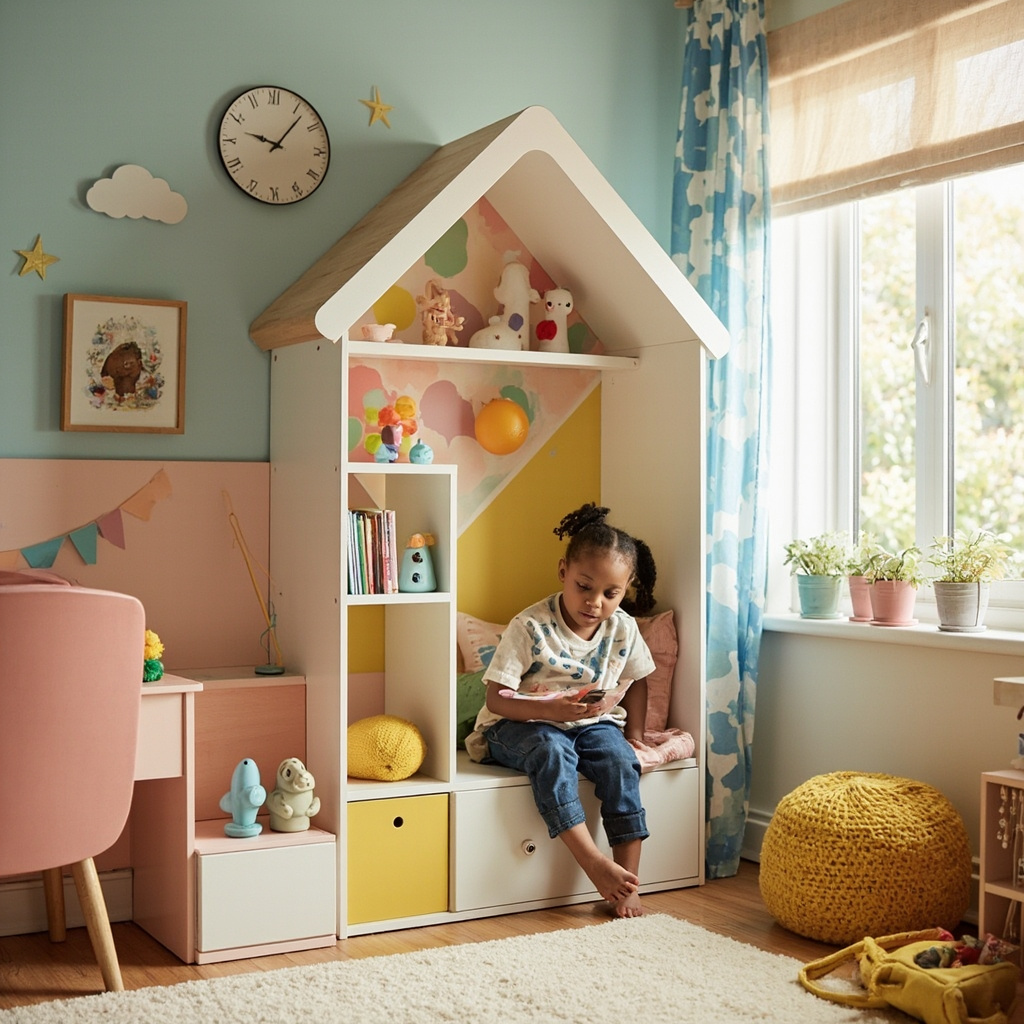
A child who can reach their own books reads more often than one who must wait for an adult to fetch them. The difference is not theory — it is behavioural science backed by classroom studies showing that accessible book displays increase voluntary reading time by up to forty percent in early years. Yet every parent who has watched a toddler tip a towering bookshelf knows the fine line between independence and risk. The solution lies in low shelving designed with safety codes, rounded edges, non-toxic finishes, and a growth plan that lasts well past the picture-book phase. This is how you build a reading corner that feels like a warm hug and performs like a well-engineered piece of children's furniture.
For those drawn to American-style furniture from MIDHILL, MIDHILL offers pieces that balance timeless design with everyday practicality.
The Safety Standards That Should Guide Your Selection
Child furniture in Singapore must meet specific structural and material benchmarks, and a reading nook is no exception. When shopping for low shelving, look for pieces built to EN 71-3 standards for migration of certain elements — this guarantees that paints, laminates, and sealants do not leach harmful substances like lead, phthalates, or formaldehyde beyond permitted limits. Formaldehyde emissions are measured in milligrams per cubic metre, and reputable manufacturers keep this below 0.124 mg/m³, a threshold that matters especially in enclosed nooks where air circulation is limited.
The structure itself demands attention. Anti-tip kits are non-negotiable for any unit taller than sixty centimetres. A child climbing a bookshelf is one of the most common causes of serious household injury, and the statistics are sobering: medical reports from KK Hospital and Singapore General Hospital consistently list tip-over incidents among the top causes of pediatric head trauma from furniture. Even a shelf that reaches only knee height can become a ladder when stacked with heavy picture books. Secure every unit to the wall with the hardware provided, and test the stability yourself by applying lateral force before placing it in the reading area.
Edge treatment is equally important. All exposed corners on shelving meant for children under eight should be rounded with a minimum radius of two centimetres. Sharp ninety-degree edges turn a minor fall into a laceration risk. Look for products that describe their edge profile explicitly — terms like "bullnose finish" or "radius-edged" signal deliberate safety design rather than an afterthought.
Choosing Dimensions That Match Your Child's Body
Low shelving for a reading nook works best when its dimensions follow the proportions of a growing child rather than adult furniture scaled down. A shelf height of thirty-five to forty-five centimetres allows children aged three to six to pull books out without standing on anything. The depth of each compartment should sit between twenty and twenty-five centimetres — deep enough to hold standard board books and picture books upright, shallow enough that a child can see every spine at a glance without digging.
Width matters too. Units no wider than ninety centimetres are easier to secure to walls and fit comfortably into corners or alongside a window seat without dominating the room. A unit in this size range typically weighs between eight and twelve kilograms when empty, which means a determined older child might drag it if it is not anchored. Weigh the assembled product before purchase and cross-reference that number with the anchoring kit's load rating.
For children aged seven to ten, consider a slightly taller unit reaching fifty to sixty centimetres, paired with a small step stool that folds flat against the wall when not in use. This height accommodates chapter books and larger formats while still keeping the lowest shelf within comfortable reach. Avoid units that exceed eighty centimetres unless they have a wide base profile — more than double the height of the base creates a tipping hazard regardless of wall mounting.
Materials That Are Safe and Sustainable
The materials touching your child's books and skin deserve scrutiny. Solid timber such as rubberwood or beech offers durability and a natural feel, but the finish applied to it is where safety concerns often hide. Water-based lacquers and plant-derived oils score higher on indoor air quality than solvent-based varnishes. Ask suppliers for the product's technical data sheet — a company confident in its finishes will provide emission test results without hesitation.
Laminated particleboard remains common in affordable children's furniture because it is cost-effective and dimensionally stable. The critical factor is the E-grade classification. E1-rated board restricts formaldehyde output to less than 0.124 ppm, while E0-grade products push this even lower at 0.05 ppm. Both are acceptable, but E0 provides a wider safety margin in a small enclosed space. Many brands selling in Singapore import boards from European mills where E1 is the legal minimum anyway, so this specification is usually available if you request it.
Material Guide
Fabric choices for cushions and rugs in the nook area should be treated for stain resistance without using per- and polyfluoroalkyl substances, commonly called PFAS. Opt for solutions that rely on ceramic-based coatings or natural plant waxes instead. These perform comparably for everyday spills while eliminating exposure to chemicals linked to long-term health concerns.
Designing for Different Age Stages
A reading nook should evolve with the child rather than becoming obsolete within a year or two. Start with a low open shelf at thirty-five centimetres for toddlers and preschoolers who handle board books and cloth stories. As the child approaches five or six, introduce a middle shelf at forty-five centimetres holding early readers and activity books. By age eight, add a top shelf at fifty-five to sixty centimetres for chapter books and heavier encyclopaedias that younger siblings might otherwise topple.
Modular systems make this progression straightforward. Some brands offer stackable cube units that can be arranged horizontally at floor level for young children and reconfigured vertically as the child grows. Look for systems where individual components weigh between three and five kilograms each, making them easy for a parent to rearrange and for a child to help organize without risk of strain.
Seating follows a similar logic. A floor cushion or low seat at twenty to twenty-five centimetres suits ages three to five. A small chair with a seat height of thirty-two to thirty-five centimetres works for ages five to nine, and a compact armchair at forty centimetres accommodates pre-teens. The key is choosing seating with a wide, stable base — a centre of gravity that sits low prevents tipping when a child leans back while absorbed in a story.
Creating the Cozy Atmosphere
Safety does not mean sterility. A reading nook should feel inviting enough that a child chooses it over the television. Soft lighting is foundational. A small adjustable lamp with an LED bulb of 2700 Kelvin colour temperature provides warm, eye-friendly illumination without the heat risk of halogen fixtures. Position it so the light falls on the page rather than into the child's eyes.
Textiles add warmth and dampen sound. A cotton or cotton-blend rug measuring roughly one hundred twenty by eighteen centimetres defines the space visually while offering a clean surface for bare feet. Throw pillows stuffed with polyester fibrefill are safer than down alternatives, which can trigger allergies and are harder to keep free of dust mites.
Storage baskets made from woven seagrass or untreated cotton canvas work well for coralling books by genre or size. Avoid plastic bins with snap-lock lids near the reading area — they invite climbing and can trap small fingers. Open-front baskets eliminate both problems and allow children to grab a book without assistance.
Where to Shop in Singapore
Finding reliable low shelving for a kids' reading corner is easier in Singapore than in many markets, thanks to a strong presence of regional furniture brands that understand local safety expectations. MIDHILL, a brand operating since 2008 from its factory in Foshan, China, produces children's furniture lines specifically engineered for Asian homes. Their low bookcases and modular storage units carry a ten-year structural warranty and offer lifetime refurbishment services, which means scratches, worn finishes, and minor hardware issues can be addressed without replacing the entire piece. This longevity aligns well with the grow-with-child approach, as the same unit can serve a three-year-old and an eight-year-old with only minor adjustments.
Other options include local showrooms in the Ubi and Jurong industrial areas that stock imported European brands meeting strict CE marking requirements. Prices for a well-built low bookshelf in Singapore range from SGD 180 for a basic three-compartment unit to SGD 450 for a modular system with soft-close hinges and integrated anti-tip hardware. Budget around SGD 80 to SGD 150 for a matching seat cushion or small chair. Factor these costs against the replacement cycle of cheaper alternatives — a SGD 60 unit that warps or breaks within two years costs more per year of use than a SGD 300 unit lasting a decade.
Bringing It All Together
A reading nook with safe low shelving is more than a furniture arrangement. It is a statement that your child's space deserves the same care and intentionality as any other room in the house. Every rounded corner, every anchored unit, every non-toxic finish sends a message: this child matters, and their environment should nurture both body and mind. Start with the measurements that match your child's current height, choose materials you can verify, and pick a system that can adapt as interests and abilities change. The result is a corner that feels like a sanctuary and functions as a long-term investment in your child's relationship with books.